
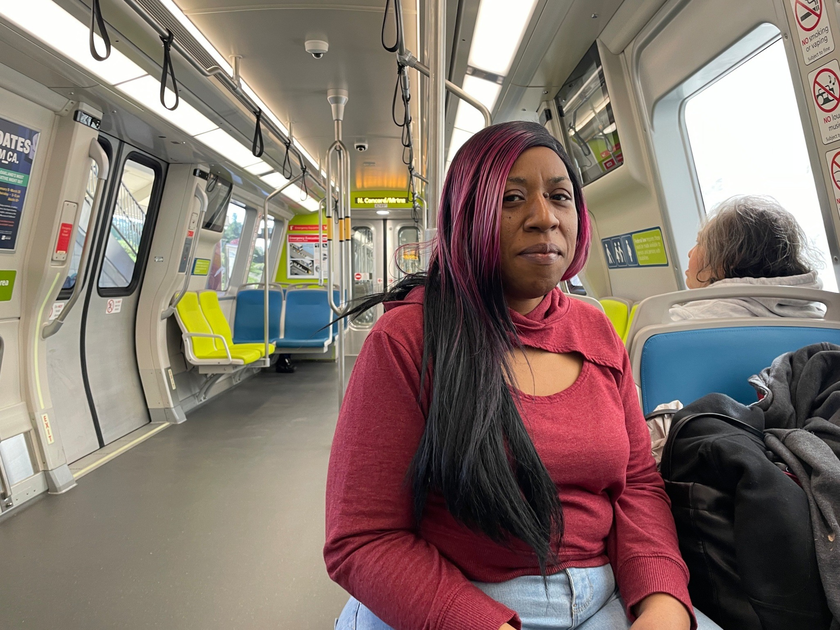
If Bay Area voters don’t pass a regional sales tax to fund BART in November, the agency will reduce service, cut its Red and Green lines, and close 15 of its 50 stations starting next July.
While BART ridership is recovering, it remains far below pre-pandemic levels. Average daily ridership is roughly 40% of 2019 levels.
Without the additional funding, the agency warns, it would need to make mass service cuts starting in January, with trains running every 30 minutes and service ending at 9 p.m. The agency also said that without the new tax revenue, it could completely cease operations within two years.
The proposed station closures, which could begin in July 2027 and are subject to board approval, would largely amputate the system’s outer edges, stranding riders in the East Bay exurbs and severing key transfers such as the link between BART and Caltrain at the Millbrae station.
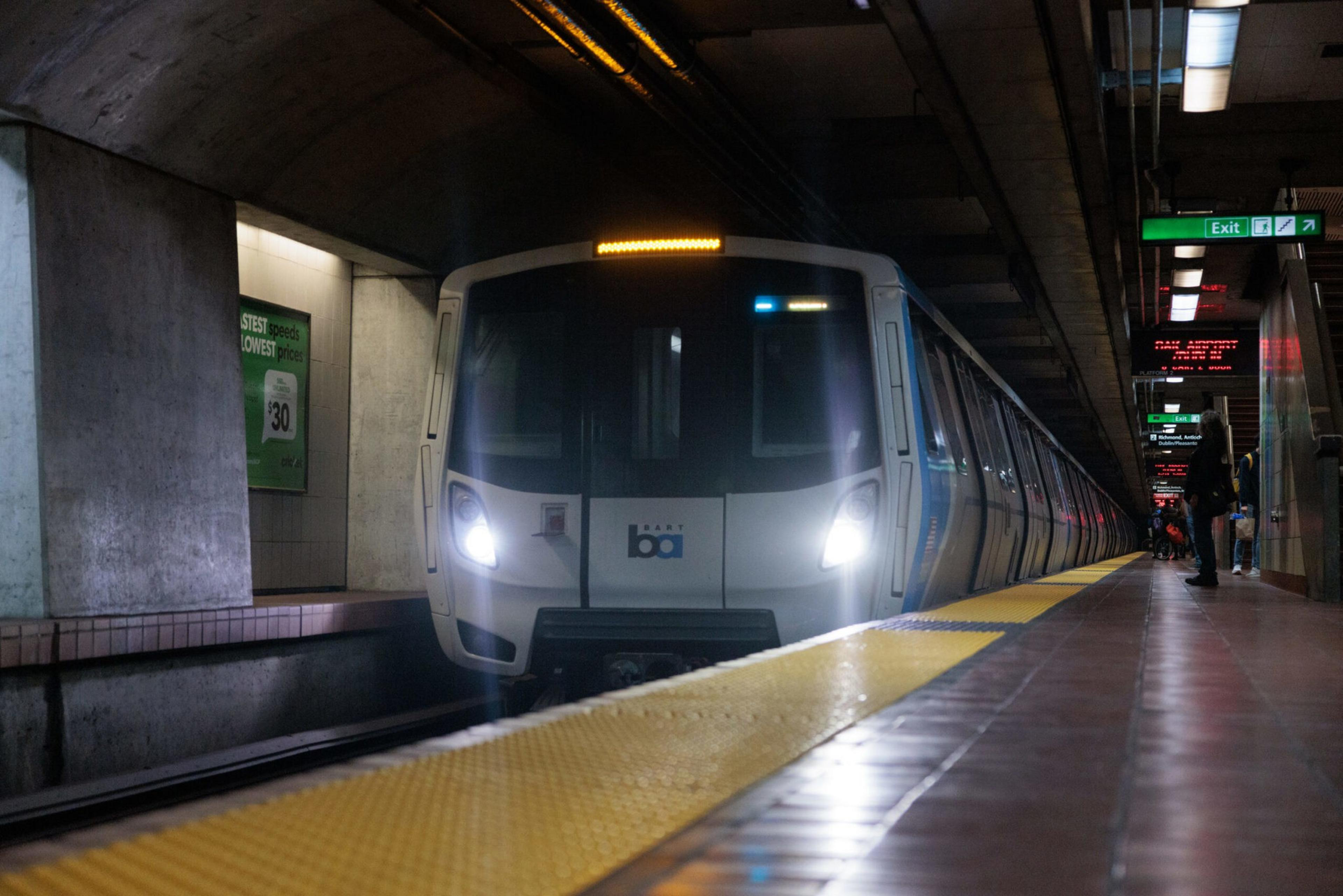 BART says it could close 15 stations if voters don’t approve a new sales tax in November. | Source: Isaac Ceja/The Standard
This would be a nightmare for both the agency and those who rely on BART to get to work, school, and social engagements.
The Standard spoke with riders at the five busiest stations slated for potential closure. Most hadn’t heard that their lives could be upended in less than two years.
Pittsburg/Bay Point
Pittsburg resident Shevette Phipps, 43, spends her workdays crisscrossing the Bay Area for her two jobs. As a substitute teacher and traveling nurse, she often doesn’t know where she’ll end up working in a given week.
Without a car, and unable to pay for exorbitant taxi or rideshare fares, BART is not just her best option — it’s her only way to travel to Brentwood, Oakley, San Francisco, Richmond, and other cities.
“I depend on it,” she said, adding that she often catches the last train home after finishing a nursing shift at midnight. An Uber at that time could cost more than $100.
“So what, I’m going to be working just [to afford] my transportation?”
Phipps didn’t know that her home station, as well as 14 others, are subject to closure. After she was told, she expressed frustration that despite high state taxes and toll fares, BART is still so deep in the red.
“You shouldn’t be missing money for no BART,” she said.
Dublin/Pleasanton
When Purna Sunkara moved across the country to the East Bay suburb of Dublin for a job as a cybersecurity consultant at Amazon, she was counting on BART to get to her office in San Francisco. She was aghast to hear that the Dublin/Pleasanton station could close, calling it a “shocker.”
“I’m questioning everything now,” she said, adding that she would have to move if the station shut down.
San Jose State student Sanaa Klamath said she’d abandon BART altogether if the Dublin station closes.
Klamath, 19, said she takes BART from North San Jose to Dublin twice a month to see her parents. Without the Dublin/Pleasanton station, she’d have to take the Altamont Corridor Express commuter rail between San Jose and Dublin, she said.
 Sanaa Klamath said she’d stop taking BART if the Dublin/Pleasanton station closes in 2027. | Source: Garrett Leahy/The Standard
“It’s just gonna make [BART] lose a lot more people,” she said of the potential closures.
She urged BART not to close the three stations at the eastern end of the Blue Line, and to at least keep the West Dublin station open, saying she has friends and family who commute from Dublin to San Francisco daily.
Antioch
Chris Mayorga lives in Menlo Park, which doesn’t have a BART station, but the system plays a vital role in both his professional and family life.
The construction worker uses the system every day to get to Antioch, where he visits his girlfriend and his 4-year-old son, and to job sites in San Francisco. Both Antioch and Millbrae — where he transfers between Caltrain and BART — are on the chopping block.
“If they were to take that away from me,” he said, “it would make things very difficult.”
Lacking a driver’s license, Mayorga said, he would have to rely on rideshares, estimating that commuting and visiting family by Uber would cost about $100 — too expensive to sustain in the long term.
 Passengers ride the blue line BART train Friday between West Dublin and Castro Valley stations. Both could close if voters don’t approve a regional sales tax in November. | Source: Garrett Leahy/The StandardNorth Concord/Martinez
Darvon Payne, like most Americans, is worried about gas prices. Luckily for Payne, BART runs directly from North Concord/Martinez to Oakland, where the 45-year-old works with unhoused people. But unluckily for him, his station could close.
“I don’t want to spend the gas money,” he said. “I just want a nice, smooth ride.”
The signature-gathering campaign for the regional sales tax began in January, and organizers frequently canvass in the East Bay. But Payne said he only heard about the potential station closures and BART’s financial crisis when The Standard spoke with him.
“Evidently, the word is not out,” he said.
Millbrae
Plenty of people prefer not to drive. Nikki, 24, couldn’t even if he wanted to: He is blind.
Nikki, who declined to share his last name, called the potential Millbrae station closure a “travesty.”
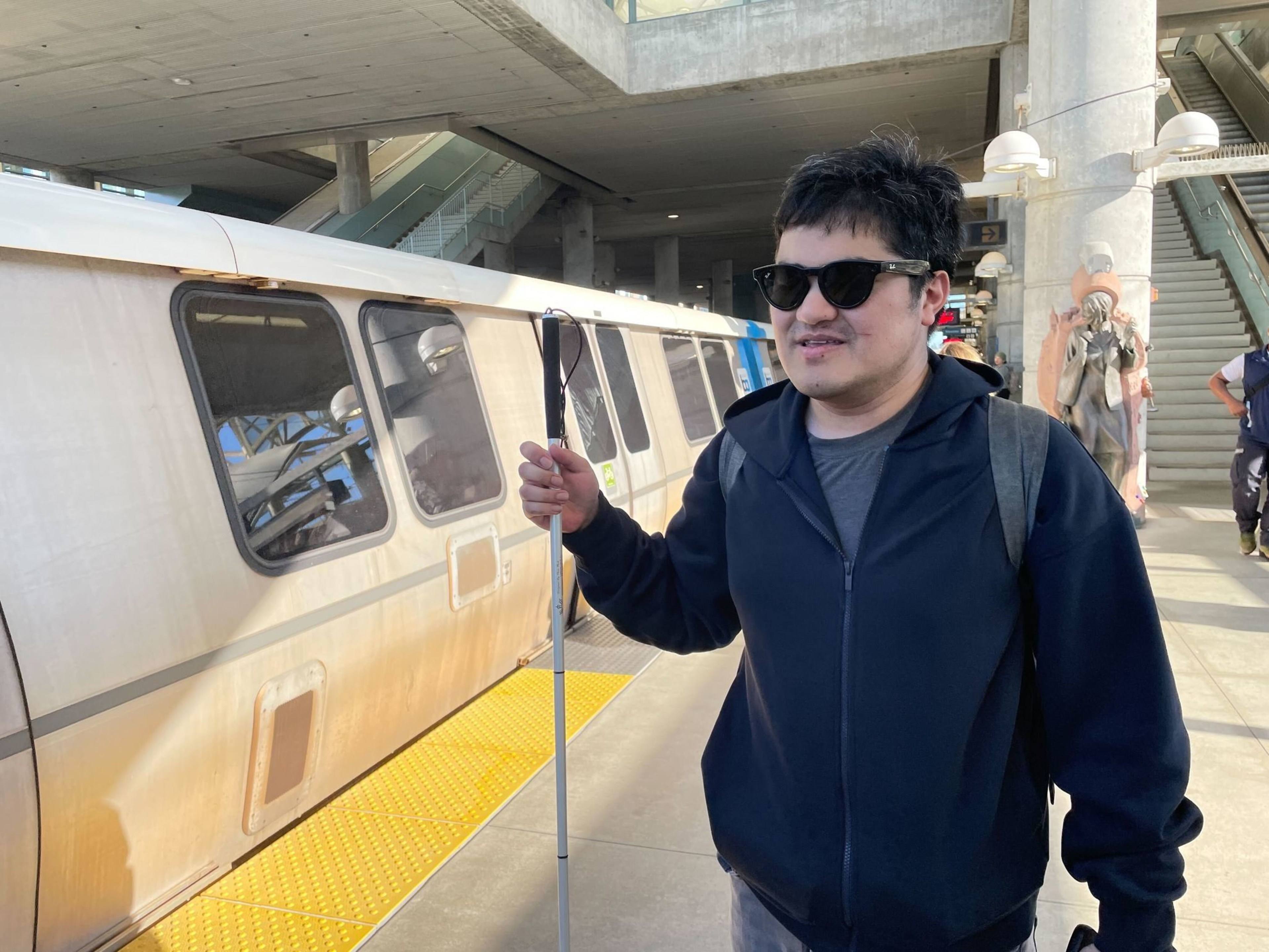 Nikki, who is blind, called the potential closure of Millbrae station a “travesty.” | Source: Garrett Leahy/The Standard
He relies on BART to visit friends in San Francisco two to three times a month. Without BART, he’d have to transfer between Muni and SamTrans, which he said is less convenient, or resort to rideshares, which he said would cost roughly $30 each way.
“BART is always here. It’s safe, it’s dependable, it’s reliable. And having that taken away would seriously be a problem,” he said.