
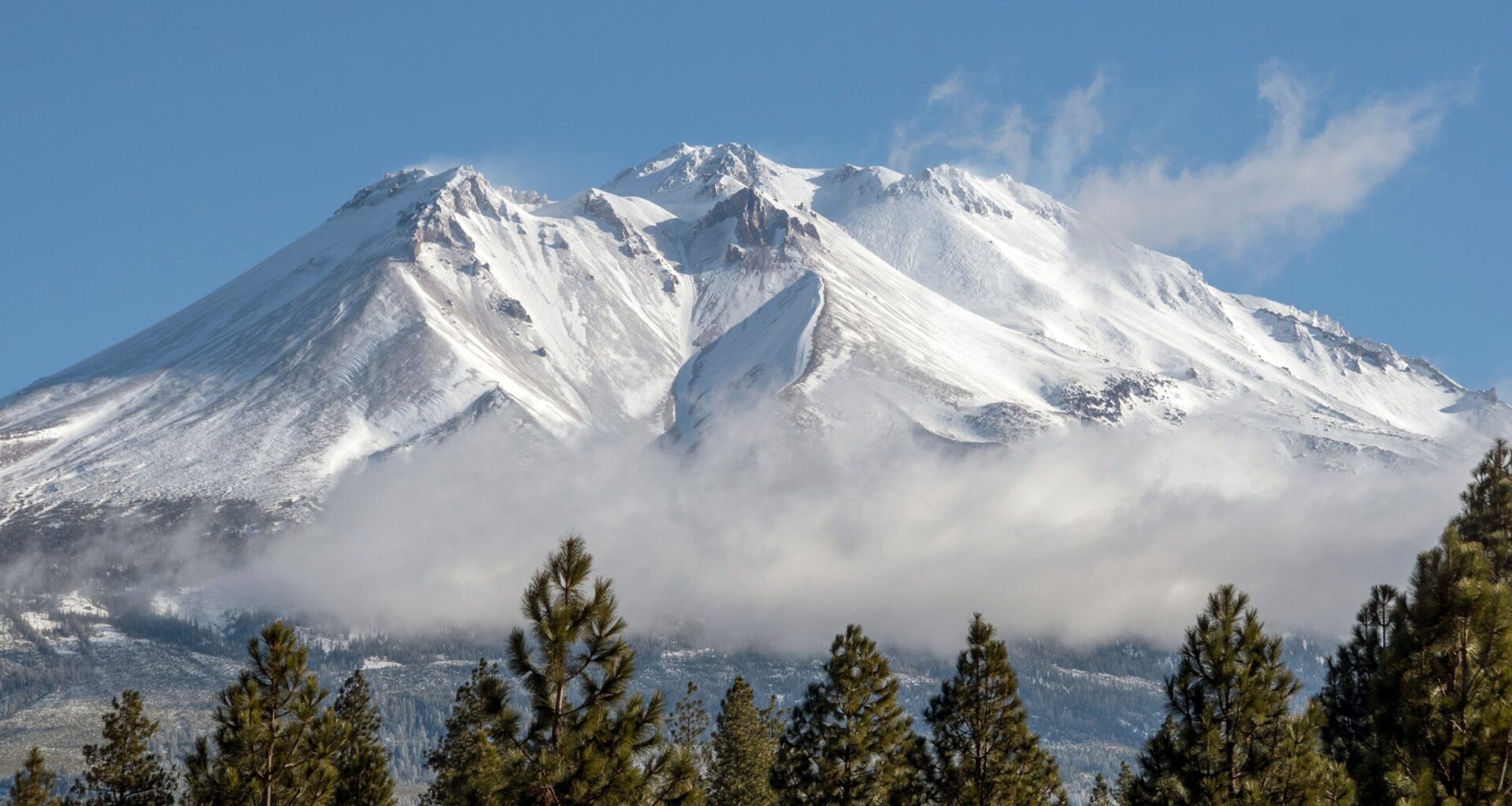
Rescue crews in Siskiyou County, California rescued two budding alpinists, age 19 and 20, after they had an emergency on the legendary volcano
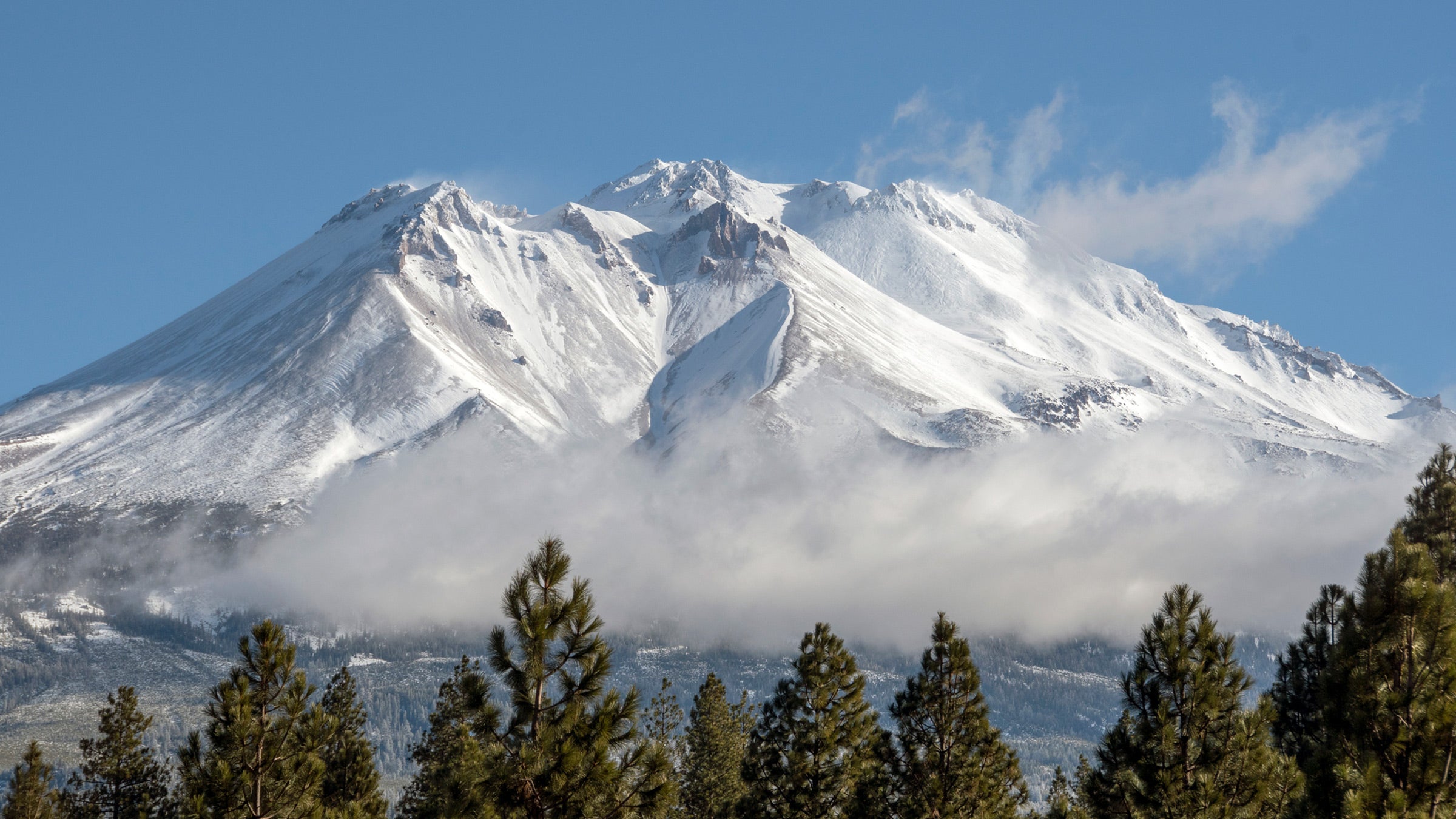
Shasta is a beginner’s big mountain (Photo: NNehring/Getty Images)
Updated March 10, 2026 04:31PM
California’s 14,179-foot Mount Shasta is an ideal classroom for budding alpinists. The stratovolcano rises nearly 7,000 vertical feet above the valley floor, and the top portion of the peak is shrouded in white year-round and ringed by seven different glaciers.
It’s a grueling climb that requires crampons and an ice ax, but not necessarily expertise in a rock climbing gym. And because the mountain is just a four-hour drive from San Francisco, hundreds of climbers flock to the trailhead when the climbing season opens in the spring and early summer.
“Mount Shasta is a beginner’s big mountain,” is how one guiding service describes the peak. “One that requires ample preparation and mental respect.”
On March 9, two young climbers from Santa Rosa, California, were rescued after their expedition to the summit went awry.
According to the Siskiyou County Sheriff’s Office, the two climbers, aged 19 and 20, called for help the previous evening after one of them lost his footing and plunged 700 vertical feet down Avalanche Gulch, the major gully on Mount Shasta’s southern flank.
“In the fall, the climber sustained significant injuries to his shoulder, hand, and ankle and was unable to descend the mountain further,” the report said.
The climber came to rest at an elevation of 11,300 feet. The incident occurred at approximately 5:30 P.M., just as the sun was starting to go down. According to Sage Milestone, a public information officer with the Siskiyou County Sheriff’s Office, the two attempted to descend but couldn’t continue.
“The duo shared that they had intended to summit Mount Shasta in a single day and thus did not bring any overnight gear, extra food, or water,” Milestone said. “They had successfully summited Mount Shasta the previous year via the Clear Creek route, but were novice climbers.”
Milestone said the climbers had crampons, ice axes, and helmets, but the one who fell lost his gear in the tumble.
The SOS call came in at 8:22 P.M., and according to the report, winds had kicked up on the peak’s upper flanks, making a nighttime rescue dangerous.
Eventually, Forest Service rangers, officials from the sheriff’s office, and Siskiyou County Search and Rescue ascended the route and reached the stranded climbers the following morning. According to the report, it was the first Siskiyou County SAR mission on Mount Shasta of 2026 (a previous incident did not require the SAR team).
Climbing season on Mount Shasta typically starts in May, after snowpack on the lower flanks has melted. Milestone said the weak snowfall and comparatively mild winter may entice some climbers to try to ascend the peak early.
But just because the peak isn’t as snowy as normal doesn’t mean that hazards are diminished.
“It may look like climbing conditions because the snowpack looks like where it typically is in May,” she said. “But it’s really icy at the top, and there’s a good potential for a fall above 12,000 feet. That’s why people who have been doing their research have been staying away.”
Milestone said the duo did have proper gear for the ascent—crampons, ice axes, and helmets. But after the rescue, the sheriff’s office published a PSA to all incoming alpinists: bring up the proper gear, extra food and shelter, and extra layers for warmth. Ask the local rangers about conditions higher on the peak. Be prepared to self-rescue in the case of a fall. And time your ascent correctly—climbers should begin to descend no later than noon.
“Those who stay on the mountain in the late afternoon not only risk icier conditions, they also give rescuers more daylight in which to conduct a rescue should anything go wrong,” the statement said.