
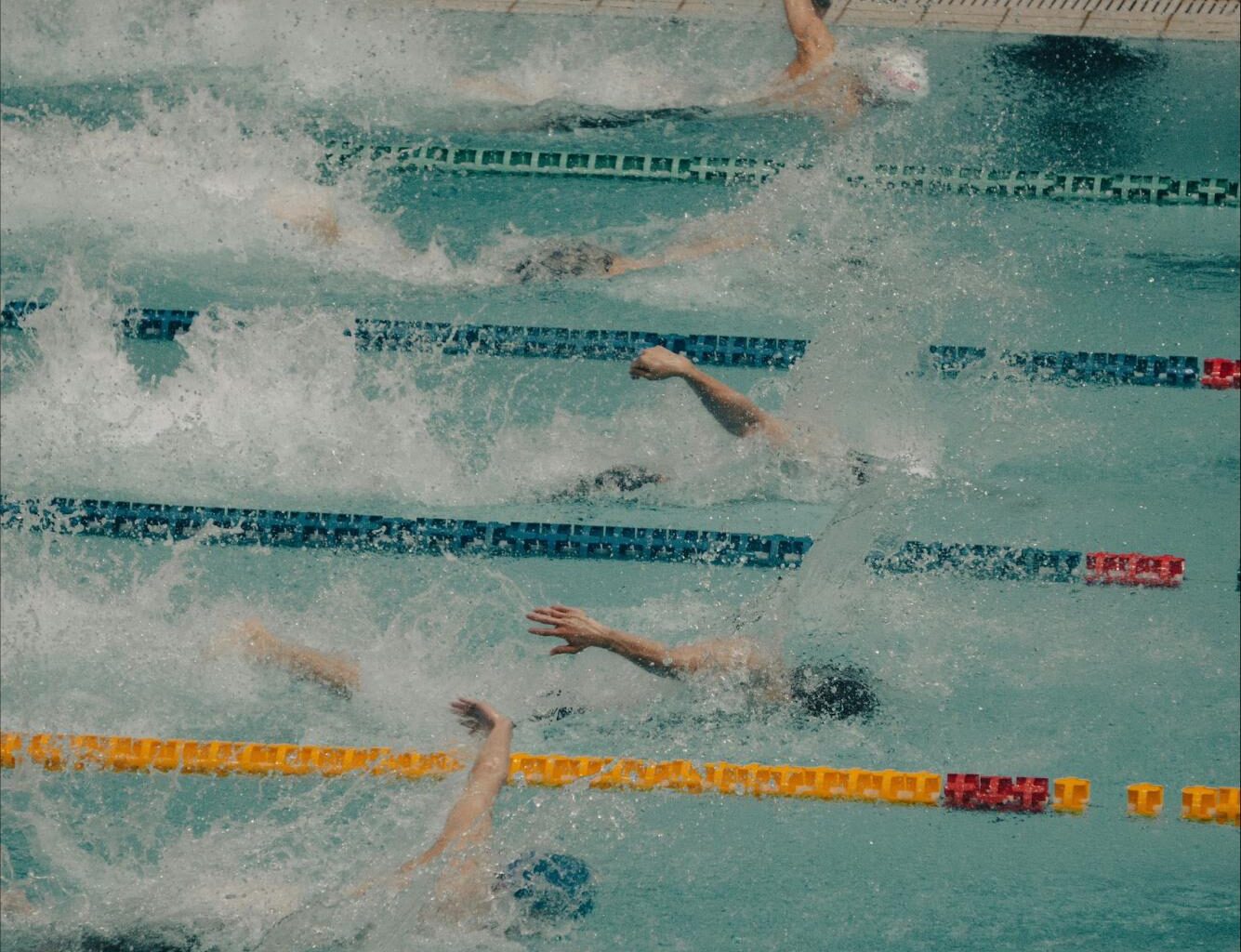
At eight years old, swimmer Viviane Partridge did not bring home the gold at first — but she found her passion.
“I didn’t even win my race, but I touched the wall with a big smile on my face,” Partridge said. “It was so natural to me… it was my calling.”
Swimming stopped being something she simply did and became who she was.
Now a sophomore majoring in psychology at Oakland University, Partridge is a Horizon League champion in the 400 and 800 free relays. She competed in every regular-season meet, finished top three in 14 events, and helped set the school and league record in the 400 free relay with a time of 3:20.09.
Collegiate dominance is one thing.
The Olympics are another.
When Partridge watches the Games now, it feels different from when she was younger.
“As I became a teenager, I understood the reality of it and how difficult it would be to reach that level,” she said. “Some of the women competing are my age.”
The Olympic Games represent the highest level of international competition, bringing together athletes who qualify through performance standards and national trials overseen by their sport’s governing bodies. In swimming, that often means hitting Olympic qualifying times and finishing among the very best at national trials.
Partridge has already stepped into that environment.
At the 2024 Canadian Olympic Trials, she experienced the intensity of swimmers competing for limited Olympic spots.
“The decorum was the most impressive that I have ever experienced,” she said. “People are competing for Olympic standards and a place on the team.”
Behind that stage is a schedule few outside the sport truly understand.
Nine in-water practices per week. Two hours each. Three weight sessions layered in. Tuesday “test sets” where times are recorded and racing suits seek to replicate the pressure of a real championship.
Ice baths after major races, ice packs after difficult sessions and equipping Normatec boots to flush lactic acid from her legs are all key elements of the preparation strategy.
“Recovery is an essential part of getting stronger and faster,” Partridge said. “Olympic-level athletes will have mastered their recovery routine.”
Head Golden Grizzlies swimming and diving coach Mitchell Alters said the difference between a strong NCAA swimmer and an Olympian is not just talent.
“Athletes must be willing to make sacrifices to achieve greatness,” Alters said. “Very good athletes dream of being there, but Olympians know they can be there and will do whatever it takes.”
The commitment extends year-round.
“There is no offseason for an Olympian,” Alters said. “It takes 24/7 commitment.”
For Partridge, that has meant missing social events, always meeting early mornings and pushing through fatigue when necessary.
“I think every athlete can relate to the amount of times we had to give up on different things,” she said.
When doubt creeps in, she returns to what she knows.
“I focus back on my training.” Partridge said. “I trust my training.”
The Olympics are not a fantasy for her. They are a benchmark.
And while only a small percentage of swimmers ever reach that stage, the pursuit itself has consistently reshaped her habits, priorities and identity.
“It takes trust, patience and determination,” Partridge said. “Nothing will come in one day.”
Her pursuit begins with first making contact at the finish, knowing she had found where she was meant to be and choosing, every day since, to keep going.