
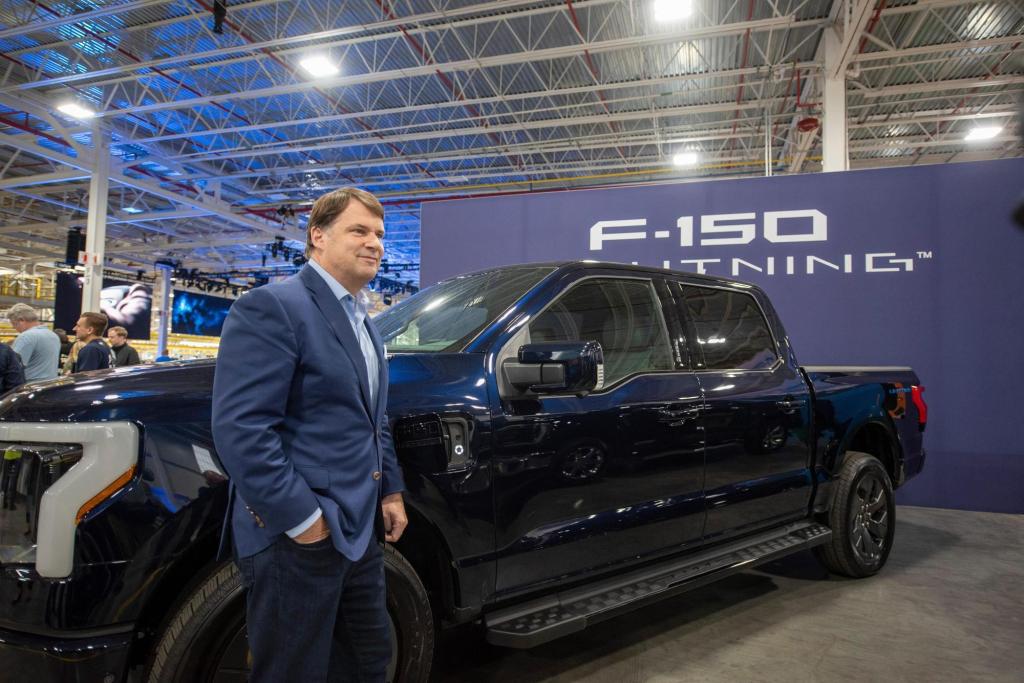
There are few things that California politicians and bureaucrats will not tax, subsidize, mandate, regulate and politicize, particularly if such a thing can be connected to environmental policy. The type of car you drive squarely falls within this rubric, as evidenced by Gov. Gavin Newsom’s new electric vehicle incentive proposal.
California policymakers have long had a fascination with zero-emission vehicles. In 2020, Newsom famously decreed, through an executive order, that all new gas-powered vehicle sales in the state would be banned by 2035. The California Air Resources Board formalized this policy in a rule adopted in 2022. Last year, Congress passed, and President Donald Trump signed, a joint resolution that nullified the rule.
Now Newsom has proposed a $200 million incentive program to encourage more people to buy zero-emission vehicles. The proposal would require automakers to match state incentives on a dollar-for-dollar basis. The subsidies would only be available to first-time buyers purchasing passenger vehicles priced up to $55,000; vans, SUVs and pickup trucks up to $80,000; and used vehicles up to $25,000.
But the government should not be taking taxpayers’ money and giving it to some preferred group to purchase a particular product. Officials are welcome to try to persuade Californians of the merits of electric vehicles, but they should never resort to coercing others to adopt their preferences or ideologies through government force — whether through the soft nudge of subsidies or the hard shove of banning the sale of certain types of vehicles altogether.
The logic of the incentive program is dubious, as is the timing of the measure. The incentives will only make a difference for a small percentage of transactions at the margins, for people who would like to purchase a zero-emission vehicle but just barely cannot afford it, or some of those choosing between a gas-powered vehicle and a similarly-priced electric vehicle. Most of the money would simply end up subsidizing wealthier people who would have gladly paid $55,000 — or $80,000 — for an electric or hybrid vehicle anyway.
Furthermore, electric vehicles have environmental problems of their own, including the mining of EV battery materials, battery disposal, the fact that much of the electricity used to power vehicles comes from fossil fuels and the 20% greater air pollution from particulate tire matter compared to gas-powered vehicles, due to electric vehicles’ added weight. Then there are the implications of having to constantly recharge millions of additional electric vehicles, given California’s already shaky electrical grid.
The timing of the proposal is also questionable, given the state’s current financial straits. California’s nonpartisan Legislative Analyst’s Office estimates that the state will face an $18 billion budget deficit next fiscal year, which begins July 1, and expects the structural deficits to grow to $35 billion annually by the following year.
“Newsom is scrambling to force Californians into electric vehicles ahead of his presidential run,” state Senate Minority Leader Brian Jones, R-Santee, told the Union-Tribune. “Now he wants to spend $200 million more in the middle of a $35 billion budget crisis created by overspending on blue sky delusions just like this.”
If that was not enough, the incentive program comes at a time when automakers are responding to consumer demands and radically shifting course away from electric vehicles in favor of gas-powered and hybrid vehicles. Even in California, zero-emission vehicle registrations and market share declined in 2025. This was accelerated by the expiration of the $7,500 federal tax credits on Sept. 30, though demand was flagging well before then.
As a result, major automakers such as Ford, General Motors and Stellantis (maker of brands such as Chrysler, Dodge, Fiat, Jeep and Ram) have lost a combined $55 billion on electric vehicles over the past few years and discontinued a number of EV models.
Ford has lost more than $16 billion on electric vehicles since 2022, and it projects an additional loss of between $4 billion and $4.5 billion in 2026, with losses expected to continue until 2029.
“So I think the customer has spoken. That’s the punchline,” Ford CEO Jim Farley deadpanned during an earnings call last month.
But will California allow those voices to be heard? Or will Democratic lawmakers and unelected bureaucrats continue to coerce and dictate which products the unwashed masses should be allowed to use?
Californians would be better served by leaders and representatives who ensure that roads are safe and well maintained, rather than the current crop, who wring their hands over how the vehicles that drive on those roads are powered.
Summers is a columnist, economist and public policy analyst, and a former editorial writer for the Orange County Register / Southern California News Group. He is also editor and co-author of “Beyond Homeless: Good Intentions, Bad Outcomes, Transformative Solutions.”