
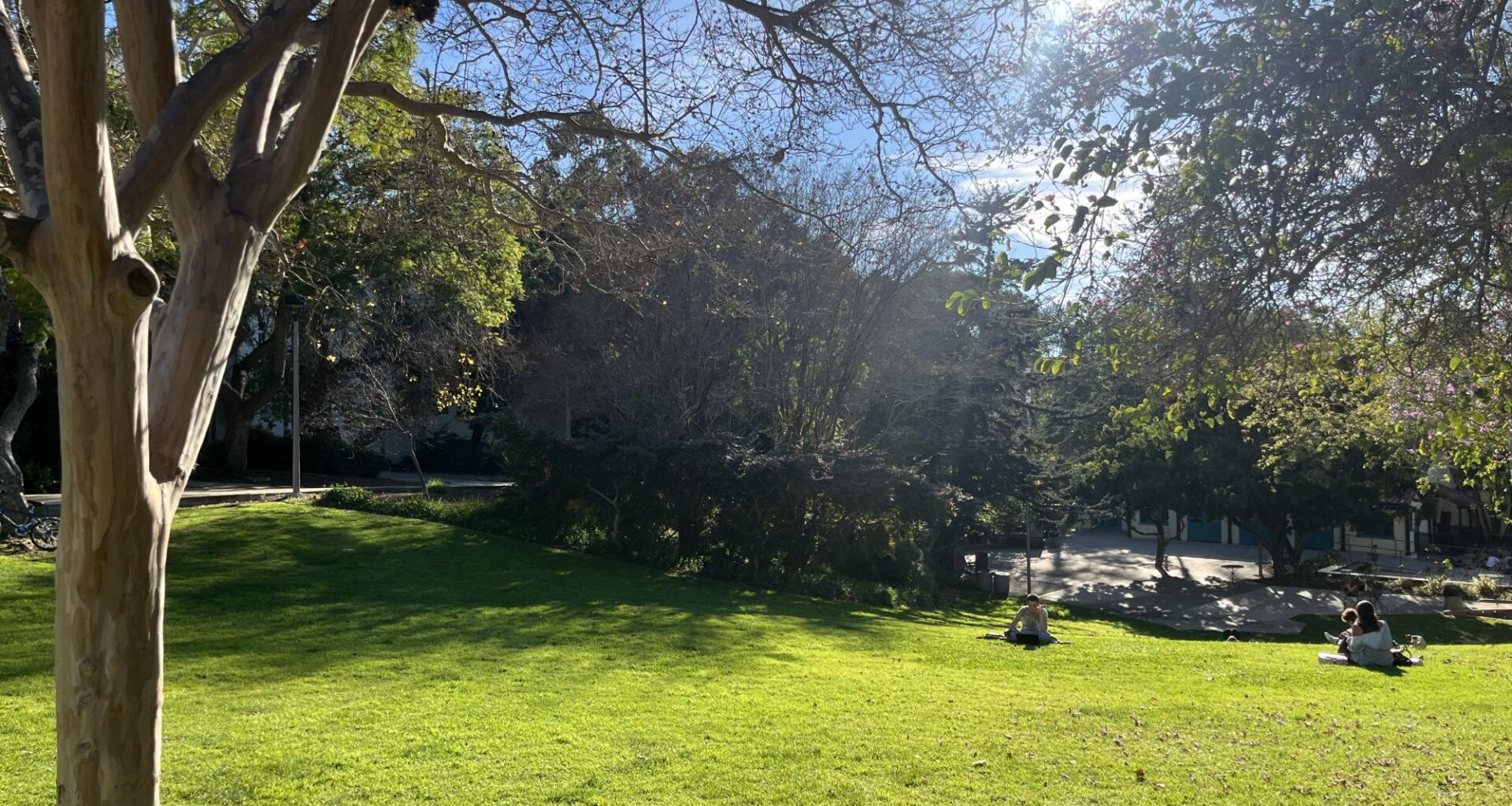
Walking around SDSU’s campus, it is hard to miss the variety of outdoor spaces the school offers. These spaces, such as the recreation fields, quads, plazas, student union and turtle pond, add a natural aesthetic to the campus that many students and faculty have experienced.
More than a visual feature, these areas serve a deeper purpose to the SDSU community. Students who have used these outdoor spaces have shared that they have experienced the benefits to their well-being and academics firsthand, gaining a deeper appreciation for them beyond the visual appeal of their greenery.
“It’s this free, open area where I can let my thoughts be free, and just flow. I’m not feeling as though I’m confined, I have room to breathe and even just reflect on how beautiful this world can be,” said Clarence McDuffie, a junior majoring in music performance.
Other students hold a similar appreciation for the outdoor environment presented in these third spaces and the easy access to them around SDSU, even if they have not made use of the spaces often.
Story continues below advertisement
“It’s nice to have a space that’s open and connected with the environment that people can come meet and spend time together and get work done – just having a good spot that’s more open and not inside a classroom or in the library,” said Dylan Chappel, a freshman studying civil engineering.
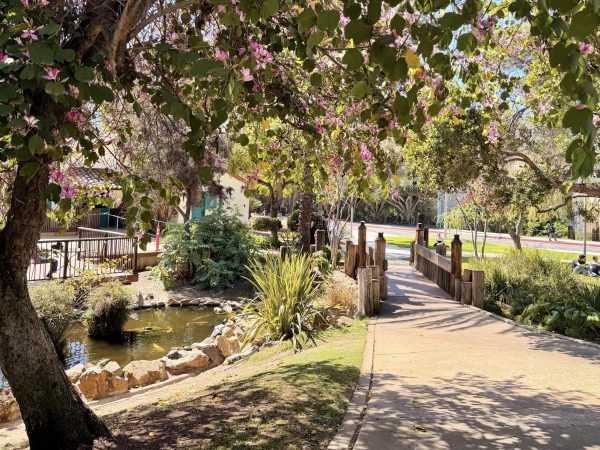 The SDSU Turtle Pond (Felicity Desuasido)
According to the Albert Shanker Institute, third spaces have academic, behavioral and social benefits for a community, serving as places where people can interact, study and engage in physical activity. The benefits of these outdoor areas have been observed in human communities for centuries, even dating back to Grecian society.
“There’s the idea that goes way back to Greek city-building. The Greeks, particularly in Athens, believed that the greatness of public places was that they were democratic spaces where strangers could meet in a public place and feel comfortable being there,” said Lawrence Herzog, former SDSU professor of urban planning and environmental design. “We feel alive because we’re in that place, it makes you feel a part of the community.”
Marc Dayon, an urban planning, design and management major, had even conducted his own research into green third spaces on campus and their effect on college students.
In the project, he created a survey linked to a mapping program and had students participate in it from three different environmental conditions: the library for indoor, the turtle pond for natural outdoor and the student union for artificial outdoor. Dayon gathered his data in the survey by asking students to rate their emotions from 1 to 7 in several categories.
“The biggest takeaways were that in the turtle pond, which was a 100% natural environment surrounded by tree canopy, students reported much less negative emotions such as anxiety, boredom, sadness and stress. For example, in the library, students reported an average stress of 5.28, and in the pond, the average stress was 3.15,” Dayon said.
Other documentary sources support this as well, such as statements on the Environmental Protection Agency’s website that claim green spaces help to reduce mental fatigue and/or stress, as well as provide natural vegetation to urban areas that would otherwise be deprived of it.
Access is critical for a community to be able to reap the benefits of these outdoor third spaces. When access to these spaces is limited or eliminated, their loss is felt by the community.
Fewer third spaces mean fewer areas to interact with others and stimulate social activity, exacerbating antisocial behavior and individual stress.
“Cognitive health is a big issue, and I think people’s sense of well-being is taken away without access to natural greenery and space,” said Bruce Appleyard, professor of city planning and urban design at SDSU. “It’s a very important thing to have access to.”
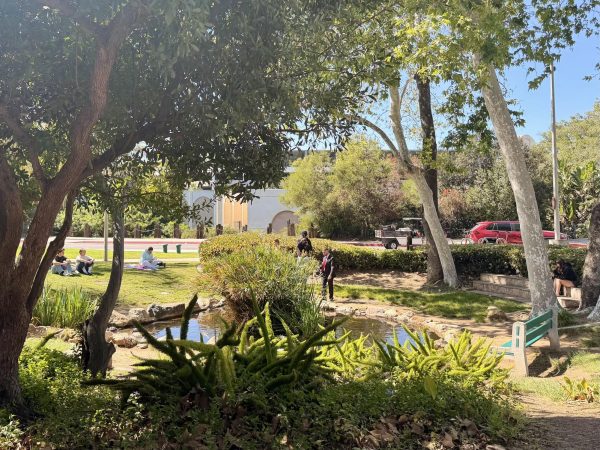 Students enjoy the scenery at the SDSU Turtle Pond (Felicity Desuasido)