
Joseph said the department has never shared data with federal immigration authorities — which would be illegal under California law — and that the manufacturer has disabled that capability statewide.
An independent audit found no unauthorized access or suspicious activity, according to the city’s Chief Information Officer Khaled Tawfik.
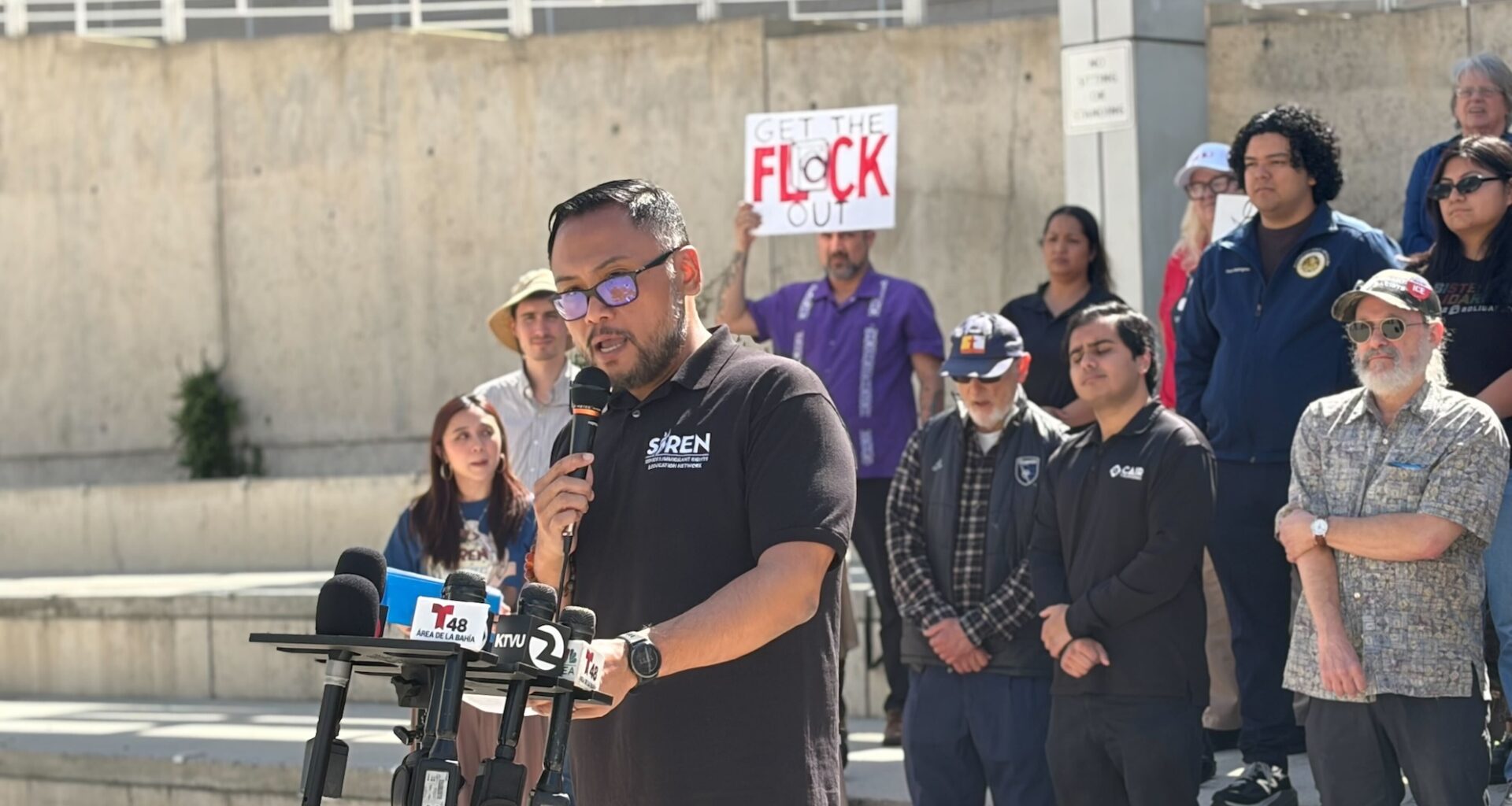
But advocates say restricting the cameras is not enough — they want the city to end its Flock contract entirely. Kimberly Woo, an organizer with the Services, Immigrant Rights and Education Network, said no policy can fully protect residents from what she called the “dangers of mass surveillance.”
“We must refuse to give this authoritarian federal government any AI mass surveillance weapon that will and has already been used to hunt our neighbors,” Woo said at a rally outside City Hall before the city council’s vote.
Late last year, SIREN and the Council on American-Islamic Relations filed a lawsuit against the city over its use of the cameras. Advocates warned that the data could be used to track residents visiting mosques, immigration legal clinics or health care facilities.
 San José Mayor Matt Mahan helps to install a Flock Safety brand automated license plate reader on April 23, 2024. The city and Mahan are now being sued by civil liberties groups over the technology’s uses. (Joseph Geha/KQED)
The coalition is calling on the city to permanently end its Flock contract, halt all license plate reader operations until an alternative vendor is found, require judicial warrants for all data searches and establish a quarterly independent audit process.
During the council discussion, Mayor Matt Mahan defended the city’s approach, arguing San José had been ahead of other cities in establishing privacy protections before Tuesday’s additional recommendations.
“I personally believe from everything I have read, seen, studied and discussed that we’ve struck the right balance here,” Mahan said.
The council approved two additional memos related to the Flock contract. A brief authored by Councilmember Domingo Candelas and four colleagues directs the city manager to explore alternative vendors, prohibits facial recognition integration and adds consulate and embassy offices to the list of sensitive locations where cameras cannot be placed.
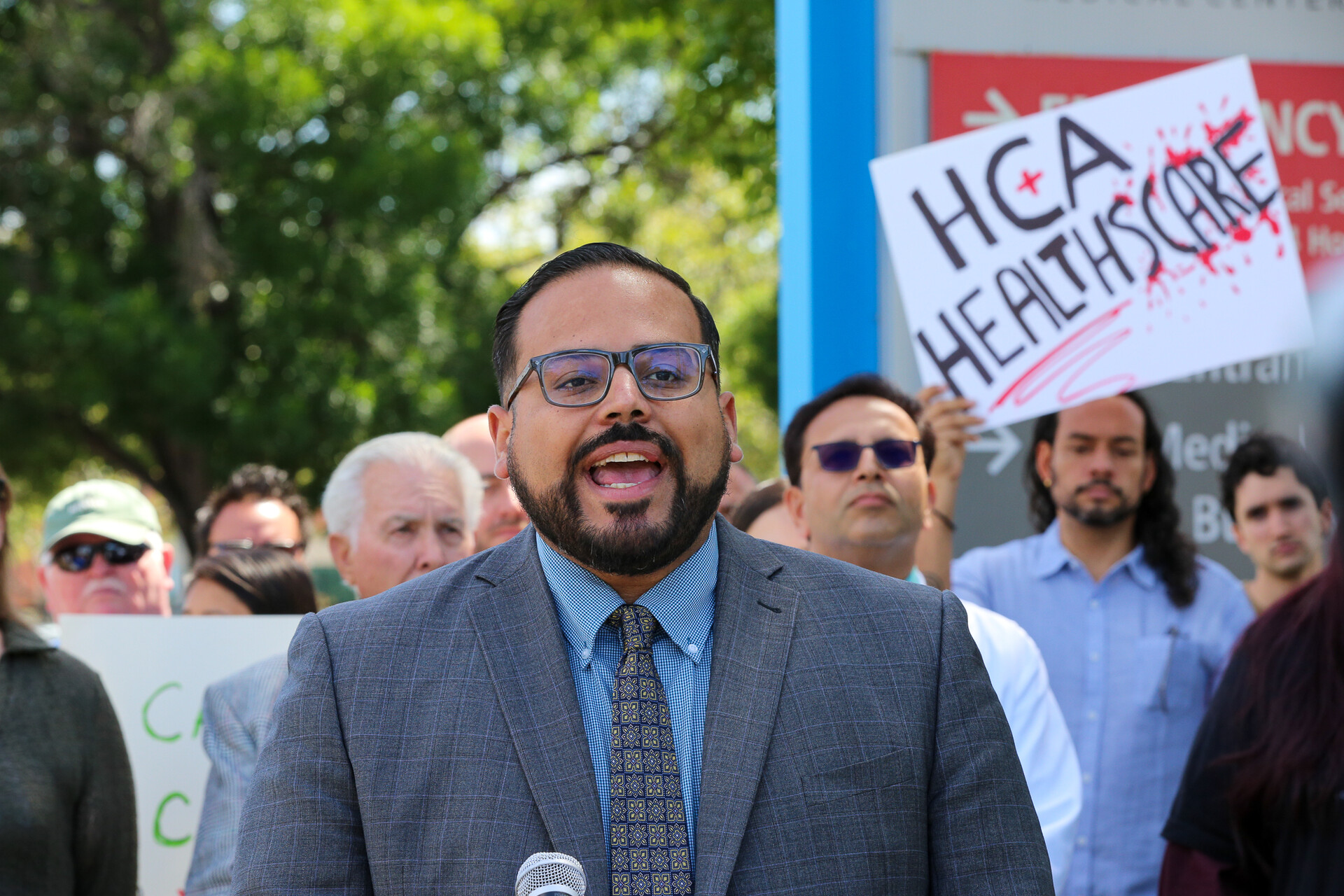 San José City Councilmember Peter Ortiz speaks during a rally outside of Regional Medical Center in East San José on May 24. Ortiz and others called on Attorney General Rob Bonta to halt service cuts planned by the hospital’s ownership. (Joseph Geha/KQED)
A separate memo from Councilmember Peter Ortiz expanded placement restrictions to include facilities that primarily offer gender-affirming care. During the meeting, Ortiz went further, saying the city should end its Flock contract entirely.
“My concern is not with ALPR technology itself; my concern is with Flock Safety as a vendor,” Ortiz said. “Honestly, I believe we should end our contract with Flock today.”
Ortiz noted that the contract comes up for renewal each June, meaning the council could opt not to extend it. The contract otherwise runs on annual extensions through 2034 before a new competitive bidding process would be required.