
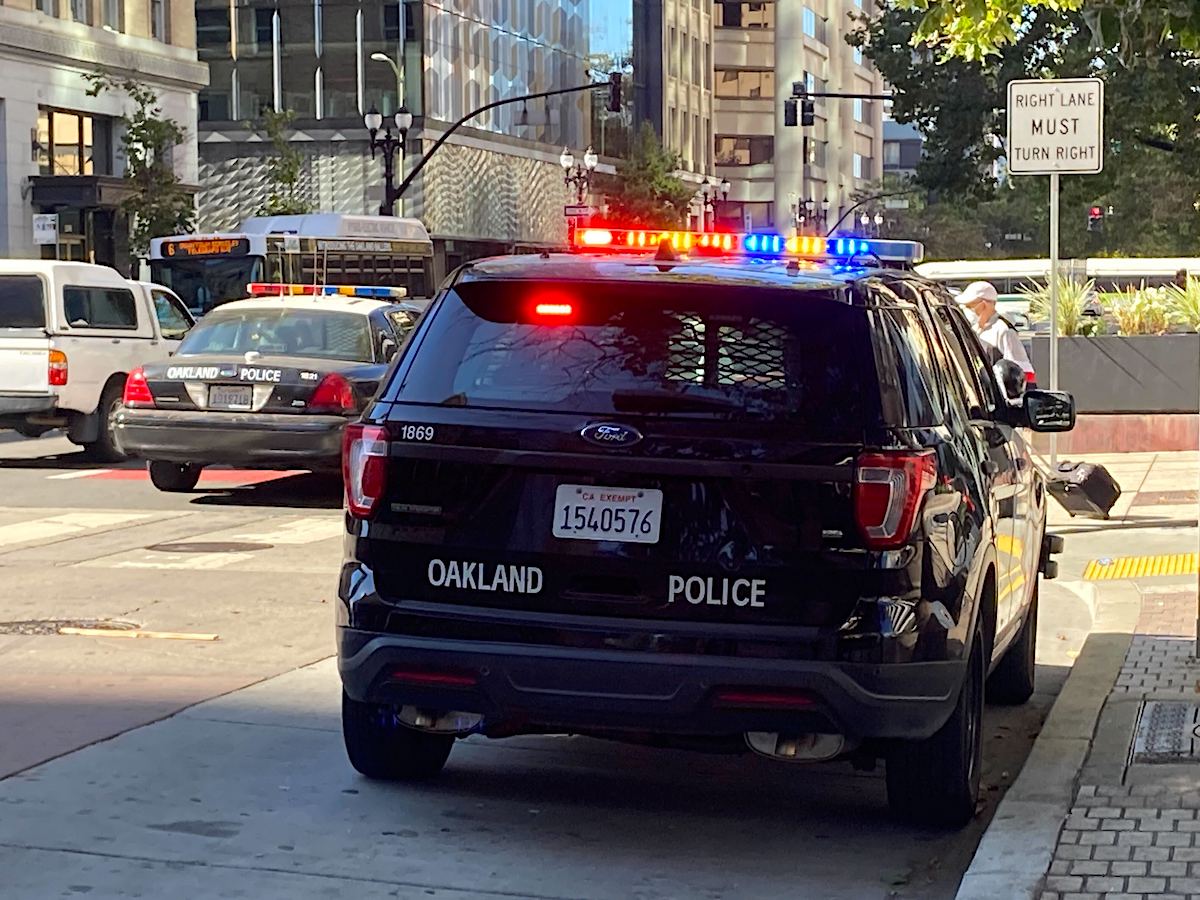
Interim Police Chief James Beere has ordered significant changes to OPD’s overtime policies aimed at improving checks and balances.
At a meeting of the City Council’s Finance and Management Committee on Tuesday, Beere said he issued a special order in mid-February, cancelling all discretionary overtime spending — meaning officers wanting to use unbudgeted overtime will need approval from the chief’s office.
Beere also said he is requiring officers to better track their overtime shifts and requiring transparency on the highest and lowest paid department staffers.
The attempts to rein in overtime use followed Oaklandside’s investigation of one officer’s nearly $500,000 overtime payout in 2024. The officer’s pay records revealed major gaps in OPD’s recordkeeping and problems with how the department manages overtime.
Beere said he was personally concerned about OPD’s difficulties in managing overtime spending.
“I live here, I’m raising my kids here. I’m a taxpayer, so it affects me,” Beere told the councilmembers. “I want to have the best systems online for our department to be successful so we can properly track it.”
No way to accurately track overtime spending
Historically, OPD has overspent by millions of dollars every year on overtime.
OPD has cited two central problems as drivers of runaway overtime spending: its staffing shortage and its lack of a real-time, digitized tracking system.
City officials have been rallying to hire more officers, and the department is in the process of trying to institute a new digital tracking system; however, the system is unlikely to go online until at least December of next year.
In the meantime, Beere said the department’s commanders need to step up to make sure OPD is getting overtime use under control.
“We have to hold our commanders responsible for ensuring the supervisors are monitoring and properly supervising the officers, all the way from the bottom to the top.”
The special order Beere implemented last month cancelled all discretionary overtime — meaning that officers and commanders can no longer work extra, unplanned overtime hours without approval from the chief and, in some cases, the city administrator.
The special order marks a departure from the status quo. According to the department’s overtime policy, officers were usually not required to get approval from supervisors before extending their shifts, raising concerns about accountability and runaway overtime hours.
Now, officers need approval before extending shifts — except in the cases of critical incidents, such as homicides.
“Officers cannot just arbitrarily start working overtime and close out cases on their own without having approval through the chain of command,” Beere told the committee.
Beere’s order also mandates that when commanders want to allocate additional, unbudgeted overtime to certain areas of the city, they need to back up the need with data, like crime rates or numbers of citizen complaints.
Beere also said he wants the department to be able to fully track what officers are doing when they work overtime, which OPD has long been unable to do. Our recent reporting revealed, for example, that one OPD officer was paid for working over 3,300 hours of overtime in 2024, but the department was unable to provide documentation for almost half of these hours.
Now, though, Beere said officers must email their supervisors after overtime shifts explaining their duties, to ensure a record exists even when the required overtime forms go missing.
Some Councilmembers were encouraged by the changes the department is implementing, but they also raised concerns about how far the department still has to go.
Councilmember Charlene Wang said she is concerned about the extreme overtime hours some officers work. She suggested the department provide regular reports to the council on how many officers work dangerously long hours.
Wang also voiced unease about the timeline for the new scheduling system’s implementation. A digitized scheduling system was slated for implementation in 2024, but after complications arose with the contract, the project was abandoned.
“It’s a good first step,” Councilmember Rowena Brown told The Oaklandside about Beere’s special order. “But I am 100% waiting on the digitized tracking system.”
Wang asked Beere and City Administrator Jestin Johnson if they were confident the new system wouldn’t face undue delays. Both were reluctant to make any promises.
“I don’t know what at all the vendor would have to reconstruct to fit into this antiquated financial system that we have here in the city of Oakland, unfortunately,” said Johnson. “I have to be honest with you all, that’s something to keep in mind that may cause some delays — or not.”
“*” indicates required fields