

A decade after Google began buying land for its ambitious $19 billion Downtown West megacampus in San Jose, block after block of the milelong industrial corridor sits empty, wrapped in chain-link fencing.
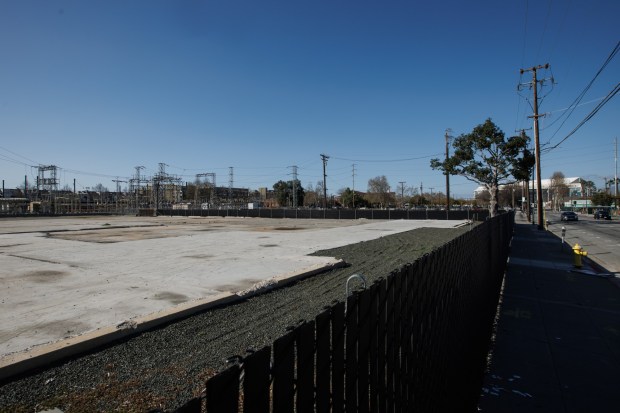 An empty lot on South Montgomery Street in San Jose owned by Google is seen March 4, 2026. In the company’s master plan, the site was envisioned as multi-story office space as part of a new mega campus. (Dai Sugano/Bay Area News Group)
The Orchard Supply Hardware store, where Google once planned high-rise housing next to its new offices, sits shuttered in a vast empty parking lot. Along the barbed-wire fence, a small homeless encampment has begun to creep in.
This 80-acre stretch of property was supposed to become the centerpiece of a once-in-a-generation plan to transform San Jose’s urban core.
Construction should have been in full swing by now.
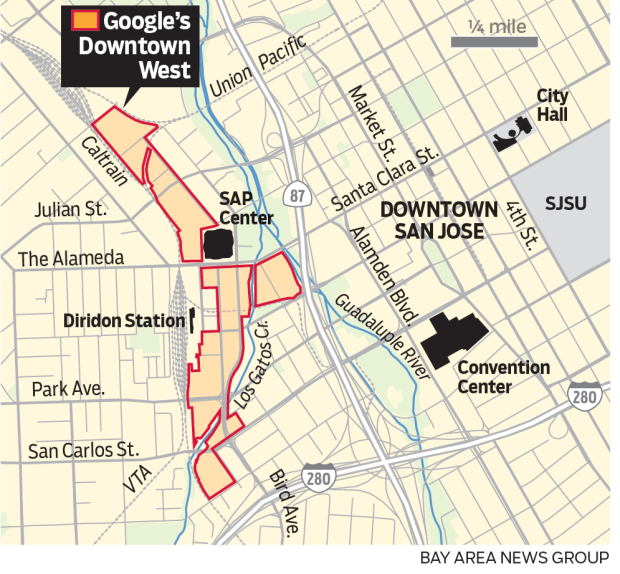 Crews and cranes would be erecting 7 million square feet of offices for a Google campus anchored at Diridon Station. Nearly 6,000 housing units would rise alongside shops, hotels, restaurants and 15 acres of riverfront parks stretching from SAP Center to Interstate 280.
It would have been the largest transformation of San Jose’s downtown in decades a sweeping partnership between public land and private capital meant to reshape the city’s economic future.
“It was everything that urbanists dream of,” said Russell Hancock, CEO of the think tank Joint Venture Silicon Valley. “It was jobs. It was housing. It was retail. It was fun. It was all of those things.”
Demolition had already begun when Google paused the project three years ago, leaving much of the site as flattened slabs of concrete and empty asphalt parking lots.
Google and city leaders have offered few public answers about what will ultimately rise here, whether the promise of 25,000 Googlers living and working downtown will materialize, or whether some entirely new vision, such as a sports and entertainment district recently floated by Mayor Matt Mahan, could take its place.
But the terms of the deal that created Downtown West — and what’s already happening across the site — offer clues about what may come next.
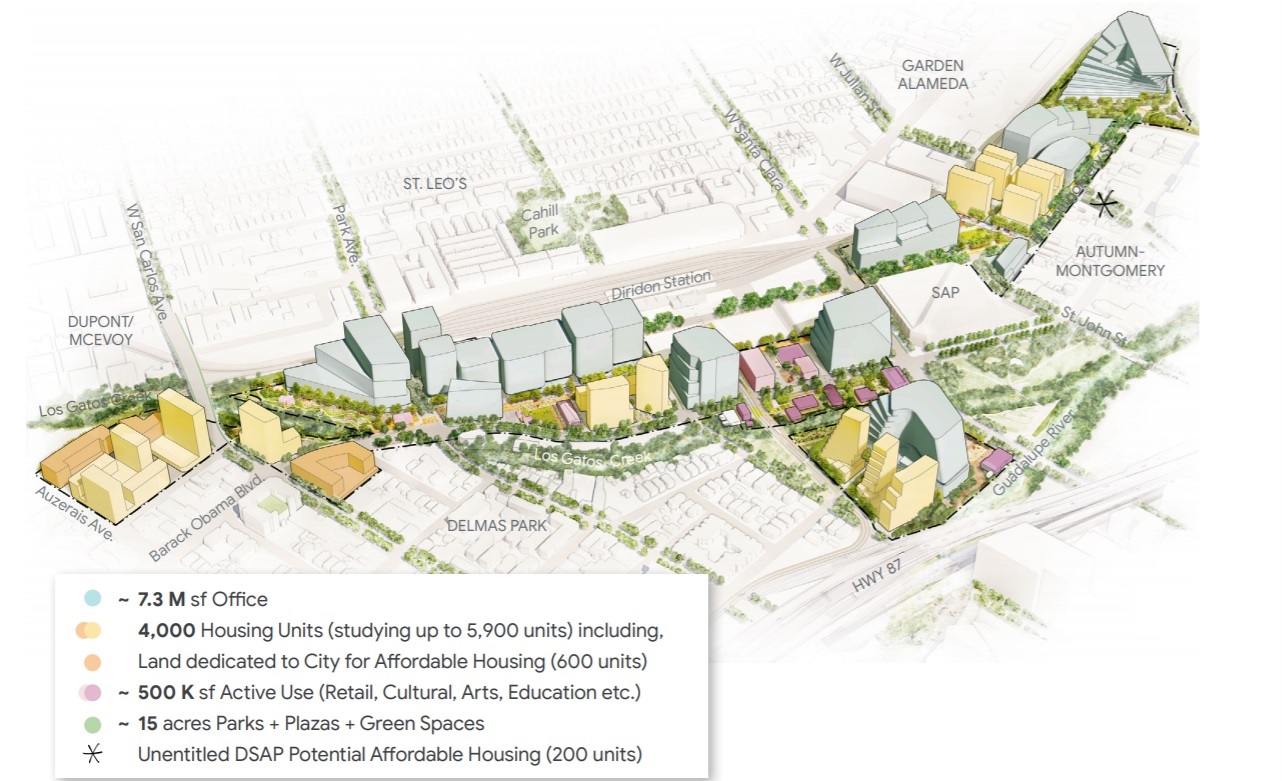
Downtown West site plan submitted in 2021, showing general locations for offices, housing, active uses, and open spaces.
San Jose has little power to force Google to build anything at all. After selling 16 city-owned parcels at one of its most strategic downtown sites, the city now has few legal tools to compel development and no clear timeline for when construction might begin.
A nearly 700-page development agreement approved unanimously by the City Council in 2021 included no penalties if the project never moves forward. Google pledged as much as $200 million for community programs, with most of that money released as construction milestones are reached. If Google never builds anything, it would be required to contribute only about half of that amount.
“It was everything that urbanists dream of.”— Russell Hancock, Joint Venture Silicon Valley
For some downtown business owners who expanded their operations expecting a surge of new workers and residents, the prolonged standstill feels like a betrayal — and raises new questions about who ultimately controls the future of downtown San Jose.
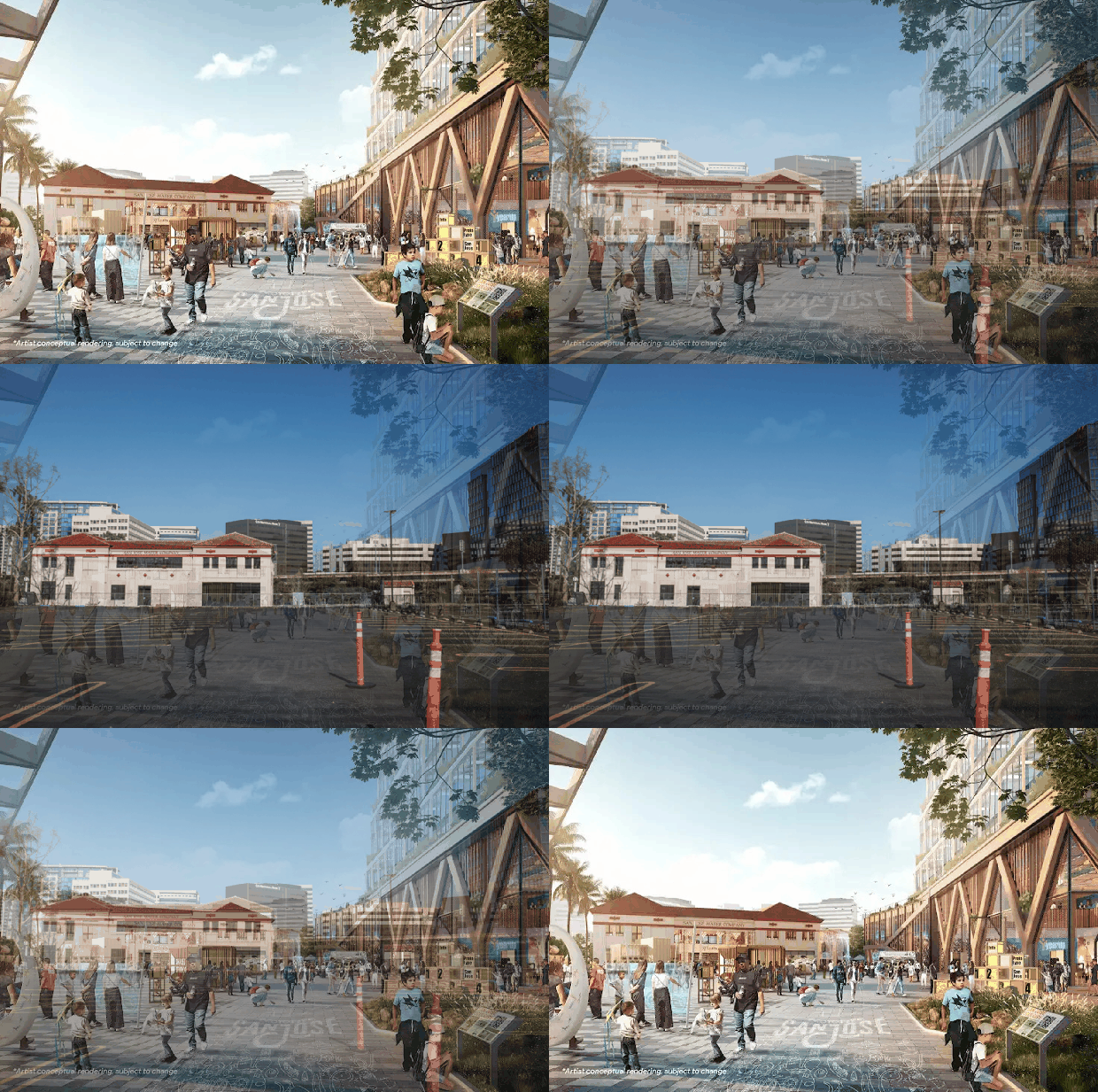 The historic two-story San Jose Water Co. building, now owned by Google, and the adjacent parking lot at West Santa Clara Street and Delmas Avenue in San Jose are seen March 5, 2026. A Google rendering shows what the site could have become under the proposed Downtown West development. (Google rendering and Dai Sugano/Bay Area News Group)
A downtown left waiting
“It’s kind of wrong. They’re sitting on (all these) acres right now and no one’s calling them out,” said David Mulvehill, a partner in several restaurants in nearby San Pedro Square, including The Pressroom, which opened last year. “Everyone’s tiptoeing around it, and we all know that they’re not developing it anytime soon, certainly not anytime within their time frame, and possibly never.”
Google may have begun the project with good intentions, Mulvehill said. But today, he added, “it’s choking up businesses downtown. It’s really a chokehold on the city.”
Kelly Snider, a San Jose State University professor and urban planning expert who has done a “deep dive” with her students into the Downtown West development agreement, said the city left itself with little recourse.
“Google doesn’t have to do anything ever, really,” Snider said. “They purchased all the property. They own it. They’re paying their property tax on it. That’s all you have to do legally to own property — and I have heard zero about them starting any of it.”
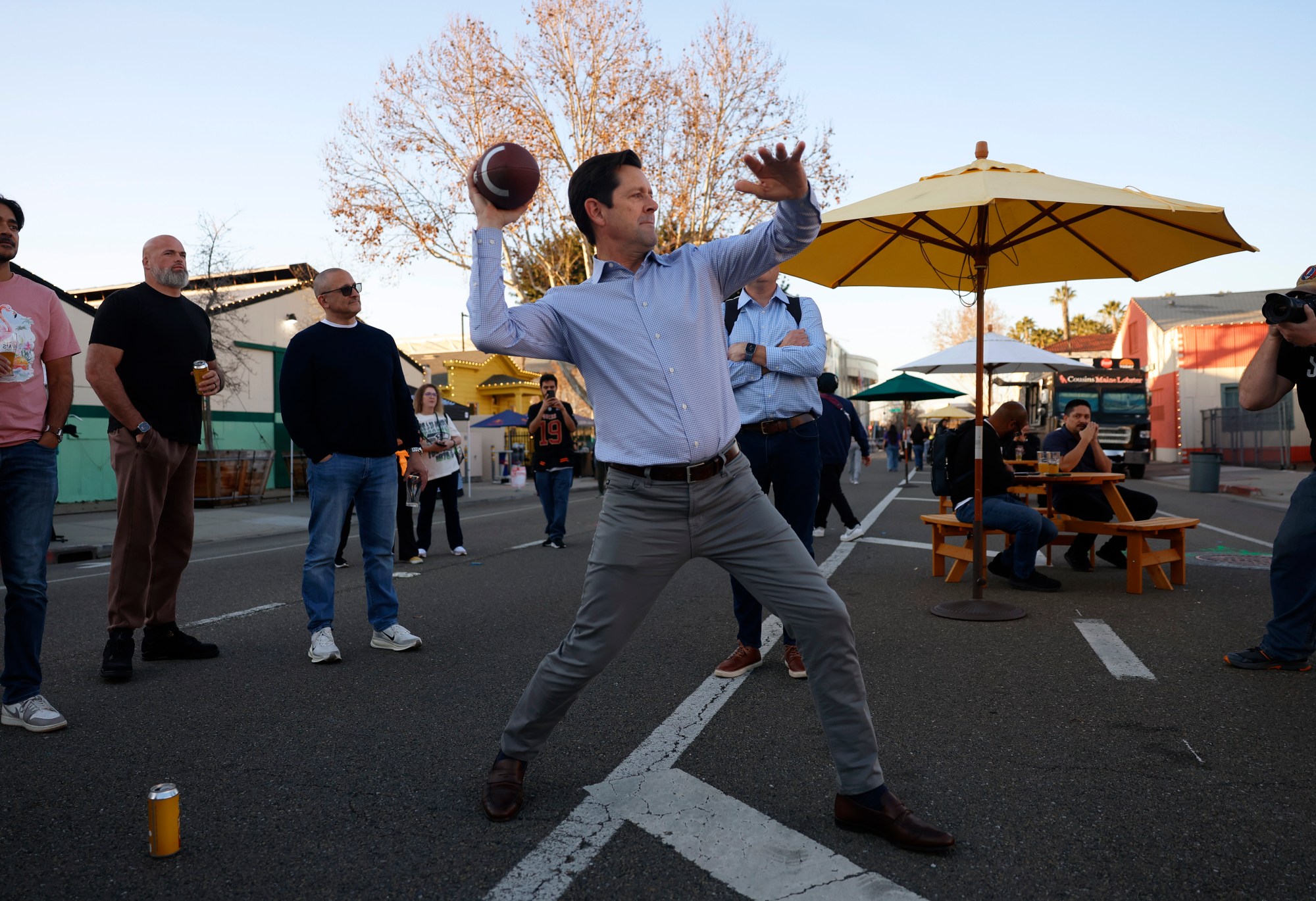 San Jose City Council member Michael Mulcahy throws a football at a target at The Big Game Block Party on Barack Obama Boulevard in downtown San Jose, Calif., on Wednesday, Feb. 4, 2026. (Nhat V. Meyer/Bay Area News Group).
After buying more than 80 acres for nearly half a billion dollars, Google once expected “major construction” to begin between 2025 and 2027. Now the plan appears to be back on the drawing board.
“Will it be different than what Google originally planned? I think we can both guarantee it will be different,” said San Jose City Council member Michael Mulcahy, who was elected last year and represents the Downtown West area. “But I don’t think either one of us knows at this moment how different or what it exactly will be.”
To keep the land active while discussions continue, Google partners have leased several old warehouses still standing — including to artists, a thrift shop and a doggie day care — and hosted pop-up events such as a Super Bowl block party at a temporary beer garden.
Last month, a San Francisco company signed a five-year lease to operate food trucks, fire pits and mini-golf on a 75,000-square-foot stretch of asphalt near the center of the development footprint — another sign, Snider said, that construction on a major new project is unlikely to begin there anytime soon.
A $19 billion promise
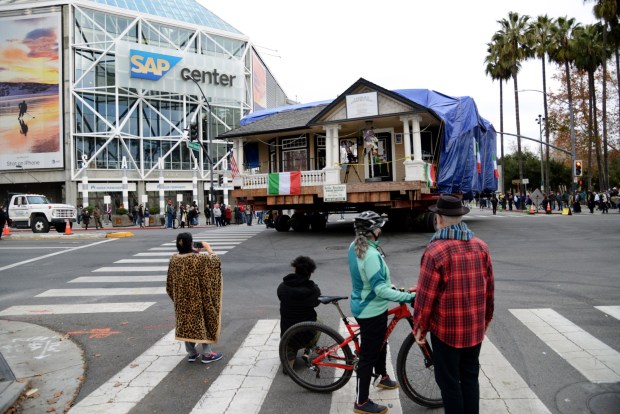 The Poor House Bistro moves slowly past SAP Center toward its new home in San Jose’s Little Italy neighborhood, Jan. 8, 2022. (Karl Mondon/Bay Area News Group)
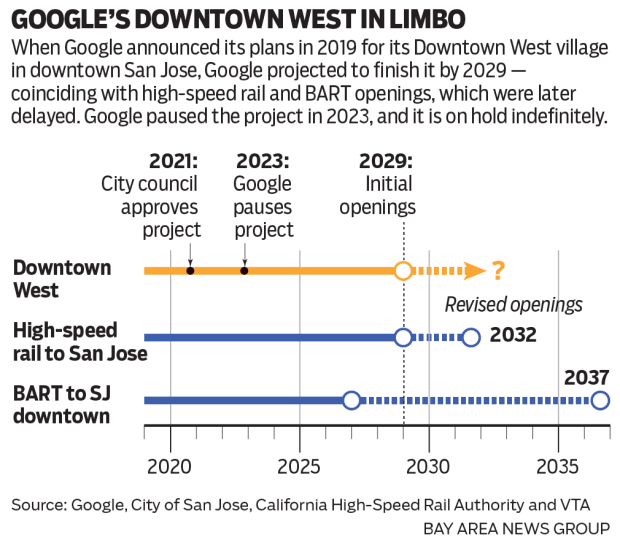 When Google paused the project in 2023, it cited pandemic-driven changes to office work. Other developers downtown and across the region were also halting projects as construction costs soared and demand dropped.
At the time, the company said it remained “committed to San Jose for the long term” while it reassessed how to proceed.
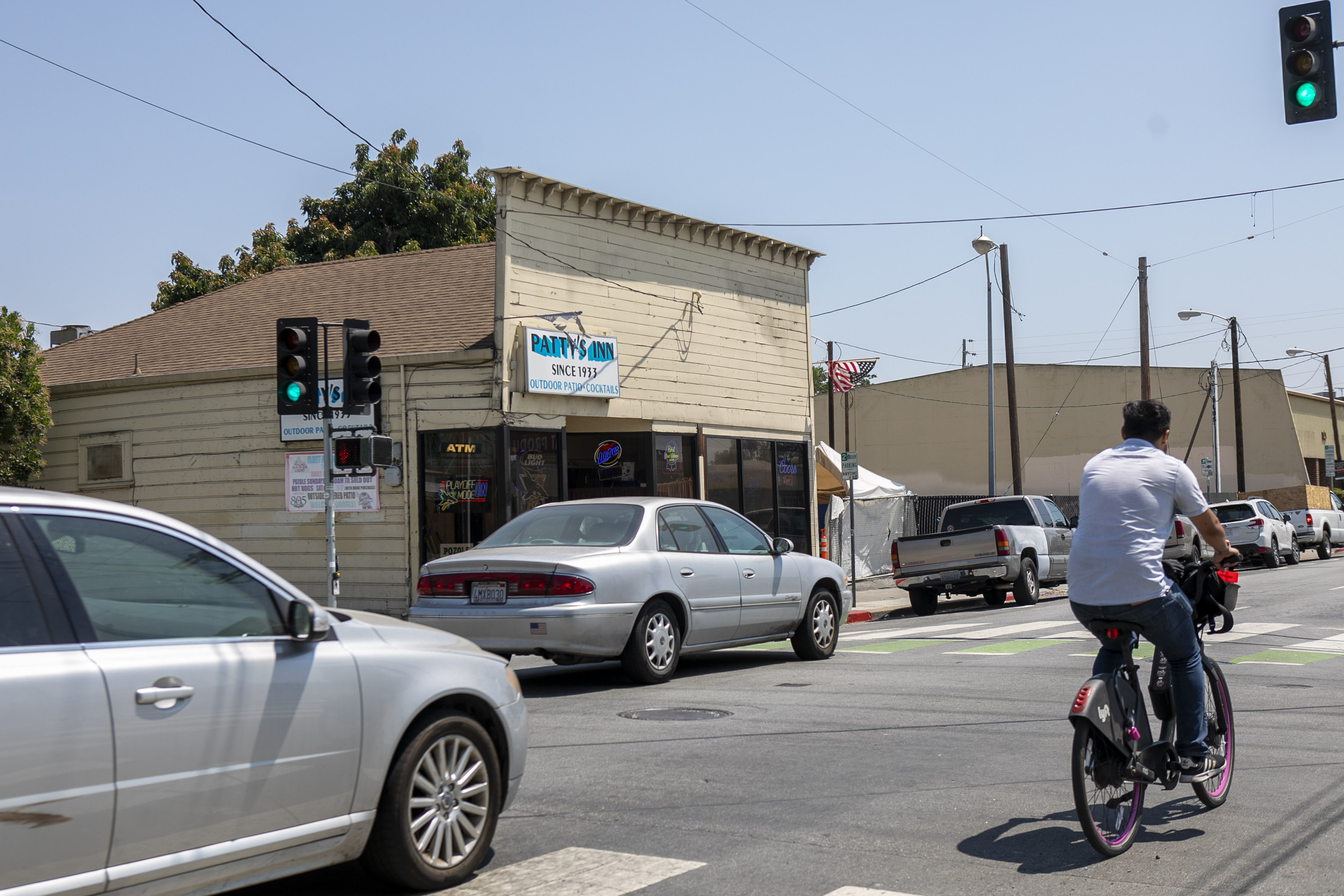
By then, historic dive bar Patty’s Inn had been torn down. Poor House Bistro a popular live-music venue housed in a shingled bungalow was lifted onto wheels and moved across town to Little Italy. The neon “dancing pig” sign from Stephen’s Meat Products and Orchard Supply Hardware’s giant arrow sign were carefully stored away, with expectations they would return as part of the new development.
(George Avalos/Bay Area News Group)
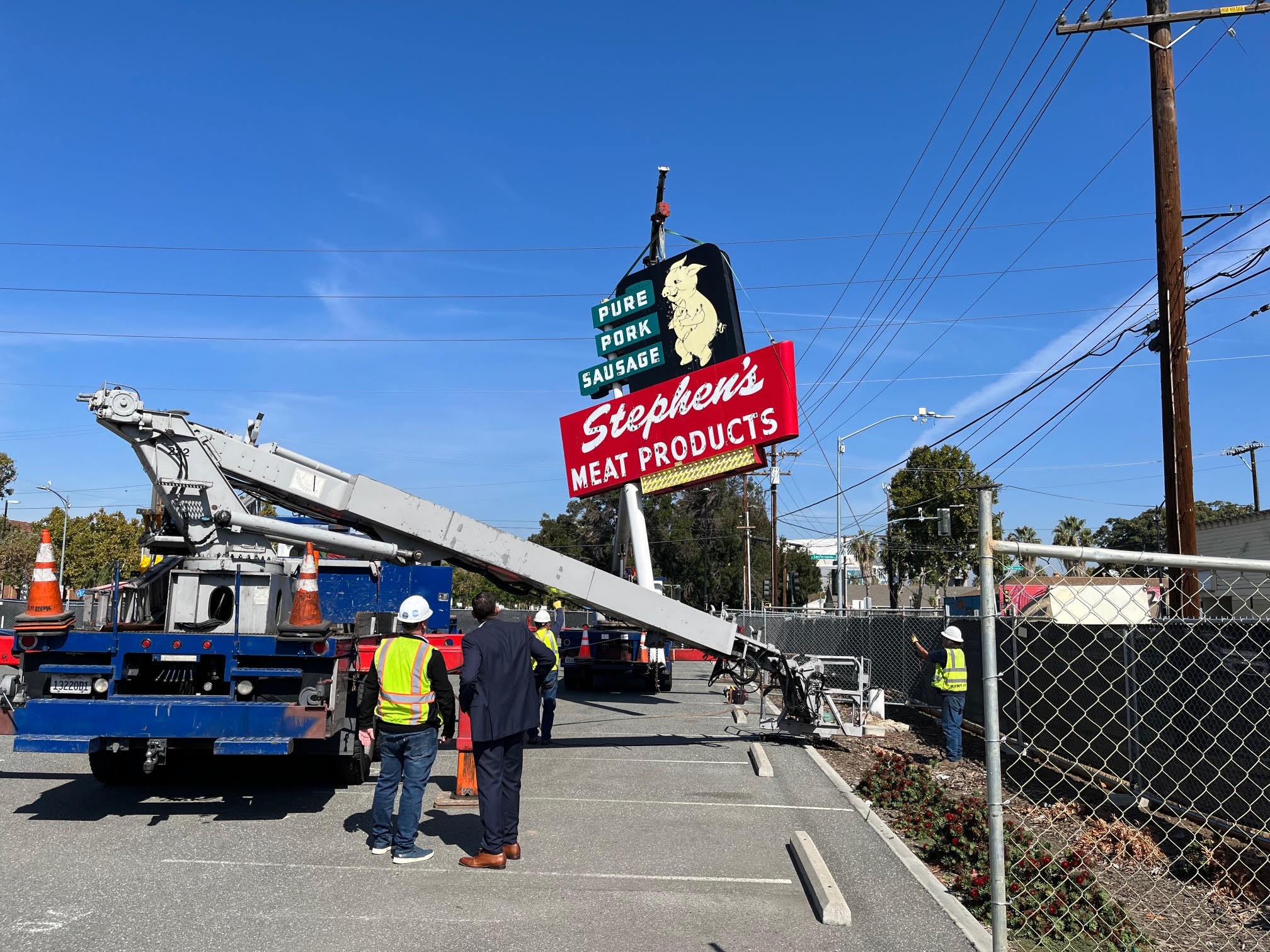
The Stephen’s Meat Products Co. “Dancing Pig” sign at 81 S. Montgomery St. in downtown San Jose is removed before being relocated to the city’s History Park as Mayor Sam Liccardo, center, watches the operation, Oct. 6, 2022. (George Avalos/Bay Area News Group)

Chao Vang of Arrow Sign Company inspects tubes being installed on the restored Orchard Supply Hardware sign that stood for decades on West San Carlos Street. It is making its return to San Jose, Calif., Friday, Dec. 4, 2020, in an outdoor exhibit at History Park. (Karl Mondon/Bay Area News Group)
(Karl Mondon/Bay Area News Group)
Traffic on South Montgomery Street passes by Patty’s Inn, Friday, July 30, 2021, in San Jose, Calif. The venerable bar open since 1933 closes this Saturday to make way for the Google development. (Karl Mondon/Bay Area News Group)
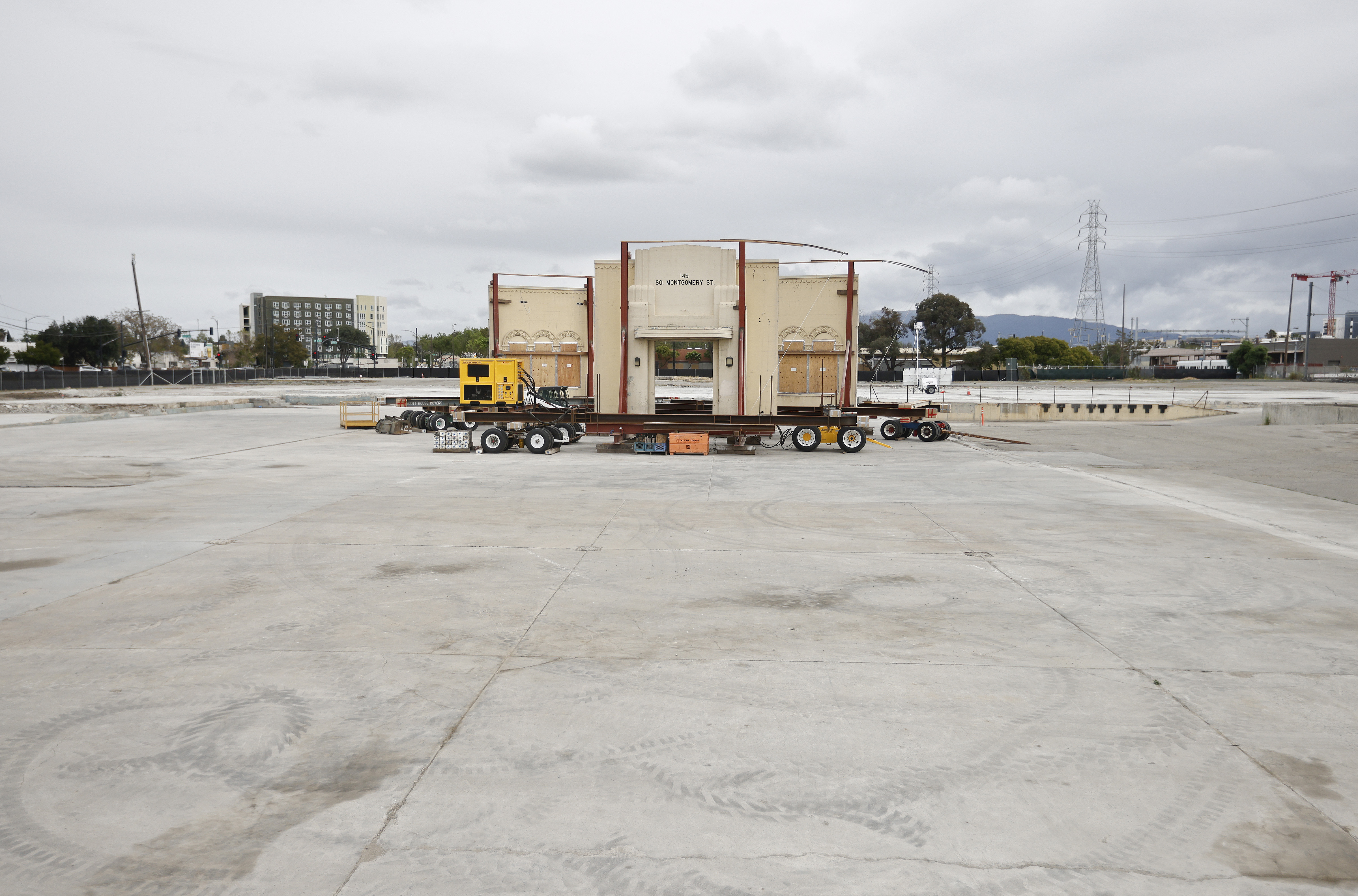
The site of the former Sunlite Bakery Bread Depot building at 145 S. Montgomery St., demolished in preparation for Google’s Downtown West development, is seen in downtown San Jose, May 3, 2023. (Nhat V. Meyer/Bay Area News Group)
Show Caption
(George Avalos/Bay Area News Group)
1 of 4
The Stephen’s Meat Products Co. “Dancing Pig” sign at 81 S. Montgomery St. in downtown San Jose is removed before being relocated to the city’s History Park as Mayor Sam Liccardo, center, watches the operation, Oct. 6, 2022. (George Avalos/Bay Area News Group)
The project was estimated to cost $19 billion to build over a decade — a “jobs-rich” plan in a city long known more for suburban sprawl than for the “Capital of Silicon Valley” identity it aspired to embody.
When completed, city officials projected, Downtown West would generate about $79 million annually in property taxes, $9 million a year in general fund revenue, $58 million in one-time construction tax revenue and $16 million in school fees.
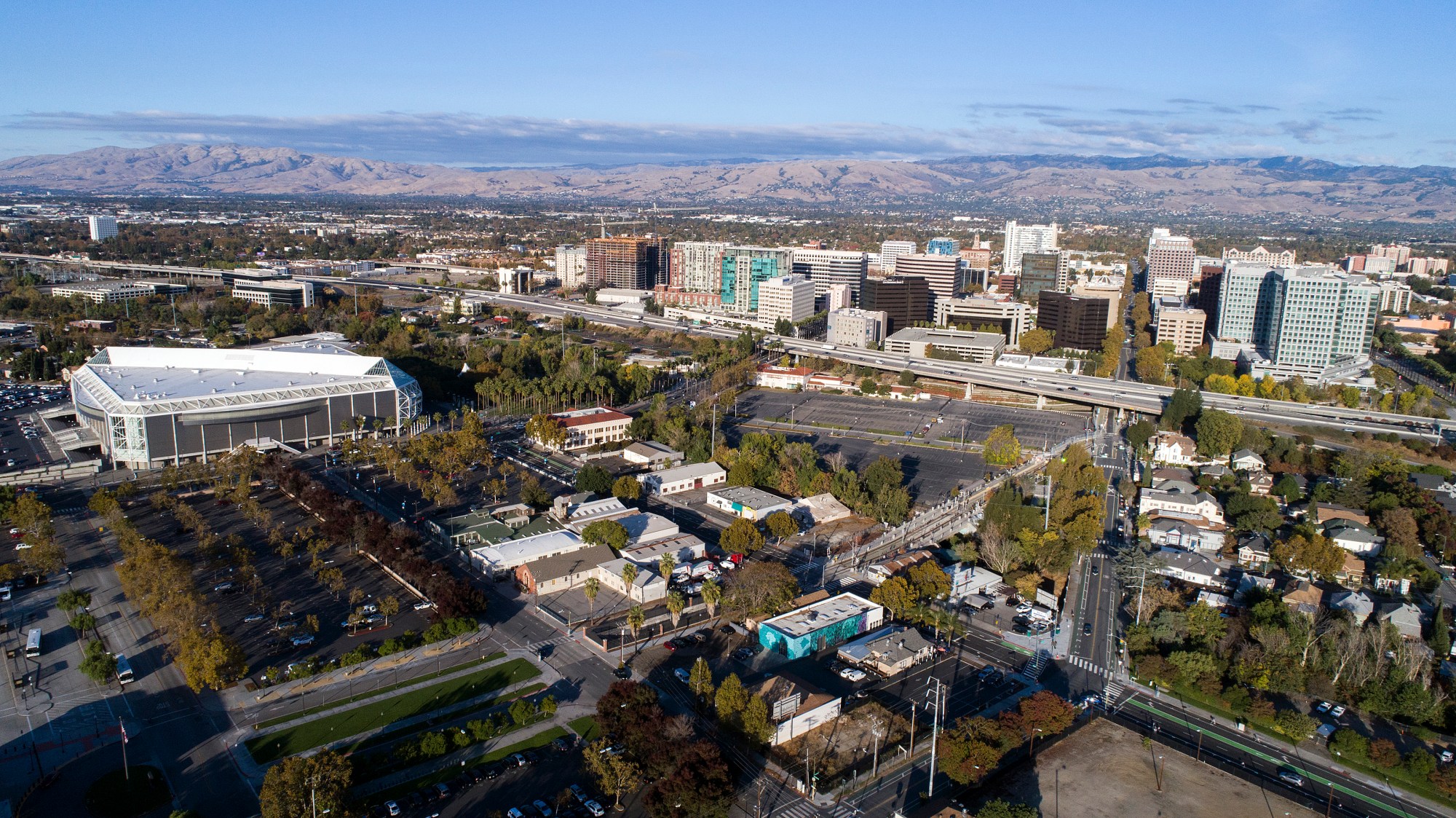 An aerial view of the area near Diridon Station on the western edge of downtown San Jose on Nov. 11, 2017, where Google later proposed its Downtown West transit-oriented village. The project would replace a mix of aging industrial, retail, dining, office and residential buildings, along with vacant parcels and parking lots. (LiPo Ching/Bay Area News Group)
When the City Council approved the project in 2021, then-economic development director Nanci Klein’s voice broke with emotion.
“This project has inspired so many,” she said.
Support from residents was overwhelming. Speakers packed City Council meetings and wrote letters praising the plan’s commitments to affordable housing, expanded parks along the Guadalupe River and Los Gatos Creek, and development around Diridon Station, where an extension of BART is still planned.
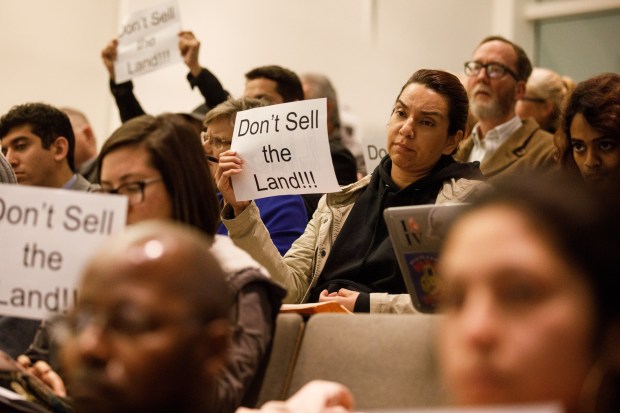 Liz Gonzalez of San Jose, center right, and other opponents of the proposed Google project near Diridon Station hold signs during a San Jose City Council meeting, Dec. 4, 2018. The council was expected to formally approve the sale of city-owned land to Google the following day, advancing plans for a massive mixed-use development near the transit hub. (Dai Sugano/Bay Area News Group)
The most visible opposition came from a group of housing advocates who dubbed themselves the “Google 8.” They chained themselves to chairs inside City Hall to protest the sale of public land to the tech giant, warning the project would accelerate gentrification.
But concerns about the lack of penalties if Google delayed construction did not emerge as a major point of debate.
Instead, city leaders pointed to the project’s $200 million community support fund, meant to support neighborhood nonprofits and help offset displacement from the development.
But if construction has not begun by July 2031, Google would be required to contribute only $54 million — a fraction of the total pledge, according to San Jose’s Office of Economic Development.
So far, the company has paid $12.5 million into the fund, helping finance projects including the new Gardner Community Center.
Critics say it’s not enough. Former San Jose Mayor Tom McEnery, who oversaw major downtown redevelopment in the 1980s that brought the Fairmont Hotel and Adobe Systems to the city center, said the city bears responsibility for the deal it signed.
“The reason there was no opposition to it is that everybody was enthusiastic — and in some cases just gaga about it — because it sounded extraordinary,” said McEnery, whose family later developed the San Pedro Square restaurant district expected to benefit from Downtown West traffic.
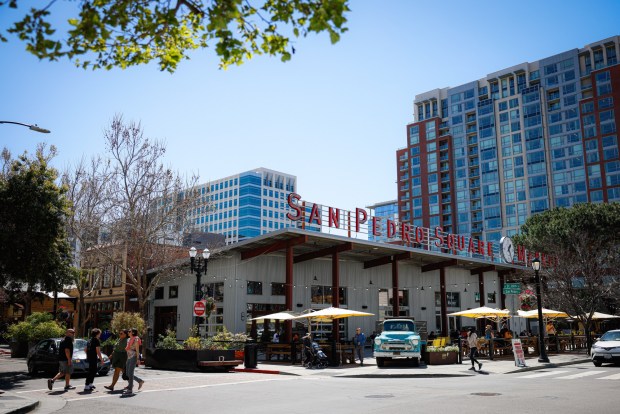 People walk at San Pedro Square Market in San Jose, Calif., on Tuesday, April 2, 2024. (Shae Hammond/Bay Area News Group)
“I mean, who would ask questions? They were so excited about a project with Google, they didn’t take any precautions for something like this to happen.”
U.S. Rep. Sam Liccardo, San Jose’s former mayor who voted with the City Council to approve the Google agreement in 2021, defended the deal, calling it good for the city even now.
“To any mayor or anyone who understands the dynamics of economic development in blighted areas, there is nothing about this deal that any public agency could have made better,” he said.
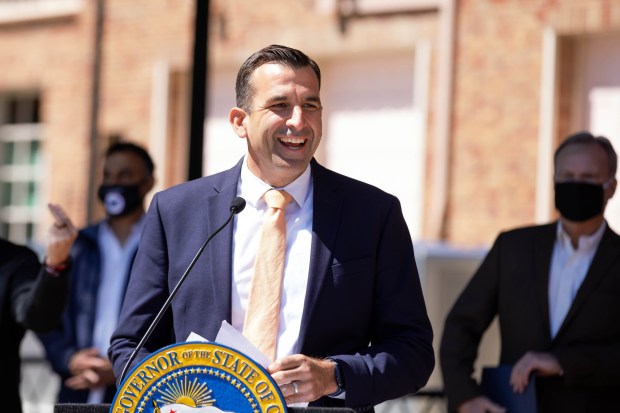 San Jose Mayor Sam Liccardo smiles during a speech before the signing of SB 7 outside Diridon Station in San Jose, May 20, 2021. (Randy Vazquez/Bay Area News Group).
Liccardo said Google’s interest helped push property values higher around the Diridon Station area, increasing tax revenue for the city, county and local schools. Google paid the city close to $110 million for the parcels that became part of the Downtown West site — roughly 2½ times their value just a year earlier — and received no tax subsidies to build there.
Even if Google ultimately abandons the project, Liccardo said, assembling more than 80 acres under a single owner could make the land attractive to another major company.
Before Google, “you could shoot a cannon down the street and hit the dancing pig sign without hitting any human being,” he said. Without the Google deal, “you would be guaranteed to have nothing happen.”
A new vision for the site?
Now, city leaders appear to be considering alternatives.
In June, Mayor Mahan — who is now running for governor — suggested the idea on social media of relocating the San Jose Earthquakes soccer stadium into a future “sports and entertainment district” within Downtown West.
Details are scarce.
According to the mayor’s official calendar, Mahan met Feb. 11 with city staff and Google representatives for a “Downtown Tour Pre-Meeting,” followed by a phone call later that day with Google’s president of global affairs, Kent Walker, regarding a “Sports & Entertainment District.”
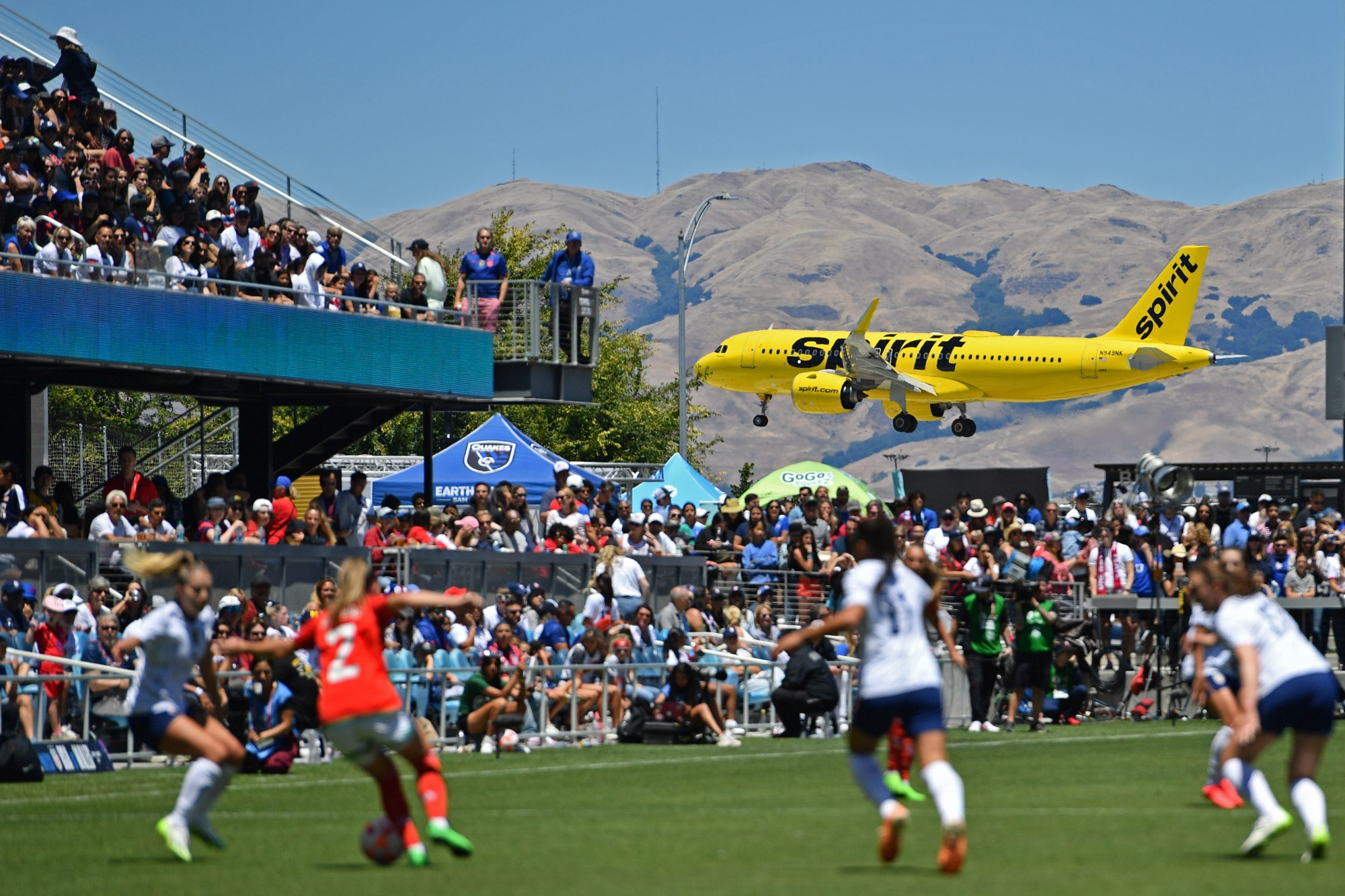 A Spirit Airlines plane lands at San Jose Mineta International Airport as the United States plays Wales during the first half of a FIFA Women’s World Cup send-off match at PayPal Park in San Jose on July 9, 2023. The United States defeated Wales 2-0. (Jose Carlos Fajardo/Bay Area News Group)
Where such a stadium might fit remains unclear.
The city previously sold to Google the 12-acre parcel once reserved for a potential Oakland A’s ballpark — a plan that collapsed after Major League Baseball blocked the move. Land-use experts say few nearby properties still under city control are large enough for a stadium-scale project.
Mahan declined an interview request about the discussions. In a statement, he said the city is working with Google “to make sure Downtown West delivers tangible benefits for San Jose” and that the company “maintains its commitment to the project.”
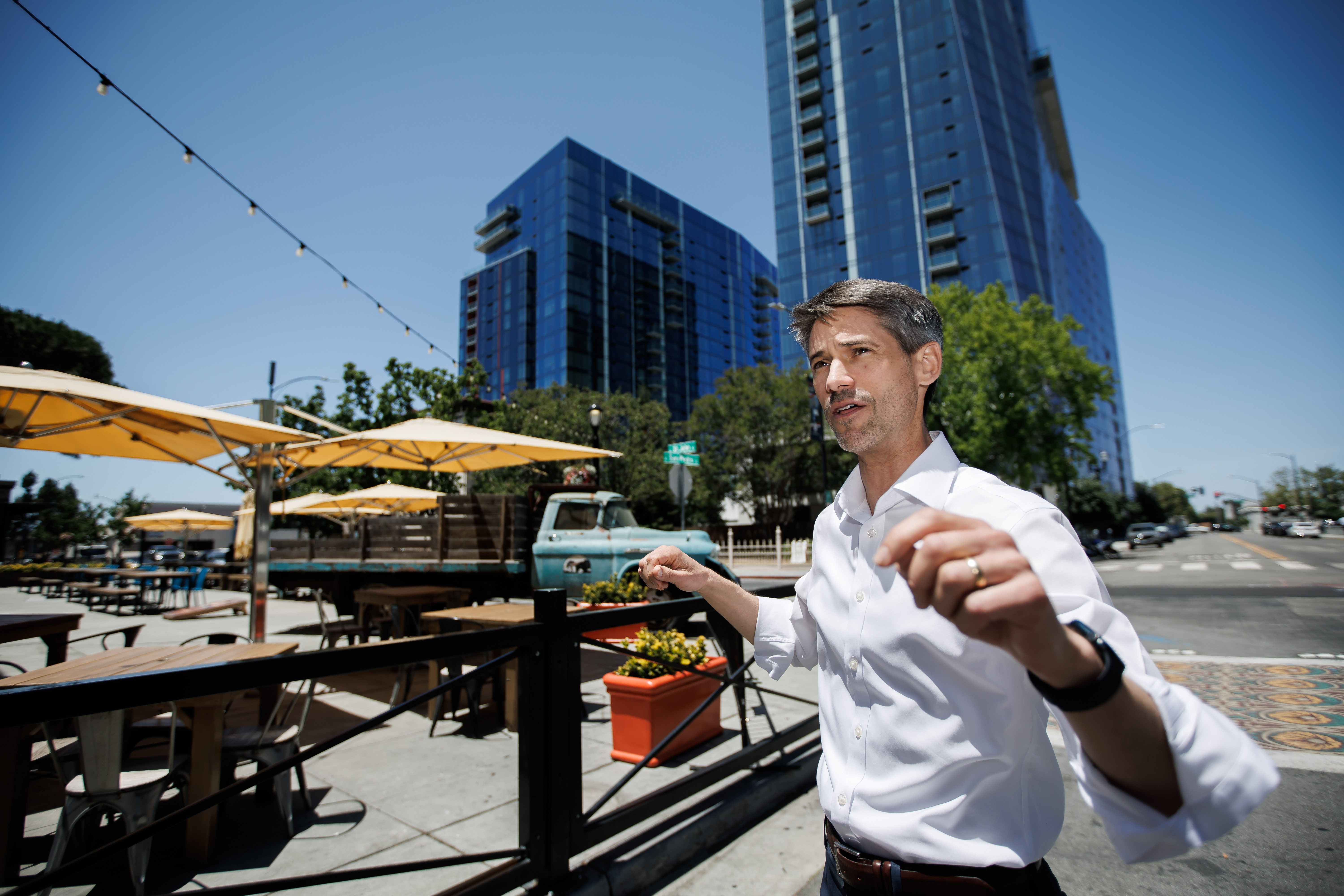 San Jose Mayor Matt Mahan talks about downtown businesses during an interview at San Pedro Square in San Jose, June 26, 2025. (Dai Sugano/Bay Area News Group).
But Google has offered few details about what that commitment would entail.
In late 2023, Google ended its partnership with development firm Lendlease, which had been tapped to help build Downtown West along with three other major Bay Area projects.
At the time, Google said all four developments would still move forward. But a year later the company canceled its North Bayshore project in Mountain View after excavation had already begun for a parking structure. Last spring, Google also announced plans to sell roughly 40 acres in Mountain View’s Middlefield Park that had been slated for offices, housing and retail.
A Google spokesperson said at the time the company was focusing on “investing in real estate efficiently to meet the needs of our hybrid workforce and business.”
Responding to recent questions from this news organization, Lamont again declined to outline a timeline for Downtown West, saying projects of this scale often unfold over decades and move through periods of slowdown and acceleration.
“We’re actively investing in San Jose and are collaborating with the city, community and our project partners to determine a pathway to deliver mixed-use spaces that support the city’s goals,” he said in a statement.
Lamont would not say whether that pathway still includes a Google campus — even a smaller version — or whether the housing, parks and retail promised in the original master plan could proceed without one. Meanwhile, Google recently paid about $25 million for an existing office building in North San Jose’s Alviso district, adding to a cluster of properties the company has acquired there since 2018.
Bob Staedler, principal executive with land-use consultancy Silicon Valley Synergy, said there are still reasons Google might eventually develop the Downtown West site.
It sits on a “superior site,” he said, adjacent to transit and a major arena.
“I’m sure the project will change somewhat,” said Staedler, who helped the city acquire the 12 acres once reserved for a ballpark before it was sold to Google. “But if it was dead, they would say it was dead. They don’t have a reason to lie to you.”
He also noted that Google has continued investing in the area, hosting events, adding art installations along fencing and leasing buildings to community organizations.
“There’s nothing in their development agreement that required them to do that,” Staedler said. “That’s all good faith.”
Waiting for something to rise
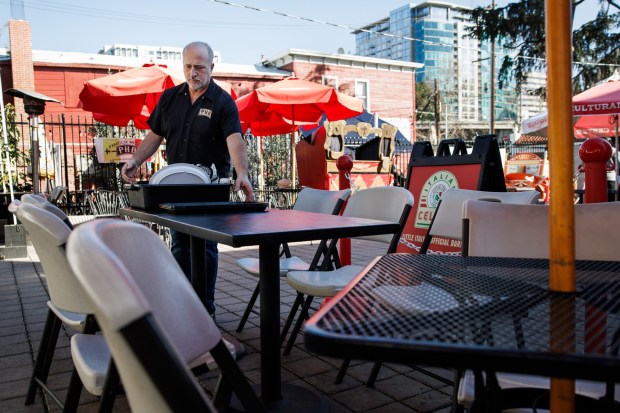 Lunchtime remains quiet at Poor House Bistro as owner Jay Meduri works on the front patio of his restaurant on Jan. 15, 2026, in the Little Italy section of San Jose, Calif. Meduri says business has been slow ever since Google purchased his former property and moved his restaurant building in 2022 to the new site to make way for Google’s Downtown West mega campus that has yet to materialize. (Dai Sugano/Bay Area News Group)
That sentiment rings hollow for Jay Meduri, owner of Poor House Bistro.
His family-run restaurant was moved in 2022 to make way for the development. Today, the pop-up beer garden sits almost exactly where the restaurant once stood.
“We could have stayed open there and not even done the whole move, and still kept the area vibrant,” Meduri said. “I really feel like the rug was kind of pulled out from us.”
Business at the new location has struggled.
“It’s been two years and a lot of people don’t even know I’m open,” he said.
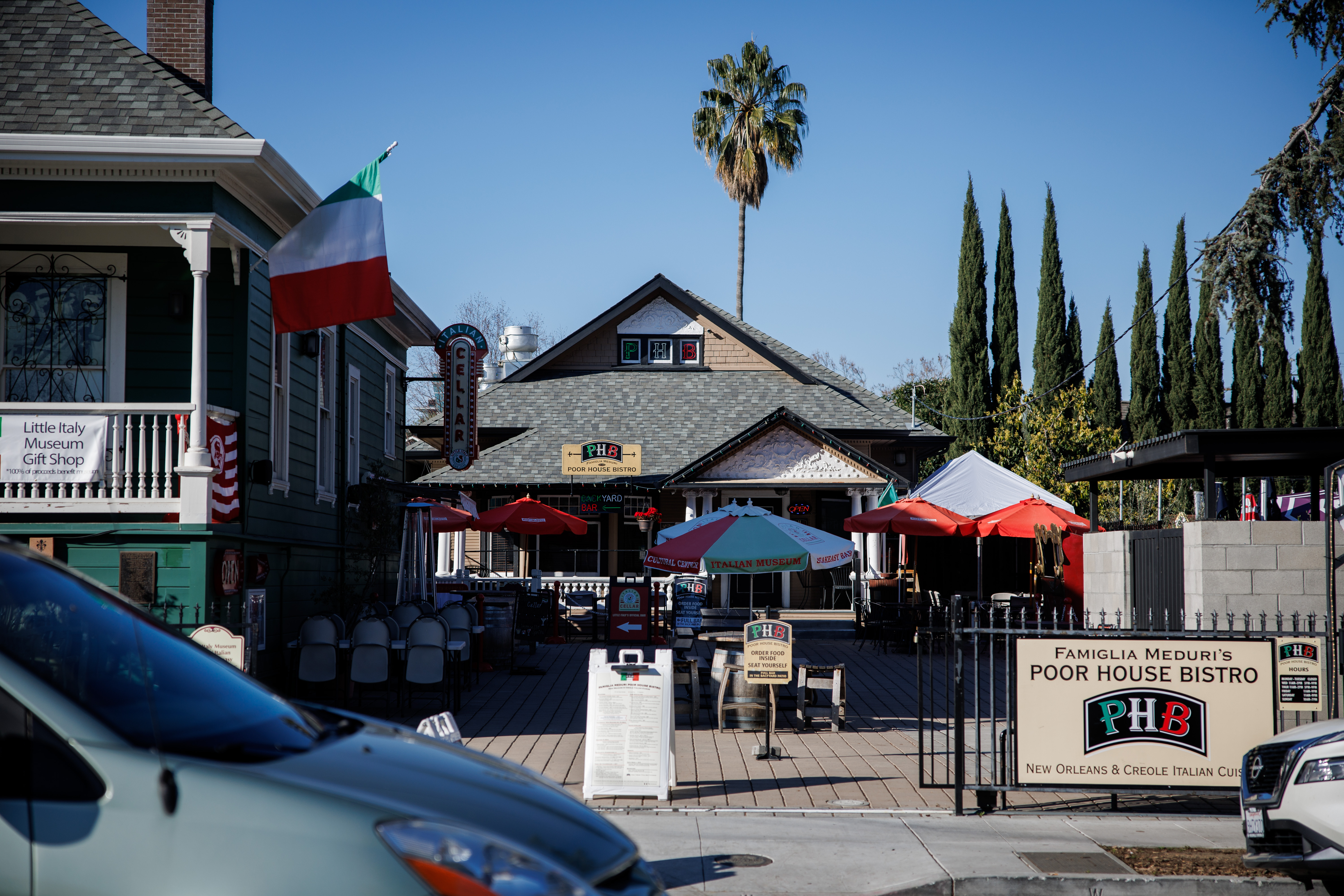
Poor House Bistro in its new location on Jan. 15, 2026, in the Little Italy section of San Jose, Calif. (Dai Sugano/Bay Area News Group)

A dining room inside Poor House Bistro remains empty during lunch on Jan. 15, 2026, in the Little Italy section of San Jose, Calif. (Dai Sugano/Bay Area News Group)
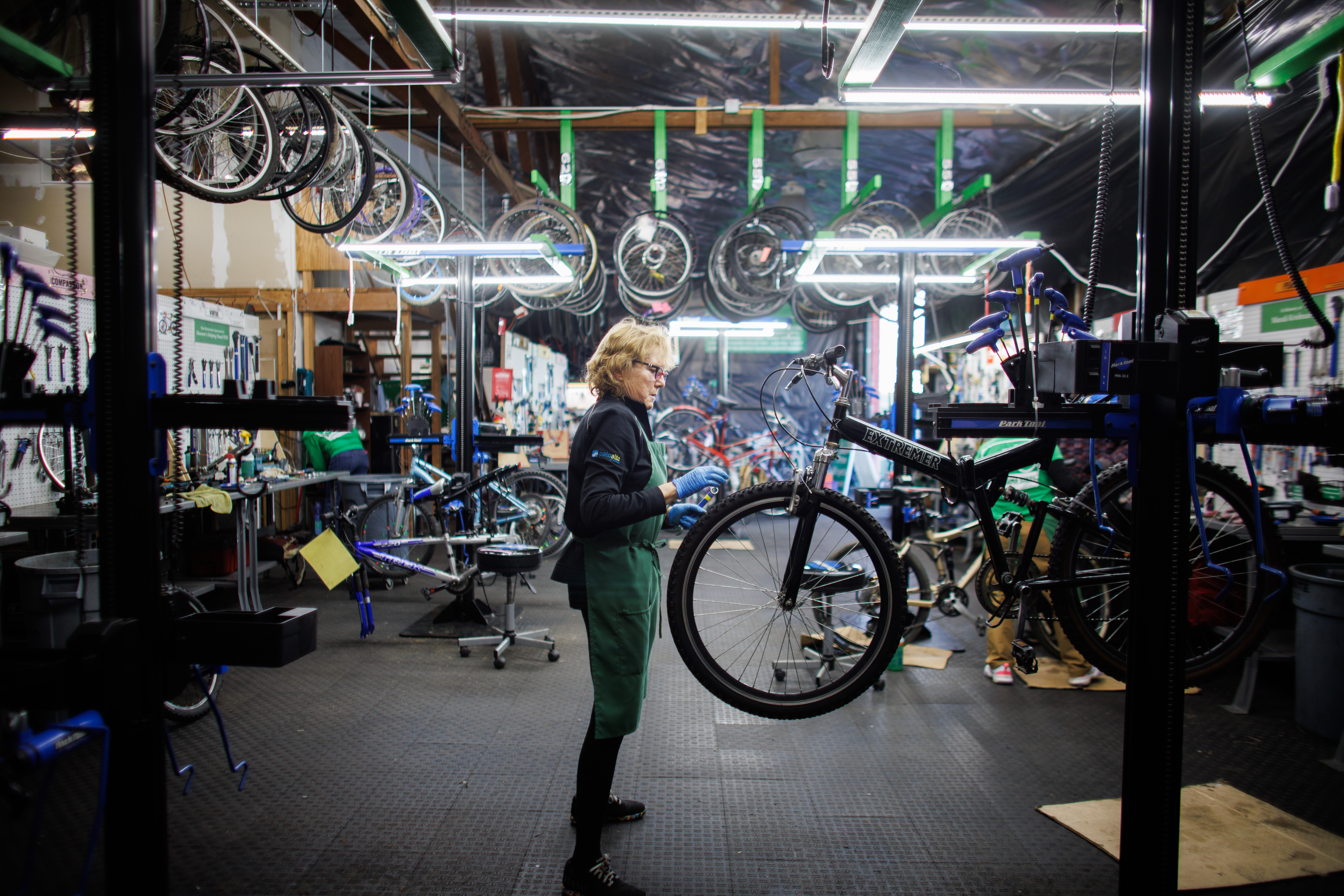
Good Karma Bikes volunteer mechanic Joanne Ottney works on a bicycle, Jan. 15, 2026, in San Jose. (Dai Sugano/Bay Area News Group)
Show Caption
1 of 3
Poor House Bistro in its new location on Jan. 15, 2026, in the Little Italy section of San Jose, Calif. (Dai Sugano/Bay Area News Group)
After it halted the project, Google leased a warehouse on the property to Good Karma Bikes, whose CEO Jim Gardner liked the location so much he asked whether he could buy it.
Google declined.
“They went to a lot of expense and effort to acquire (the property),” Gardner said. “They’re not about to piecemeal it off.”
“I really feel like the rug was kind of pulled out from us.”— Jay Meduri, Poor House Bistro owner
In some cases, Google offered extra assistance to residents and businesses displaced by the project.
When the company purchased a yellow bungalow on Lorraine Avenue, longtime tenants Martin and Elizabeth Pacheco saw their rent cut in half while they searched for a new place. Eventually, Google paid them a generous relocation settlement to move out.
The couple, now in their 70s, bounced between several rentals before settling into what they hope will be their final home.
“A lot of people had to go through a lot of turmoil,” Martin Pacheco said. “But personally, I thought they were trying to make people happy.”
Still, uncertainty hangs over the future of Downtown West.
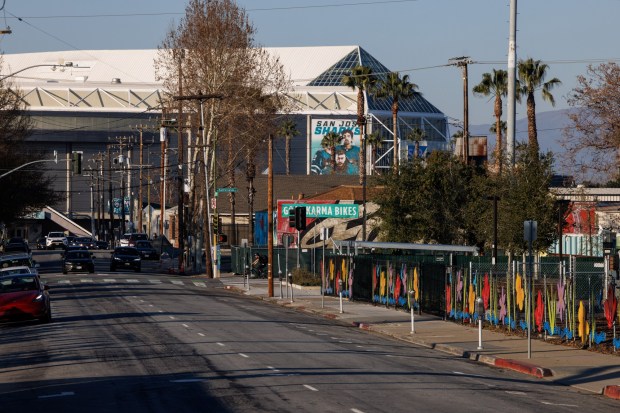 SAP Center and Good Karma Bikes are seen from South Montgomery Street on Jan. 15, 2026, in San Jose, Calif. (Dai Sugano/Bay Area News Group)
San Jose City Council member Anthony Tordillos, who represents the downtown business district next to Downtown West, said discussions about a potential sports and entertainment district are gaining momentum.
Last fall, he and other city leaders toured similar districts in Atlanta alongside representatives from Google and the Sharks hockey team. The Sharks are working with the city to identify by next year a site for a new arena the team expects it will need by 2051.
“There are a lot of different players in the room, a lot of discussions to be had,” Tordillos said.
But he added that residents deserve more information about the project’s direction.
“Folks are entitled to some transparency in terms of what that plan is,” he said.
Mulcahy, the council member representing the area, said he understands public frustration.
“But I have faith that something cool is going to happen,” he said.
Snider, the urban planning expert, is far less optimistic.
“There’s absolutely no indication that they’re going to develop something, that they’re going to sell property or otherwise partner with other people who would develop something,” she said. “I think we got a bad deal for San Jose. We sold all that property. We have no control over it anymore.”
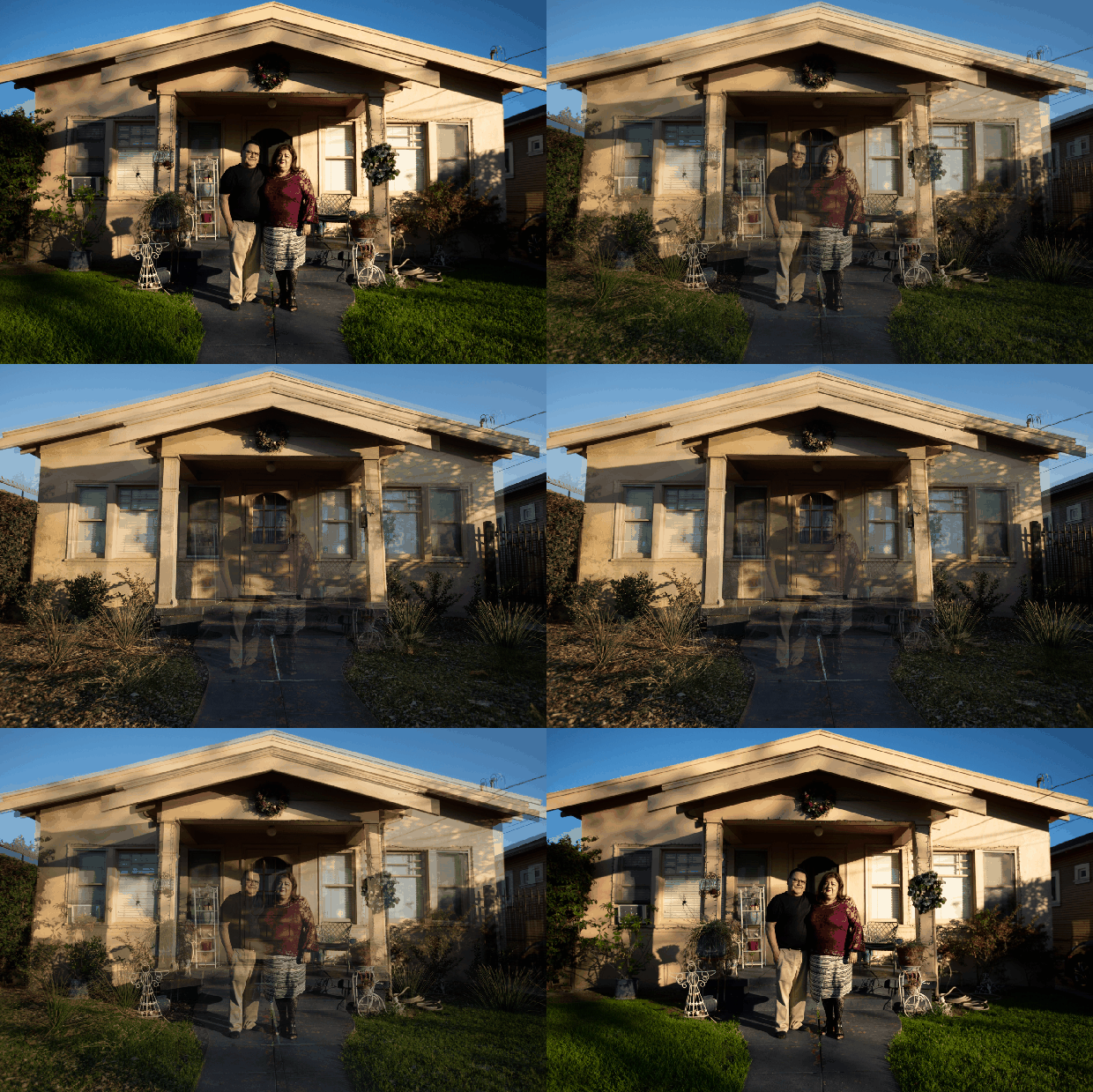 Martin and Elizabeth Pacheco stand outside their rental home on Lorraine Avenue in San Jose, April 17, 2019. The property, where the family lived for 16 years, was later purchased by Google. The yellow bungalow still stands, March 5, 2026. (Randy Vazquez and Dai Sugano/Bay Area News Group)
In the meantime, Mulvehill from The Pressroom and Meduri from Poor House Bistro are left waiting — along with much of downtown — to see what might rise on the empty land.
On Lorraine Avenue, the yellow bungalow where the Pachecos once lived now sits vacant.
The shades are drawn.
Google replaced the buckled sidewalk and planted landscaping out front that requires little care.
But above the front door, a Christmas wreath, fading in the harsh California sun, still hangs where Martin Pacheco left it.
• • •