
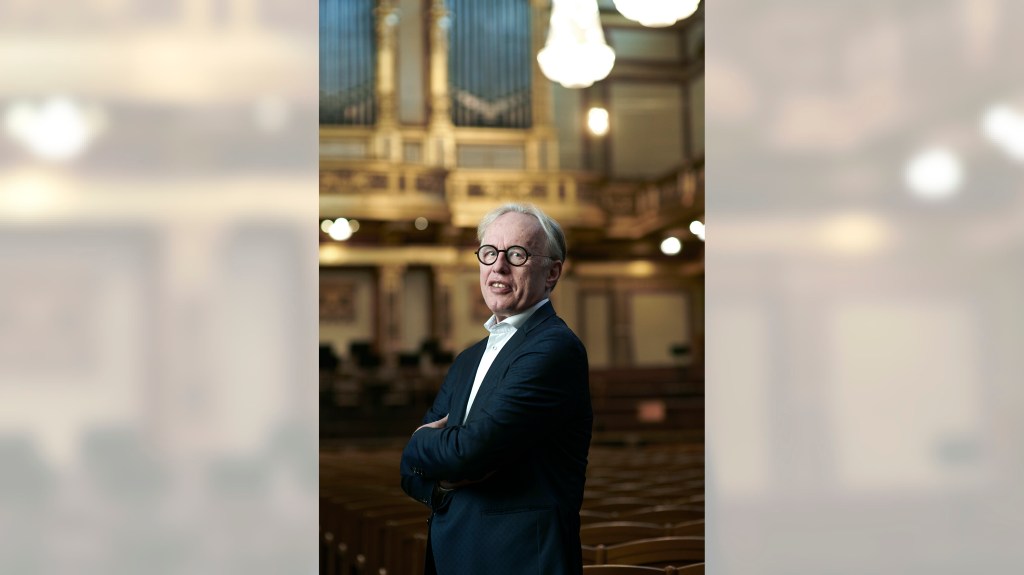
After two decades shaping the sound of Baroque music in Southern California, Martin Haselböck will take his final bow as music director of Musica Angelica with a special farewell benefit concert on March 25 at First Congregational Church of Long Beach.
Titled “Auf Wiedersehen Maestro Haselböck,” the evening marks the culmination of Haselböck’s two decade tenure leading one of the region’s most respected advocates for historically informed performance.
For audiences accustomed to modern orchestras, the approach may sound niche, but it remains one of the most important ways musicians reconnect with the expressive world of earlier centuries — using period instruments, historically researched techniques, and performance practices that aim to recreate how the music might have originally been heard.
Under Haselböck’s leadership, Musica Angelica has made that philosophy tangible for local audiences.
Indeed, the ensemble performs on authentic period instruments—or carefully crafted replicas—bringing a distinct sonic palette to Baroque and Classical repertoire: lighter articulation, gut strings, natural trumpets, and a sense of musical rhetoric rooted in the aesthetics of the 17th and 18th centuries.
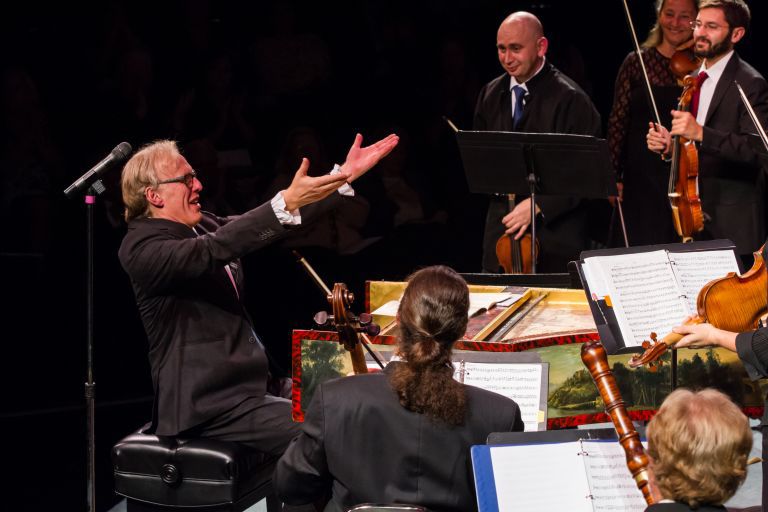
Music director Martin Haselböck presents the Musica Angelica baroque orchestra at a previous concert. (Courtesy Musica Angelica)
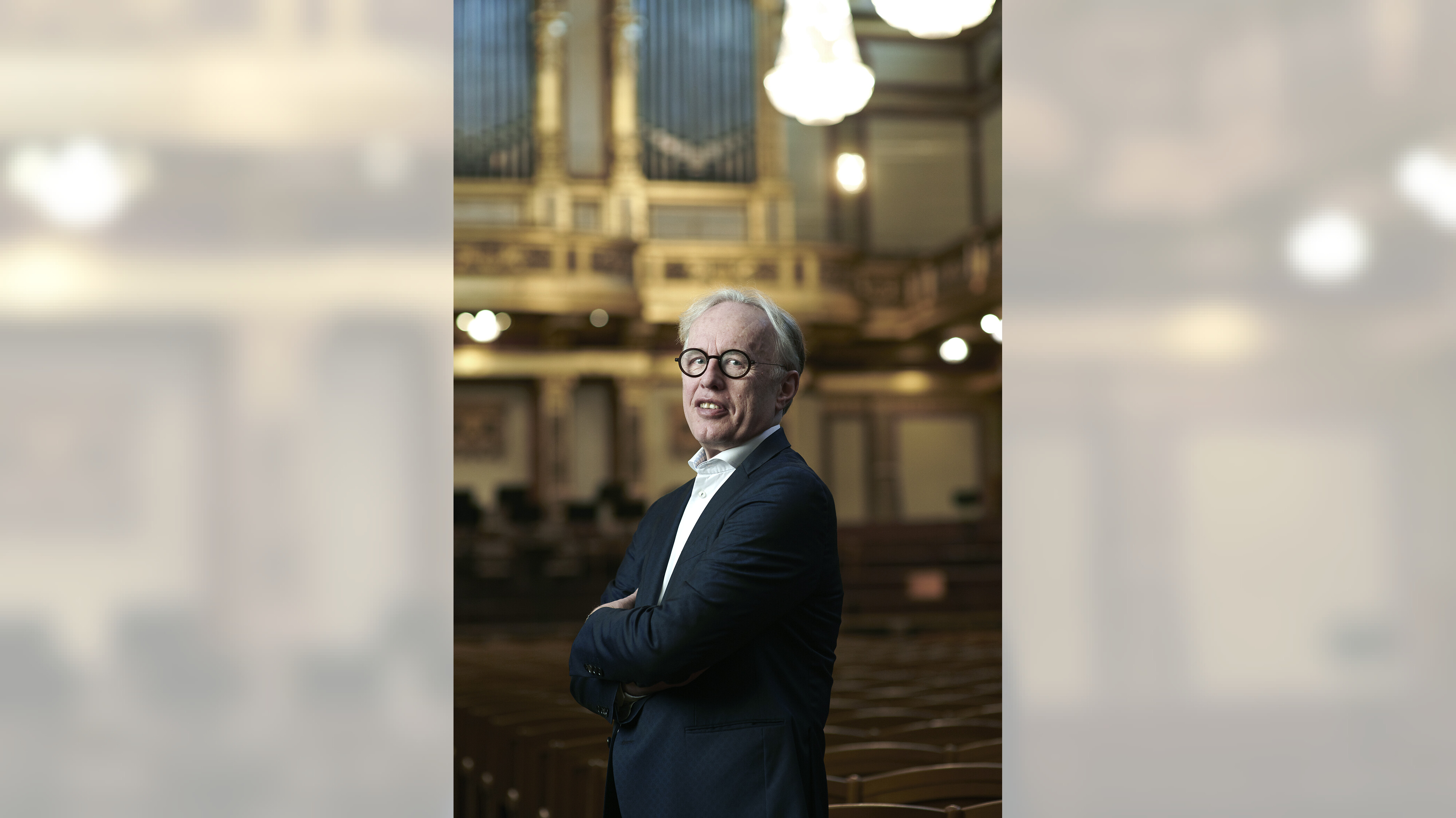
After two decades shaping the sound of Baroque music in Southern California, Martin Haselböck will take his final bow as music director of Musica Angelica with a special farewell benefit concert on March 25 at First Congregational Church of Long Beach. (Photo courtesy Musica Angelica).
Show Caption
1 of 2
Music director Martin Haselböck presents the Musica Angelica baroque orchestra at a previous concert. (Courtesy Musica Angelica)
Appropriately, the farewell concert will return Haselböck to his own musical roots, not only as a conductor but as a virtuoso keyboardist. He will step away from the podium to perform on the sanctuary’s “Mighty Möller” pipe organ, a seven-rank instrument whose 427 pipes fill the church with the kind of resonant brilliance that defined the Baroque.
The evening will also feature soprano Nola Richardson performing a featured aria, along with a chamber collaboration between Haselböck and four of Musica Angelica’s principal and founding musicians — violinists Ilia Korol and Alexa Haynes Pilon, oboist Gonzalo Ruiz, and flutist Stephen Schultz — in a work by Georg Philipp Telemann.
Haselböck will accompany the ensemble at the harpsichord, offering audiences a glimpse of the collaborative artistry and spirit at the heart of Baroque performance.
“This evening is both a celebration and a heartfelt farewell,” Musica Angelica’s executive director Matthew Faulkner said in a news release. “Martin Haselböck’s 20 seasons with Musica Angelica have elevated the ensemble to extraordinary artistic heights. His musical excellence, artistic leadership, and vision have left an indelible mark on our organization and our community.”
Before the concert, classical radio host Alan Chapman will lead an onstage conversation with Haselböck reflecting on highlights from his international career and two decades guiding Musica Angelica’s vision.
The event also serves as a benefit supporting the ensemble’s ongoing artistic and educational programs. Following the 6 p.m. performance, guests can attend a reception and dinner at La Traviata, with proceeds supporting Musica Angelica’s concerts and outreach initiatives throughout Southern California.
While this concert marks the end of Haselböck’s tenure, it also underscores why historically informed performance continues to resonate in 2026 and beyond. By revisiting the instruments, sounds, and interpretive traditions of the past, ensembles like Musica Angelica remind audiences that great music is not a museum artifact, but a conversation across centuries.
Carpenter Center
Two very different musical traditions, street dance and classic jazz, will take the stage this month at the Carpenter Performing Arts Center, each honoring the innovators who shaped their art forms while breathing new life into their legacies.
On March 13, Versa-Style Street Dance Company will offer its high-energy production “Tribute: Guardians of Street Dance” to Long Beach, marking the company’s 20th anniversary and its debut on the Carpenter Center stage.
Founded in 2005 by Los Angeles natives and co–artistic directors Jackie Lopez and Leigh Foaad, Versa-Style has spent two decades elevating hip hop and street dance from the sidewalk and club floor to the concert stage.
The evening pays homage to pioneers and innovators who shaped the evolution of street dance, including Rennie Harris, Damita Jo Freeman, and Toni Basil, as well as late legends such as Stephen Boss and Marjory Smarth.
Through a mix of photo and video projections alongside explosive choreography, the performance traces the roots and ongoing evolution of styles including hip hop, house, popping, and locking.
The company’s dancers bring these styles to life with the kind of precision, musicality, and raw energy that make street dance one of the most dynamic movement languages of the 21st century.
More than a retrospective, the program is also a reminder that these dance forms continue to evolve.
A few days later, the Carpenter Center will turn from movement to music with jazz vocalist Kandace Springs, performing “Lady in Satin” on March 18 and March 19.
Springs offers a deeply personal project: a full reimagining of the legendary 1958 album “Lady in Satin” by Billie Holiday.

Kandace Springs will perform at the Carpenter Performing Arts Center this month. (Photo by Mathieu Bitton)
Show Caption
1 of 1
Kandace Springs will perform at the Carpenter Performing Arts Center this month. (Photo by Mathieu Bitton)
Widely regarded as Holiday’s final great recording, the album captured the singer late in life, her voice weathered, burnished, and fragile after years of struggle with addiction and illness.
Yet that vulnerability is precisely what made the recording so haunting.
Backed by a sweeping orchestral arrangement, Holiday delivered aching interpretations of songs like “You’ve Changed,” “I’m a Fool to Want You,” and “For All We Know.” The contrast between the lush symphonic setting and the emotional rawness of her voice created one of the most intimate recordings in jazz history.
Springs — praised by her late mentor Prince as having “a voice that could melt snow” — approaches the album with reverence but also fresh perspective.
Since releasing her Blue Note Records debut album “Soul Eyes” in 2016, she has become one of the most compelling voices in contemporary jazz and soul, performing alongside artists such as Christian McBride, Roy Hargrove, David Sanborn, and Norah Jones.
Her new recording and accompanying tour revisit “Lady in Satin” in its entirety, lovingly reimagining the album’s sweeping orchestral sound while preserving its emotional honesty.
Together, these two upcoming performances at Carpenter Center showcase how contemporary artists continue to reinterpret the giants who came before them — through the explosive movement of street dance and the intimate storytelling of jazz vocals.