
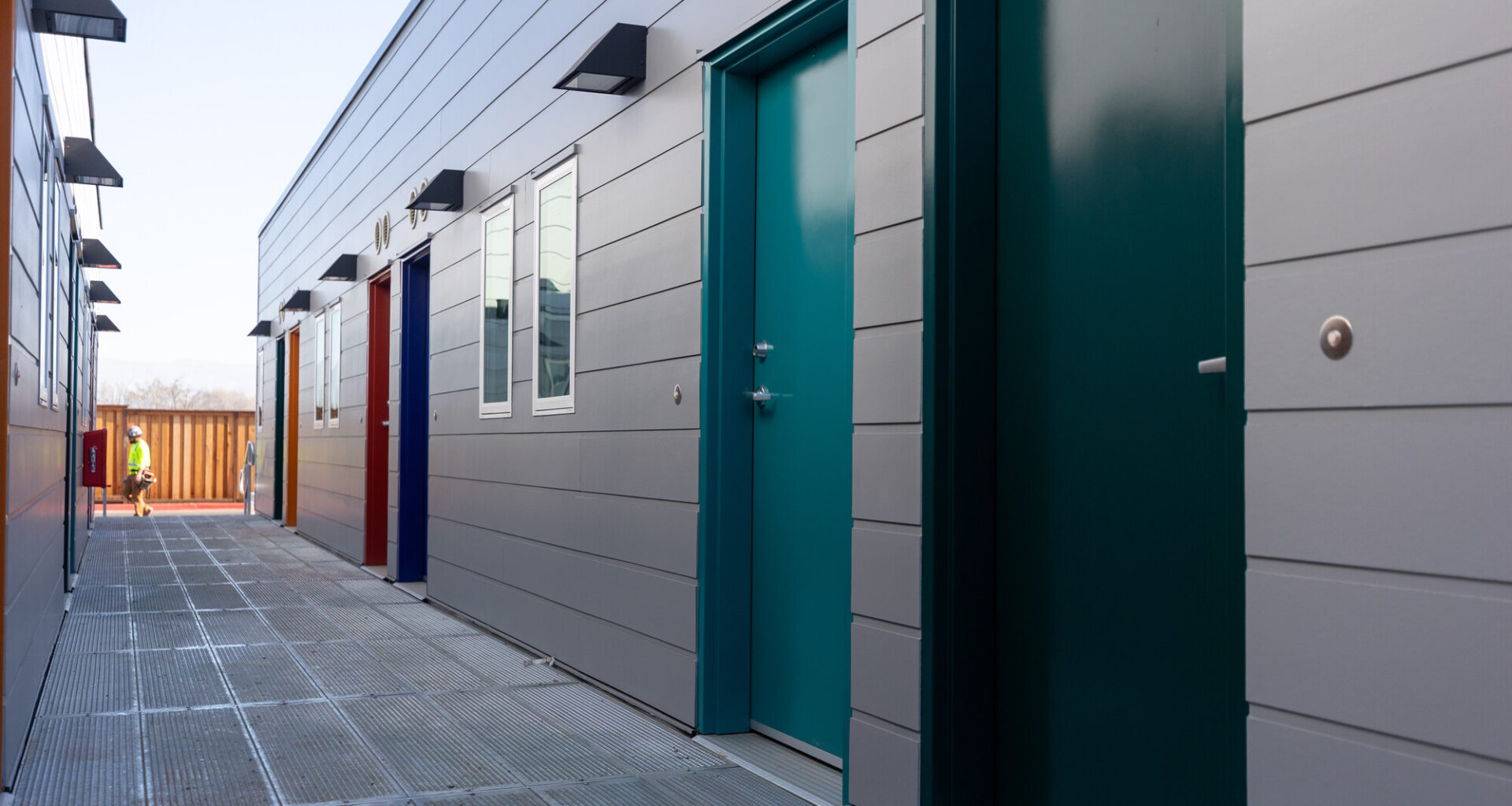
While the expansion of shelter into new parts of the city could garner neighborhood opposition, homeless advocates fear geographic equity plans implicitly promote the idea that shelters are a “burden” on local communities. Mayors including Daniel Lurie in San Francisco and Matt Mahan in San José have warned that such ordinances slow the process of bringing people indoors.
In an interview last year, Mahan said a restriction on new shelter in South San José would have prevented the city from opening Via del Oro, a tiny home development on land donated by a private developer.
“If you create a straitjacket through policy, you start missing opportunities,” he said.
When San Francisco’s policy was first introduced by Supervisor Bilal Mahmood, it mandated a new temporary housing or behavioral health care facility in each supervisorial district by mid-2026. But after opposition from Lurie, the bill was amended to only restrict new shelter in neighborhoods where the number of existing beds exceeds the number of unhoused residents — and even that restriction can be paused by a board vote.
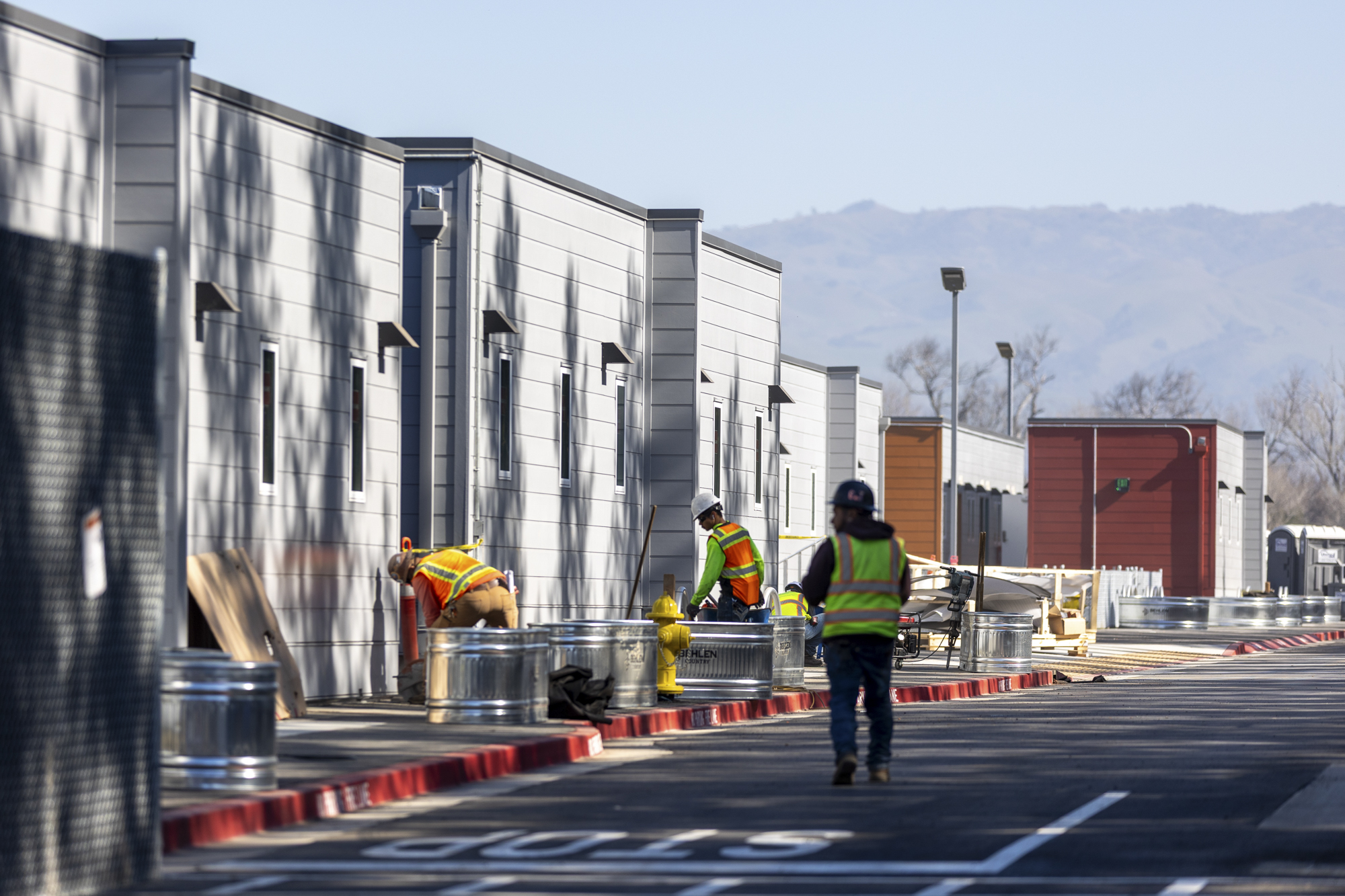 Construction workers continue building units at the Cerone Interim Housing Community on Feb. 5, 2026, in San José. The interim housing site is expected to house up to 200 people. (Gustavo Hernandez/KQED)
In San José, the opening of new shelters could be years away. A construction sprint that added 1,000 beds in 2025 finished last month.
At Wednesday’s hearing, Councilmember Domingo Candelas questioned whether a siting policy is worth staff time now.
“I also want to be realistic given the $56 million deficit that we are facing and the reality that the administration on numerous occasions has come back and said we are not in expansion mode at all whatsoever,” Candelas said at Wednesday’s meeting.
But Vice Mayor Pam Foley, who co-authored the proposal, argued it’s not too early for the city to think about its next phase of shelter construction.
Unsheltered homelessness in San José decreased by 10% between 2023 and 2025, but last year’s point-in-time count found nearly 4,000 people were still without shelter.
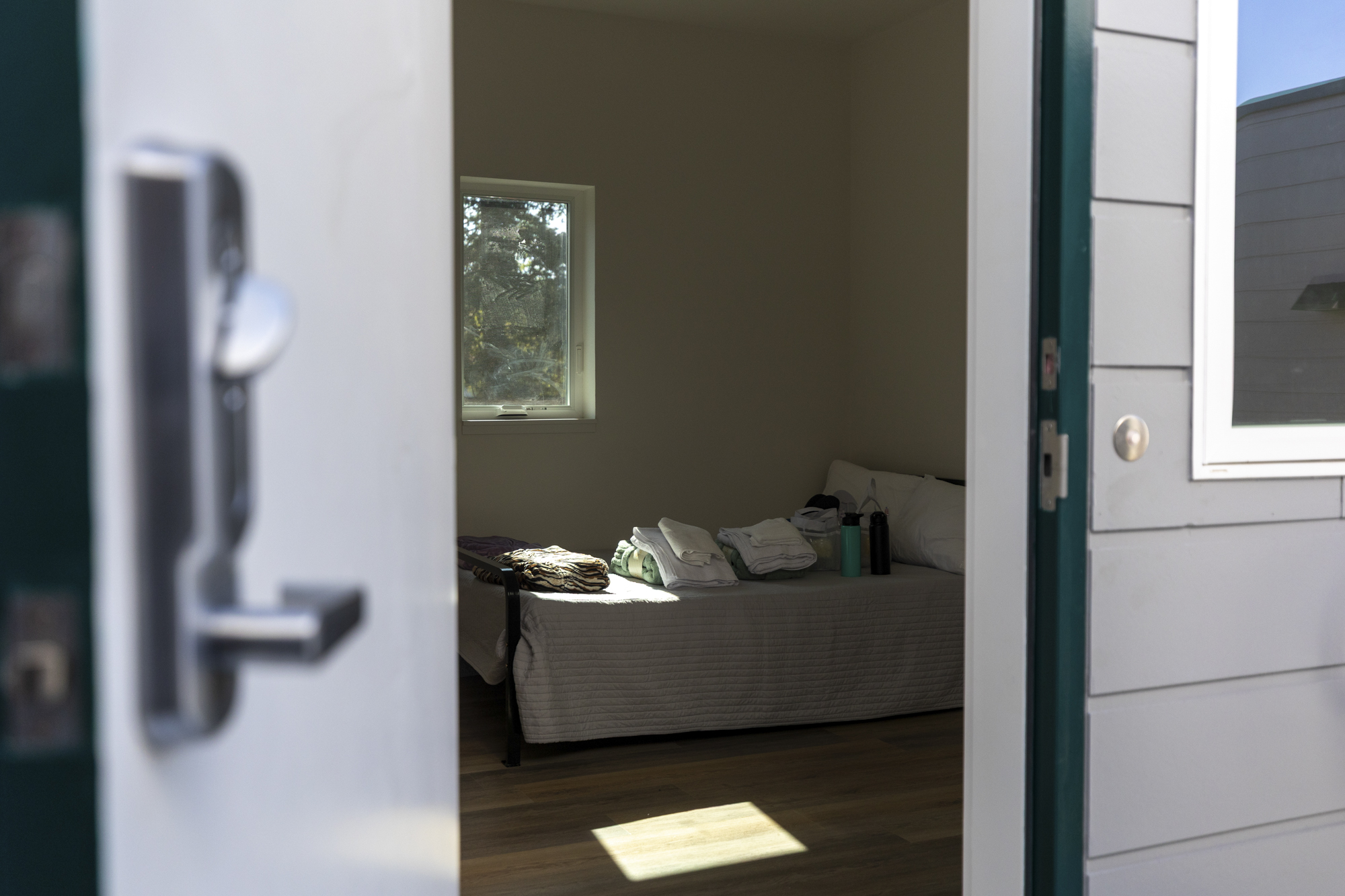 The interior of a finished tiny home is seen through an open doorway at the Cerone Interim Housing Community on Feb. 5, 2026, in San José. Each unit includes a bed, storage space and basic furnishings for residents transitioning out of homelessness. (Gustavo Hernandez/KQED)
“We’ve already said as a council that we’re not moving forward with any more EIH [Emergency Interim Housing] at the time,” Foley said. “The idea is in the future, when we do make that decision, that we look at districts that do not have EIHs.”
Lori Katcher, a resident who spoke at the meeting on behalf of the civil rights group Standing Up for Racial Justice, said the policy could be especially valuable for people who fall into homelessness in neighborhoods without existing shelter.
“We know that homelessness can befall anyone in any part of our city and to have safe places for folks to go wherever they are living, near to where they are living is very important,” Katcher said.