
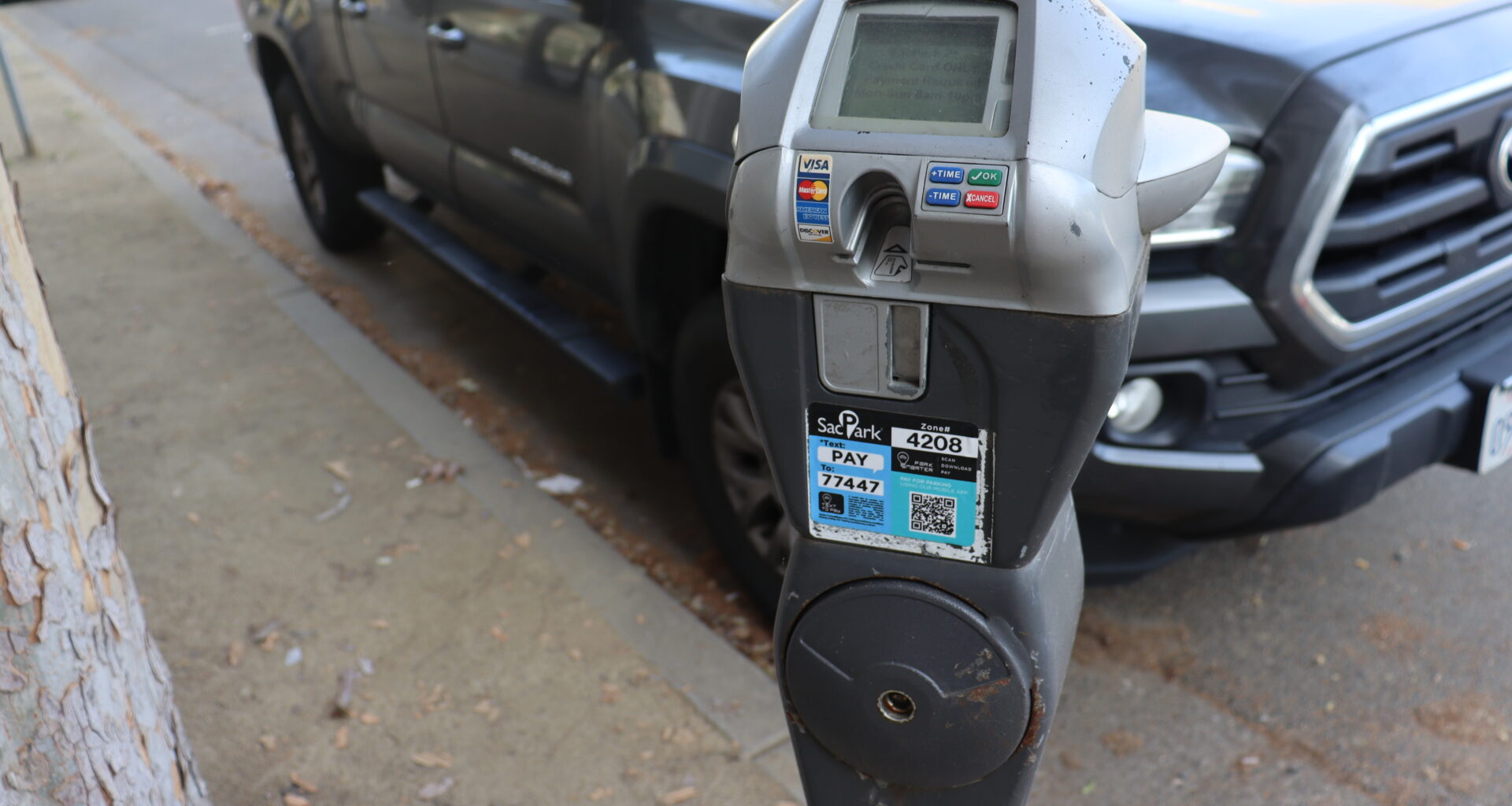
Parking fees could go up once again in Sacramento under plans being considered by the City Council to help close the city’s $66 million budget deficit. City leaders say the proposals include increasing parking meter prices, adding about 200 meters, extending evening meter hours and charging for residential parking permits.
City leaders say the proposals are still in early discussions and no decisions have been made.
While no decisions have been made yet, the discussion is one piece of a broader budget-balancing that could also include service cuts or layoffs.
Earlier this month, Sacramento notified a union representing workers across multiple departments that layoffs could occur as officials work to close the deficit.
Councilmember Phil Pluckebaum, who represents the central city, said the council is considering a range of options to make a dent in the $66 million shortfall.
“The deficit is so large that if we were to lay off every non-public safety personnel… it would not be enough,” he said.
In the past two years, Sacramento has already made changes to parking rules to generate more revenue. In 2024, free street parking on Sundays and holidays was eliminated. In July last year, the council approved higher meter rates. Maximum per-hour fees jumped from $4 to $6.
According to the city, Sacramento collected about $13 million in on-street parking meter revenue during the last year. That money goes into the city’s general fund but is limited by law to parking-related uses such as enforcement, meter maintenance and traffic infrastructure.
Parking revenue has also contributed to financing the Golden 1 Center. Parking income was originally part of the strategy used to pay back the arena’s debt, though in recent years the city’s general fund has helped cover those payments when parking revenue has fallen short.
Some city leaders say parking prices can also shape how people get around. Pluckebaum said if parking costs more, some people may choose transit, biking or walking instead. But he said those options need to improve before people can consistently rely on them.
“If we just raise the cost of parking … without also providing robust transit alternatives and good safe bike lanes and safe pedestrian crossings, I don’t think we’re going to achieve the outcome that we’re trying to get,” he said.
In the central city, residents who rely on neighborhood parking permits say they’re paying close attention to the discussion.
Laurie Bosse, who recently moved to Midtown, said she currently relies on the city’s residential parking program that allows residents to use street parking near their homes.
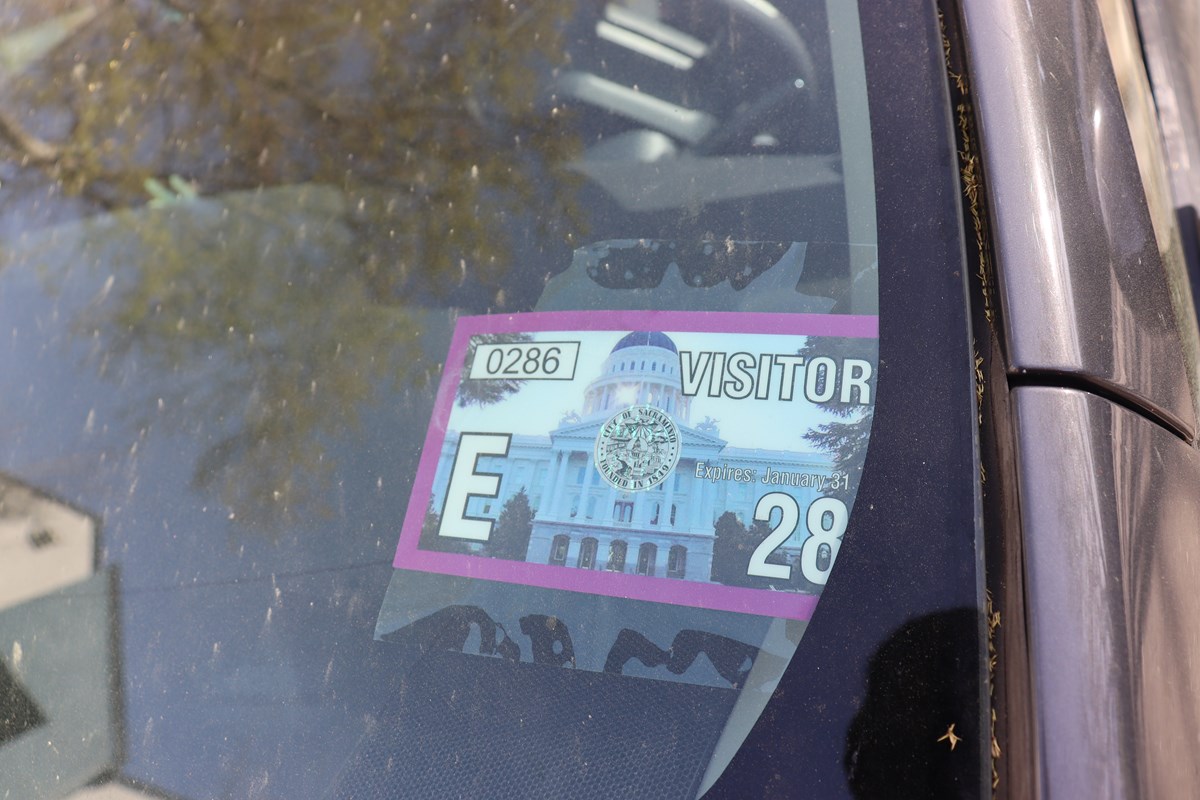 A residential visitor parking permit sits on the dashboard of a car in Midtown Sacramento on Tuesday, March 10, 2026. The city currently provides free parking passes for guests as part of its residential parking program.Tony Rodriguez/CapRadio
“I think it’s nice that they have it like this right now,” Bosse said. “Because not every place [people live at] around here provides parking.”
Pluckebaum said parking is one of the few fees the city can adjust.
“Parking is a fee structure that we can impose without having to go to the voters,” Pluckebaum said, noting California law makes it difficult for cities to raise taxes in the traditional way.
Still, the discussion about hiking fees is at an early stage and will likely continue throughout the city’s budget process. Councilmember Caity Maple said she plans to approach the issue cautiously.
“Nothing is set in stone. This is just the beginning of the process, and we’ll be very deliberative,” Maple said.
She added that previous fee hikes prompted complaints from residents in Midtown, downtown, and other nearby neighborhoods. Maple noted she has concerns about whether additional increases make sense right now.
Bosse, who lives near where many state workers park, said paying for that permit could be frustrating because the current system already limits where residents can park.
“These resident parkings are only within a three-block radius,” she said. “So it’s not like I can park anywhere.”
She said she understands the city is facing a budget shortfall, but wished it would consider other options.
“We already have enough monthly subscriptions,” she said. “I don’t need another monthly subscription to park.”
Bosse added that higher parking costs for visitors could also influence how often people come downtown.
“Everybody is trying to save every penny they can,” she said. “Everything is constantly adding up.”
Business leaders in Midtown say they are also following the discussion closely. Emily Baime Michaels, the executive director of The Midtown Association, said businesses in the central city rely heavily on visitors who park near restaurants, nightlife, and shopping.
Michaels said some businesses worry that higher parking costs or expanded regulations could discourage visitors from coming downtown.
“For every 10% that parking fees and regulations increase, it equates to a 3% decrease in visitor traffic to the area,” Michaels said.
Michaels said she hopes the city considers how parking policies could affect small businesses and the central city economy.
“The fastest way for our sales tax to increase is to make it easy and fun and safe to come into the central city to support our small businesses,” Michaels added.
The council will continue budget discussions this spring before adopting Sacramento’s next spending plan in early June.
Pluckebaum said it’s still early in the process.
“Everything’s on the table right now,” he said.
CapRadio provides a trusted source of news because of you. As a nonprofit organization, donations from people like you sustain the journalism that allows us to discover stories that are important to our audience. If you believe in what we do and support our mission, please donate today.