
The move can pull them away from their support network, making their recovery even more difficult, or it can deter them from treatment entirely. “There are simply not enough beds. We are sending people as far as Santa Barbara for this level of care,” Tsai said on Thursday. “In many cases, folks are left on the street because there is no appropriate level of care.”
Construction for the new beds on Treasure Island is slated to begin in winter of 2026 at a 64,000-square-foot, six-story building located at Tradewinds Avenue and Mackey Lane. About 172 existing recovery beds on Treasure Island will also be relocated from the former U.S. Navy housing on the island to the site that is slated to be redeveloped.
Timelines for the other two projects were not specified, but Tsai said they will begin “as fast as humanely possible.”
City officials added that the vision for the site at 1660 Mission St. includes a sobering center that also serves as a hub for other public health care services, like pharmacy pick-ups, case worker meetings and other health assessments.
It would be the second sobering center that Lurie’s administration has attempted, after the city recently announced the upcoming opening of the so-called RESET Center, where police are expected to drop off people they arrest for outdoor drug use, rather than taking them to jail for booking.
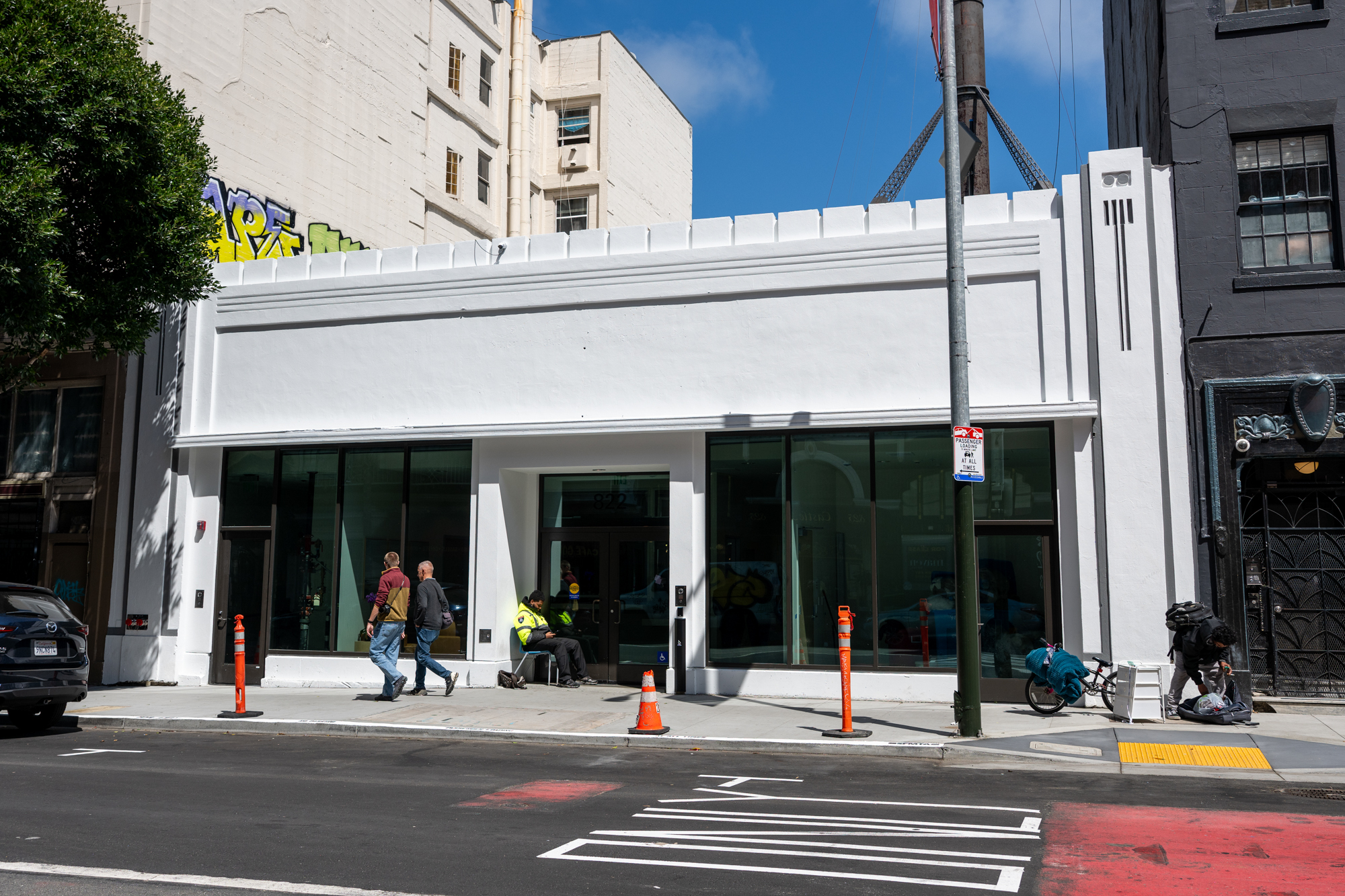 A new behavioral health center at 822 Geary Street, opened by the Department of Public Health, in San Francisco on May 2, 2025, is geared toward treating unhoused individuals experiencing a behavioral health crisis. (Beth LaBerge/KQED)
However, if someone has an outstanding warrant or other reason for arrest along with drug use, they could still be booked at jail. Some studies have shown that the risk of fatal and non-fatal overdose dramatically increases following a release from jail or prison. That, along with Lurie’s controversial decision to scale back many of the city’s harm reduction public health programs, have alarmed some addiction experts and advocates.
The new funding comes almost a year after Lurie opened a mental health crisis center at 822 Geary St., also intended for first responders to drop off people struggling on the street. Individuals can also walk in themselves for a quiet space to relax and get connected with medical professionals.
“These programs will provide much-needed mental health services to some of our most vulnerable individuals in the community and support them on their road to recovery,” said Crestwood CEO Patty Bloom in a statement.
The health organization will operate the new 50 locked beds at Hyde Hospital for people under mental health conservatorship, and it currently oversees the stabilization center at 822 Geary St.
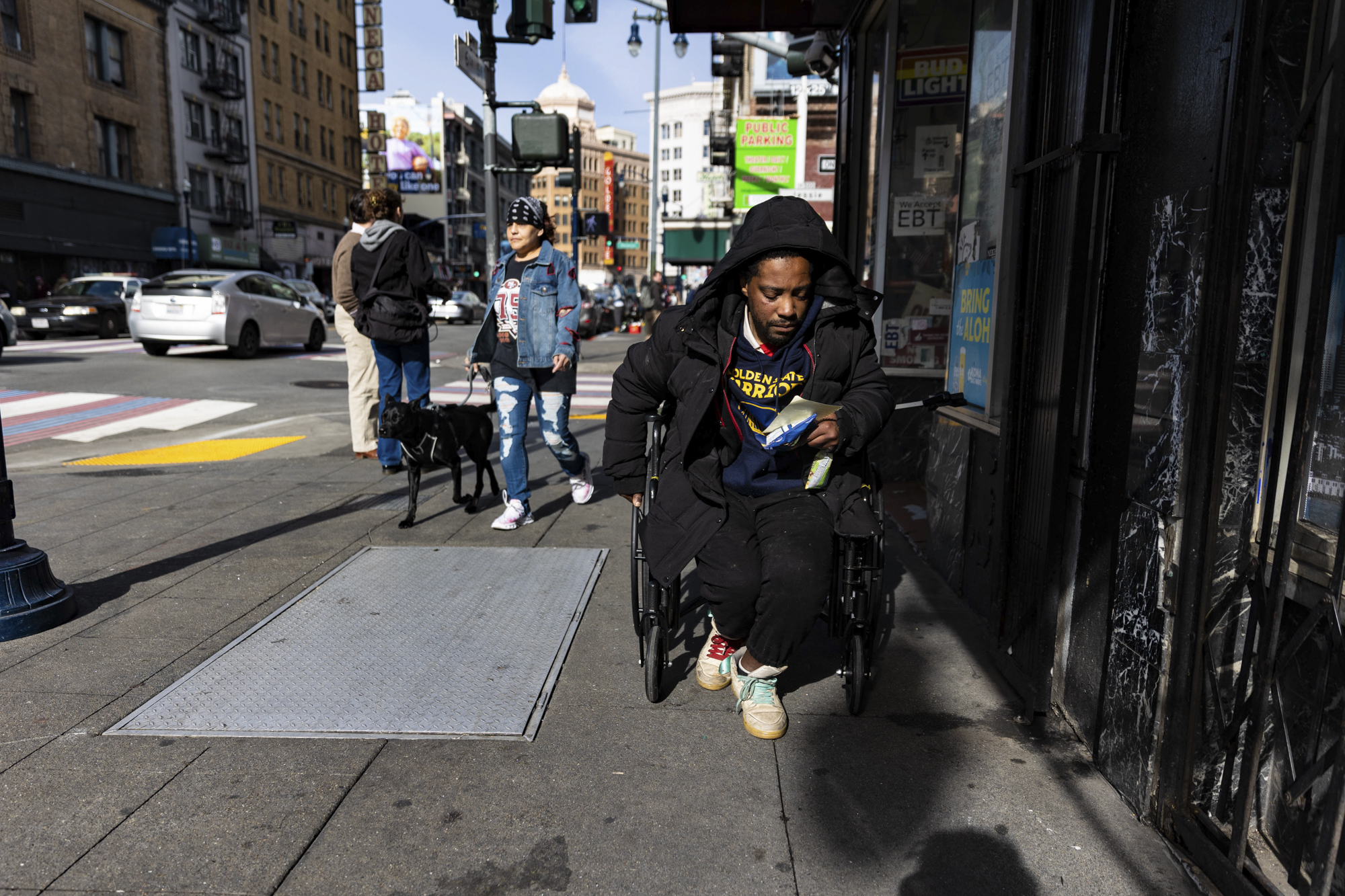 James Patrick McDonald on Sixth Street in San Francisco after visiting the outdoor triage center to get a shelter space on Feb. 11, 2025. He has a broken hip. “I’ve been on the streets so long, I just want off,” he said. “I just want to cry.” (Gina Castro/KQED)
Lurie’s police-friendly triage center on Sixth Street, however, did not have the same success and has quietly tapered off services such as offering a place to sit and get a hot coffee on the often-hectic South of Market neighborhood stretch, or sign up for social services.
Meanwhile, overdose rates have fluctuated on a month-to-month basis but remain high in San Francisco, with fentanyl still one of the most common substances involved in accidental overdose death.
On Thursday, the mayor touted the progress the city has made on street-level conditions, one of the key issues he campaigned on before entering office. Last month, the city saw a drop in tent encampments and more people participating in Journey Home, a program that covers transportation out of the city for unhoused people.
“We know that we have challenges on our streets, but with this momentum, we will continue to push for results for the people of San Francisco,” Lurie said. “We must keep going.”