
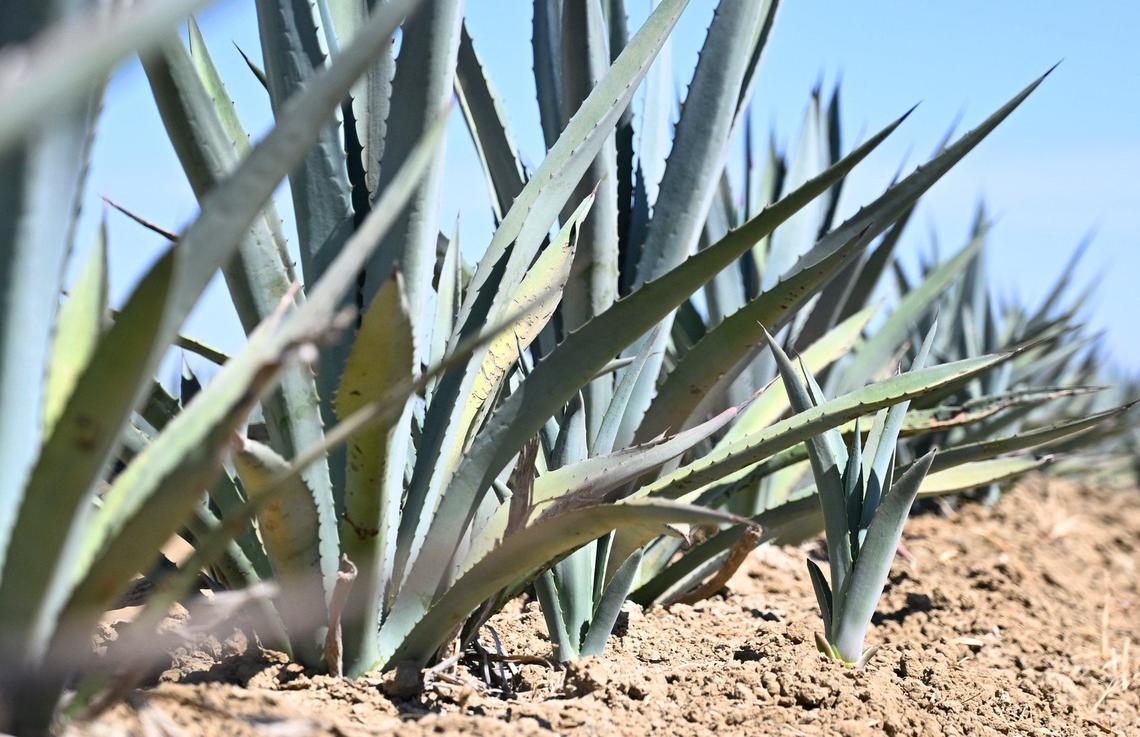
The nation’s largest agricultural water district, located in west Fresno County, says agave growing almost doubled in acreage and the amount of farmland that’s stopped producing crops also expanded within its boundaries last year.
The Westlands Water District released its latest crop report Tuesday, calling 2025 a year of “unreliable water supply” in a news release. The uncertainty resulted in 242,712 acres of the district’s irrigable land being fallowed, or paused from growing crops, the district said.
That’s an increase of about 13% from the 2024 total, according to Westlands data. It also means the amount of fallowed land in Westlands now makes up about 43% of district’s total irrigable land.
Westlands covers over 1,000 square miles in west Fresno and Kings counties and delivers water to 700 family-owned farms. According to an economic report from last year, the district’s growers produce 3.3% of fruits and nuts in the U.S.
The district’s new crop report comes weeks after agricultural water agencies across the region, including Westlands, criticized their initial allocations from the federal government as falling short of the amount farmers need and unreflective of California no longer being in a drought. Westlands’ water comes from the Central Valley Project, a federal program that uses the California Aqueduct to deliver surface water.
“Water reliability directly translates to food reliability,” Allison Febbo, Westlands general manager, said in a Tuesday news release. “When Westlands growers have access to essential water supplies delivered through the (Central Valley Project) that power agriculture, they produce the fruits, vegetables, and nuts Americans depend on every day.”
The district says its 2025 crop report shows a high level of production continues within its boundaries, “where farmers produced more than 50 high-quality crops using some of the most advanced water-efficient practices in the world.”
The district’s report shows farming of agave — the drought resistant succulent known for tequila and mezcal production in Mexico — increased about 75% to 1,010 acres in 2025. In California, alcoholic drinks made from the plant are called agave spirits, as tequila and mezcal are labels reserved for drinks made in specific parts of Mexico.
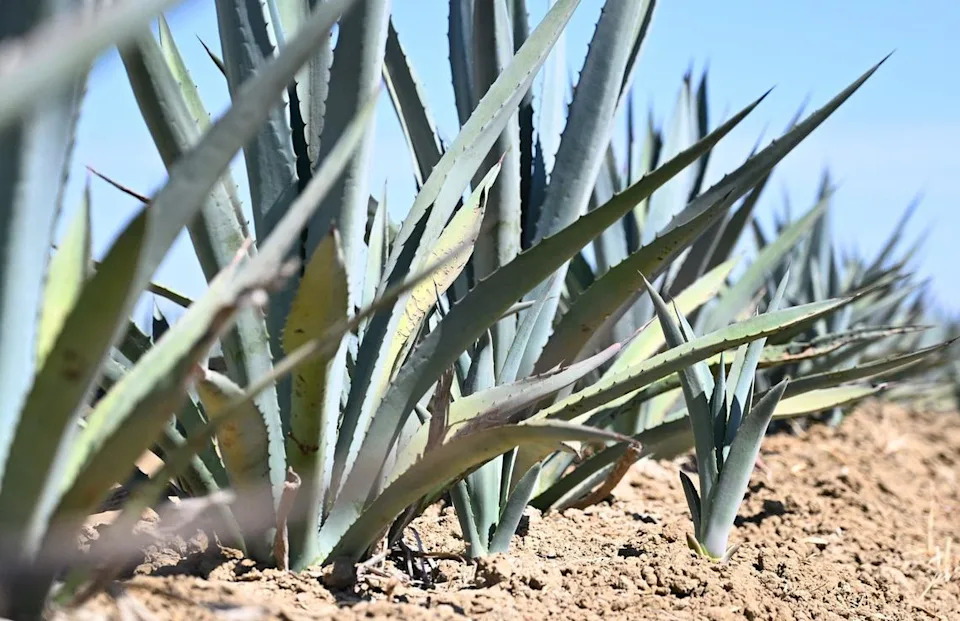
Agave, planted by Woolf Farming, could be the next big thing. Photographed Monday, Aug. 12, 2024.
(ERIC PAUL ZAMORA/ezamora@fresnobee.com)West Fresno County farmer adding agave acres, experimenting with irrigation
Westlands farmer Stuart Woolf told The Fresno Bee on Wednesday he’s getting ready to plant another 90 acres of agave, which he began growing on his family-owned farm near Huron a few years back as he looked for something he could farm with far less water.
“We’ll have about 550 acres,” Woolf said .
Woolf said the oldest plants in his commercial agave plot are 3 years old and still will require some years before harvesting. But he said he has begun harvesting some of the matured varieties from his 5-year-old test plot.
“We have sent them to a local distiller, and we’ve already made some spirits out them,” he said.
When The Bee interviewed him about his agave in 2024, Woolf said the plants were using about 2 3/4 inches of water — far less than other popular crops in the Central Valley use. Almonds, for reference, require about 4 acre feet of water.
Two years later, “you could actually argue it’s been less than 2 3/4 inches,” Woolf said.
He said this year he plans to remove the drip lines on some of the plants that have taken hold to see what happens when they are not irrigated .
“Maybe they won’t grow as much; I don’t think they’ll die,” he said. “So we’re just going to give it a try.”
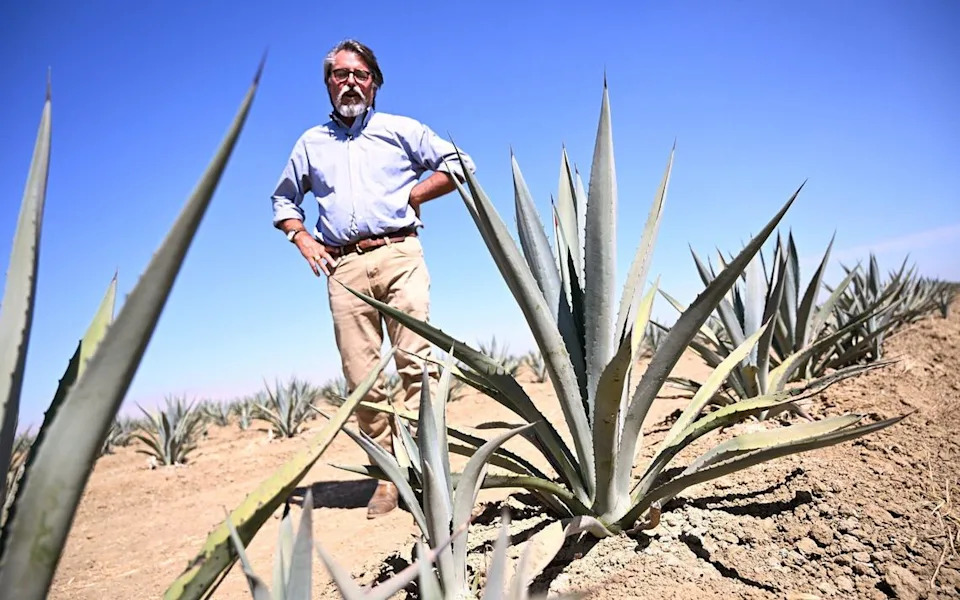
Stuart Woollf of Woolf Farming shows off some of the agave plants the company has planted near Huron. Photographed Monday, Aug. 12, 2024.
Grapes down, hemp up in Westlands, report shows
Westlands acreage of wine grapes fell 34% to 6,759 acres in 2025. The decline in wine grape farming has followed an overall downturn in the wine industry as younger drinkers are not consuming the drink as much as past generations.
The Bee reported last year that about 30,000 acres of grape-growing land in the central San Joaquin Valley were either on pause for farming or being cared for just enough to keep the vines alive.
Westlands reports that tangerines, pistachios and peaches also saw slight decreases in 2025.
But a few crops in Westlands that are on the lower end of acreage amounts saw big increases, according to the report.
Basil acreage reached 159 acres, almost double its amount in 2024. Broccoli acreage grew more than 1,500% as it went from 11 acres in 2024 to 181 in 2025.
Acreage of hemp, a cannabis plant used to create fabric and other materials, grew 133% to 2,664 acres in 2025.