
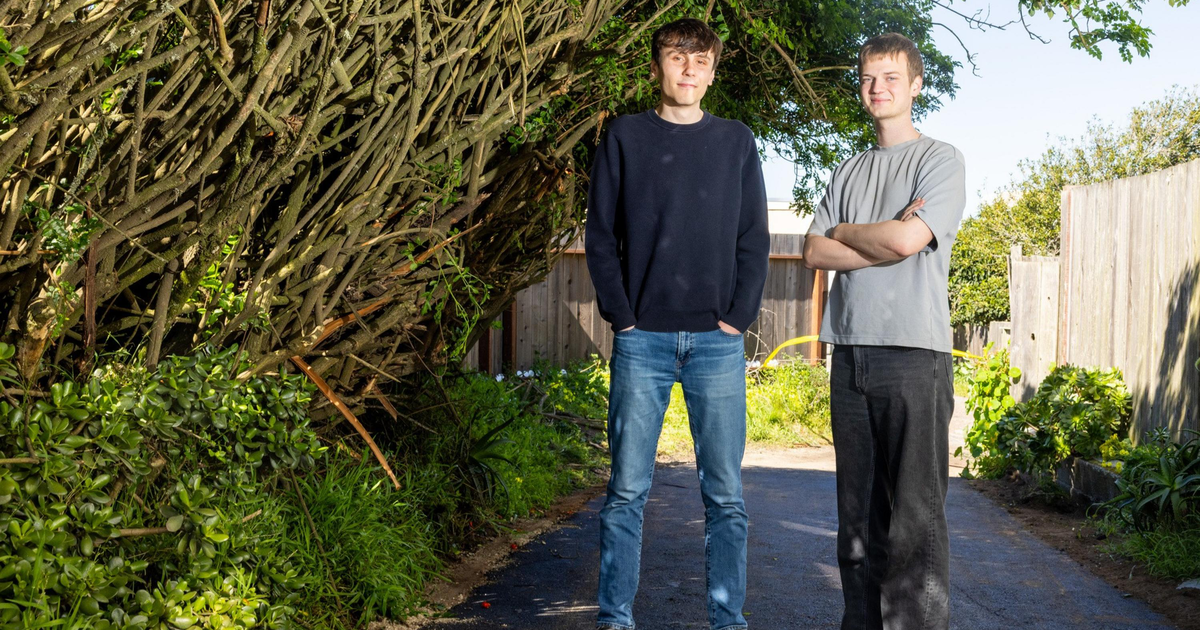
Riley Walz was in the market for an alley.
The 23-year-old tech prankster — known for building viral apps that do everything from Shazaming the ambient music of the Mission to making it easier to peruse Jeffrey Epstein’s emails (opens in new tab) — had his heart set on a thin strip in Noe Valley. Disappointingly, the city’s $33,000 asking price at auction was just out of his range.
So when he read The Standard’s November story on “Dirt Alley”, a narrow, unpaved Sunset lot that composer JJ Hollingsworth had unwittingly — and regretfully — purchased last spring at a city auction for $25,000, it seemed like a steal.
After some convincing, Hollingsworth agreed to sell the alley to Walz, who was recently hired (opens in new tab) by OpenAI “to research and develop new ways for humans to interact with AI,” according to Wired. Walz and two of his friends agreed to pay $26,000 for Dirt Alley — $1,000 more than Hollingsworth had paid the city. The new owners’ end goal: an interactive art project, set for this spring, on which they hope all of San Francisco will collaborate.
Like many of Walz’s projects, the alley’s transformation will start online, where people will compete to be part of the design process. Compared with some of his other stunts, like creating a real fake steakhouse (opens in new tab) in Manhattan for one night only, this project will be relatively low lift, he said.
But first, the “dirt” in Dirt Alley had to go; the trio paid an additional $10,000 last week to have an asphalt crew pave it. Hollingsworth was there for the transformation, looking on with approval.
“It’s hard to imagine who else would buy this alley, especially for the price that we did,” Walz said. “But we’re able to do a cool project, and she’s able to get out of this mess.”
Dirt no longer
When Walz first contacted Hollingsworth via snail mail, she thought he was nuts.
After all, she had spent months trying to rid herself of the alley, claiming that city officials were unclear about the lot she bought at an auction for tax-delinquent properties. She and her husband, Alemayehu Mergia, thought they were purchasing a two-bedroom, three-bathroom duplex across the alley, since that seemed to be the address listed on the auction notice. Instead, they were acquiring an alley used mainly by neighbors to walk dogs and access garages.
There were a few “too good to be true” red flags that Hollingsworth and Mergia missed. The block and lot number on the notice corresponded to the “unusable” alley, not the home. And then there was the $1 minimum bid, when the duplex the couple thought they were buying had last sold the year before for $1 million.
Once Hollingsworth and Mergia realized they had mistakenly bought an 83-foot-long, 7-foot-wide roadway instead of a home, they were desperate to return it.
Hollingsworth started spiraling. The stress of potential liabilities associated with the uneven former carriage path made her temporarily deaf in one ear — not a great situation for a composer.
“I’m gonna lose everything I’ve ever worked for, my family’s ever worked for, everything’s gonna be down the drain,” she worried at the time.
Still, even though she was desperate to rid herself of the alley, Hollingsworth was suspicious of Walz’s intentions. What if he wanted to park an RV there or somehow block access to neighbors’ driveways? Why the hell would anyone want to buy the alley, anyway?
The transformed stretch got rave reviews from neighbors, who had never seen the former carriage path paved.
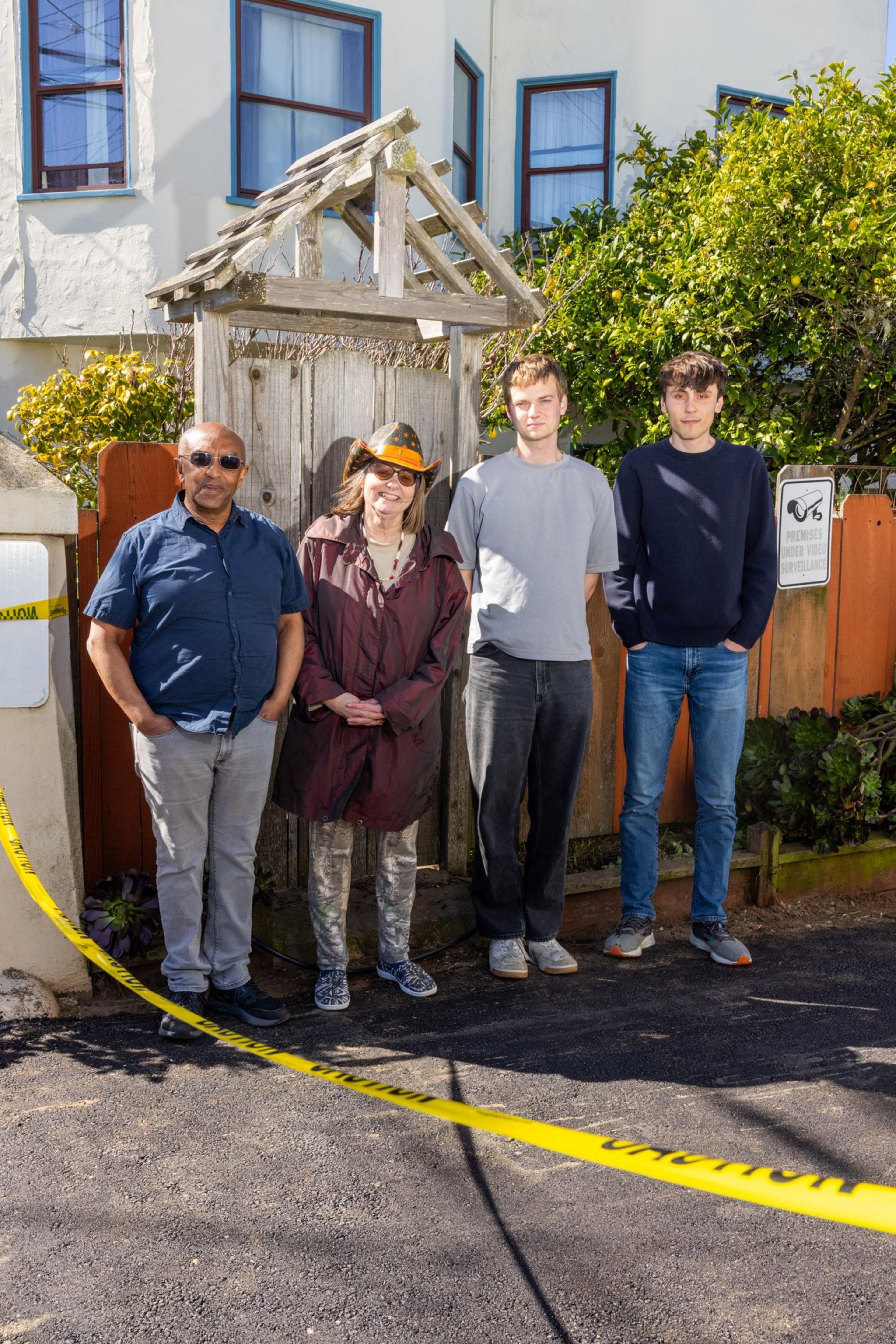 Alemayehu Mergia, left, and JJ Hollingsworth, the previous owners, with Hultquist and Walz. | Source: Morgan Ellis/The Standard
“Yeah, it’s a fair question,” said Patrick Hultquist, one of the three new owners, along with Walz and Theo Bleier. Last summer, the trio put on Pursuit (opens in new tab), a 12-clue scavenger hunt in the city that had 12,000 participants.
Walz and Bleier went to Hollingsworth’s home to make their case in person. They envisioned the community creating a one-of-a-kind artwork in the alley, likening it to a giant quilt. The metaphor sealed the deal, since Hollingsworth is a quilter herself and had just written a concerto about an antique patchwork.
“That just melted my heart,” she said.
After the deal closed at the end of February, Hollingsworth and Mergia popped open the Champagne, and the new owners — who purchased the property under the name Analysis Paralysis LLC — had to decide exactly what they were going to do with it.
The group is staying mum on the details but teased that the activation will start online in about a month. Anyone will be able to take part in the open design process. Then the online creation will morph into huge vinyl stickers that will be affixed to the no-longer-dirt alley.
“It’ll just be fun to watch people compete over space on the canvas,” Hultquist said.
The result will be revealed to the public in a ceremony in late spring or early summer. The new owners hope it will become a tourist attraction in the neighborhood, similar to the tiled steps (opens in new tab) on the way to nearby Grandview Park.
When you total the price of the property purchase, the paving, printing the vinyl stickers ($5,000), and lawyers’ fees, it’s an investment of about $50,000 for the alley-as-art-project.
The new owners think it’s worth it: For the price of a decently kitted-out Tesla Model Y, they will own a storied piece of San Francisco that could become a neighborhood landmark.
Plus, the tech workers believe there’s gotta be someone in the industry who will fund at least a portion of the project.
“There’s wealthy people in tech, and they like SF, and they want it to come back,” Walz said.
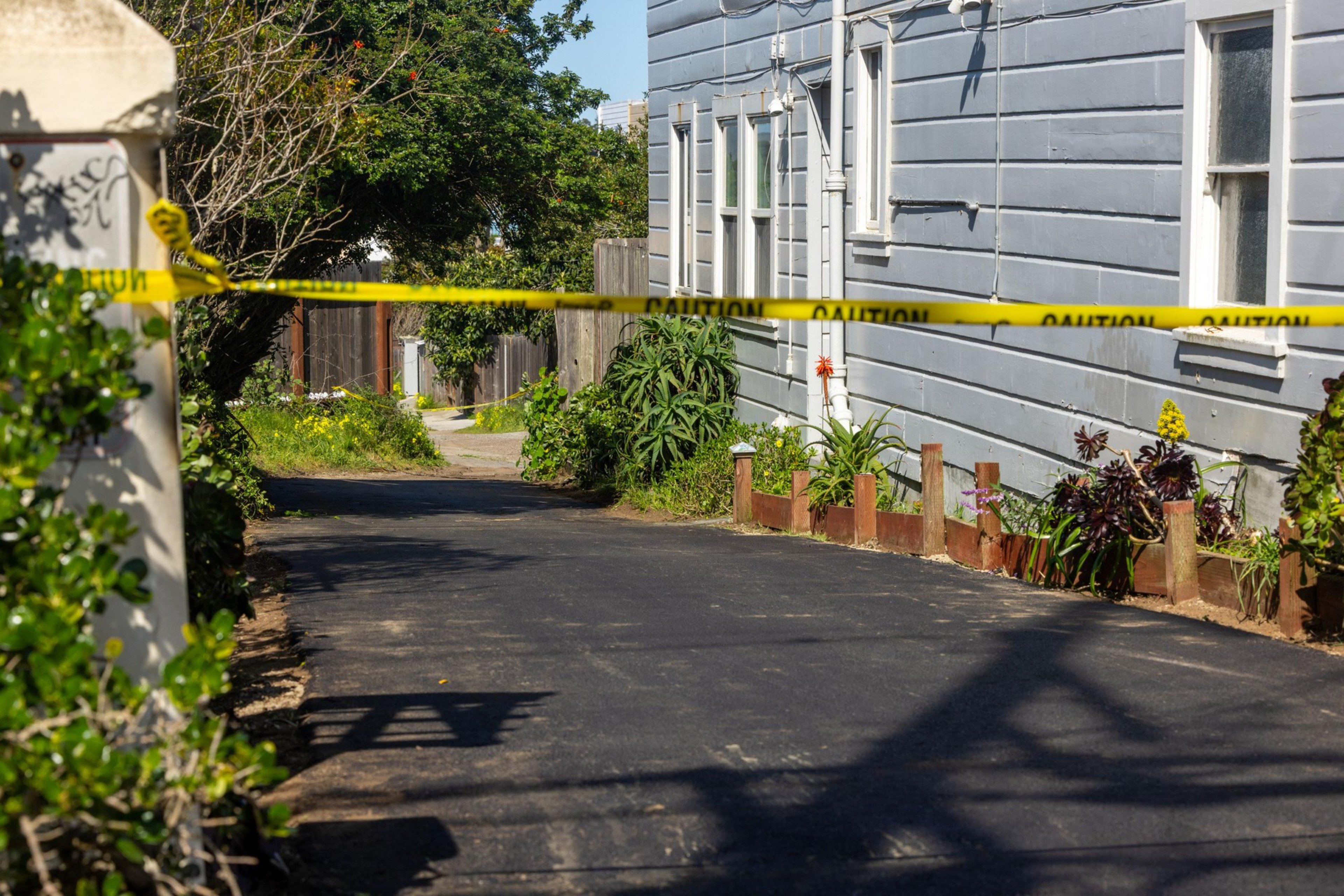 The narrow plot of land includes the outlet to Kirkham Street. | Source: Morgan Ellis/The Standard
 The trio paid to pave only the 83-foot-long, 7-foot-wide portion of the alley that they own. The rest, held by property owners closer to Judah, is still dirt. | Source: Morgan Ellis/The Standard
Stanton Glantz, a neighbor, had somehow missed the Dirt Alley debacle until coming out to see it get paved last week — something he’s been wanting to do for years. Even without the art, he said, it’s never looked this good in the 50 years he’s been living there.
Walz wants to ensure that the final result can stand the test of time and be a good use of the trio’s energy and resources. He suspects it will be.
“This could never happen in any other city,” he said. “I feel like my life would be boring if we weren’t doing stuff like this.”