
The city of San Diego’s Climate Action Plan assumes that half of San Diegans will voluntarily ditch their cars in nine years — and that’s not an exaggeration. When 2035 arrives, its expectation is that 25% of residents will commute by walking, another 15% by bus or trolley and 10% by bicycle. This plan must be revised because it overlooks the practical realities of how people in our region really commute and how we will commute in the future.
San Diego is not a dense, transit-centric city; it is geographically spread out and hilly, and most families rely on their vehicles to get to work, take their children to school, shop for groceries and run everyday errands. The plan does not align with daily life, and it overlooks the demographic future of our region.
In San Diego County, demographic researchers with the state Department of Finance project more than 910,000 people will be 60 and older by the year 2030. Are we really expecting older adults to ride a bike to their doctor’s appointments, walk to the grocery store to buy food or rely on a trolley to go out to dinner?
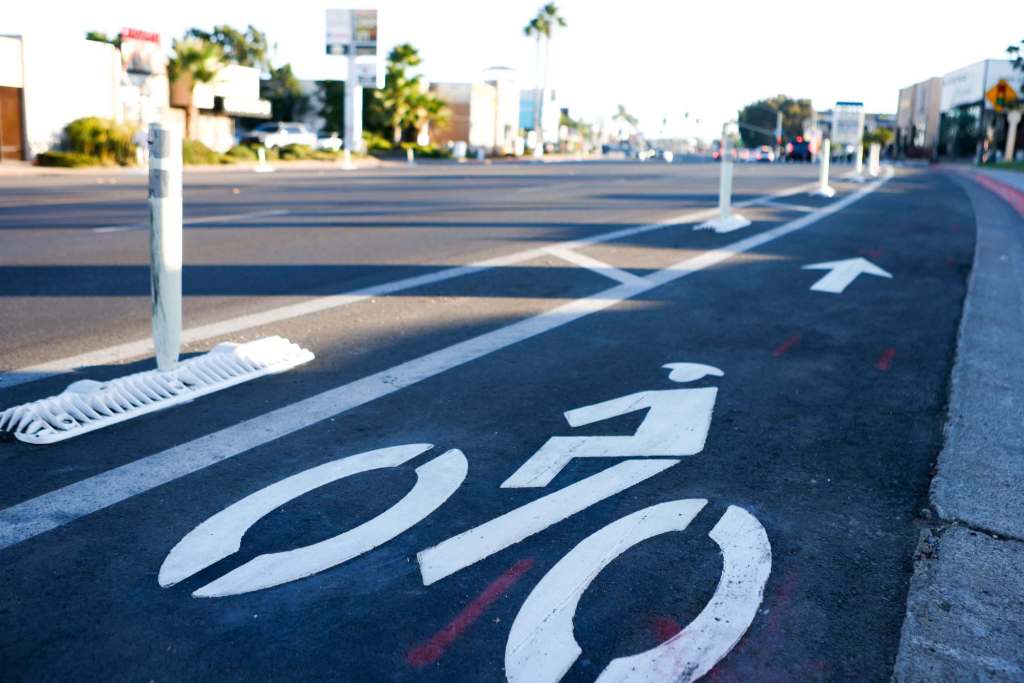
Moreover, the city’s Climate Action Plan is being used to justify removing traffic lanes and eliminating valuable street parking to install bike lanes that are barely used, while congestion increases and access becomes more difficult for residents and small businesses alike. These lane conversions can cost taxpayers millions of dollars per mile, all based on the assumption that fewer people will drive. Meanwhile, local businesses that depend on street parking for customer access are left struggling.
The plan’s deeper flaw is that it focuses on reducing car use without seriously accounting for the most likely future of transportation: autonomous vehicles and AI-driven mobility. History offers a powerful analogy.
Decades ago, Bill Gates and Paul Allen famously articulated a vision of “a computer on every desk and in every home.” At the time, that idea sounded ambitious, even unrealistic. Today, computers are everywhere, embedded not just on desks but in our pockets. Autonomous vehicles are on the same trajectory and are no longer theoretical. They are operating on public roads right now, and the pace of deployment is accelerating. They are already here in San Diego.
Instead of planning for the transportation realities of the future, the Climate Action Plan attempts to force a shift to walking, biking and public transit as the primary modes of travel. These flawed assumptions are now embedded within the city’s “Community Plans,” meaning they are actively shaping long-term development decisions.
The problem is that the plan ignores both demographic trends and rapid technological innovation that will influence how people actually move and live in the coming decades. Therefore, if the underlying assumptions of the Climate Action Plan are flawed, then the community plans built upon those assumptions are also flawed, and they too need to be revised.
These flawed community plans have targeted two specific San Diego neighborhoods for massive population growth: University City and Hillcrest. The plans could double the populations of Hillcrest and University City and make those neighborhoods look and feel more similar to downtown.
The proposal for University City would add more than 64,200 residents to the neighborhood’s current population of 65,400. It would do that by adding just over 30,000 housing units. The proposal for Hillcrest would add 17,000 new homes, some of them in buildings with 20 stories or more. Do we really expect half of these people to commute each day by walking, bus, trolley or bicycle? The short answer is no.
San Diego deserves a climate strategy grounded in reality, not one that forces residents out of their cars. Environmental responsibility and mobility should not be at odds, but expecting half the population to abandon driving in a region that is aging and spread out is not sustainable planning. It is disruption that risks harming the very communities the plan claims to protect. A more balanced approach would recognize that sustainability is not just about reducing emissions — it is also about smarter traffic management, more reliable transit options and preserving the mobility that families, seniors and working residents rely on every day.
Powell is a business owner and former San Diego County Board of Education member. He lives in San Diego.