
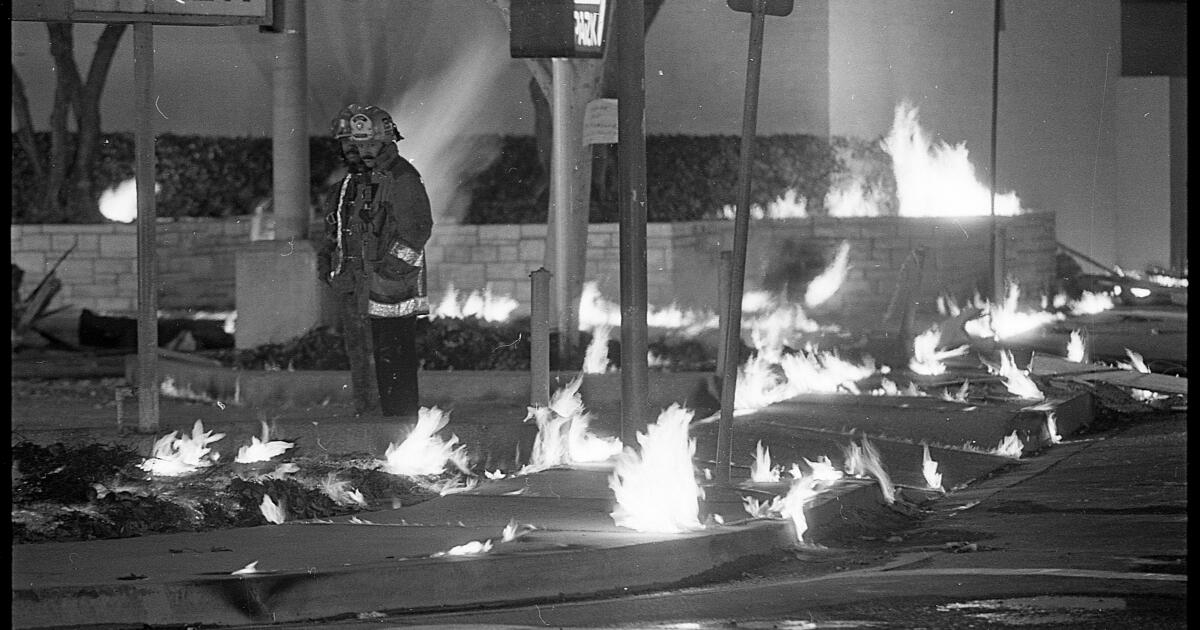
Word spread quickly through my neighborhood that Sunday afternoon: Kids on their dirt bikes repeating “do you hear the explosion?” Concerned parents wondered whether it was time to load the station wagon and evacuate.
It was March 24, 1985, and a terrifying blast rocked the Ross Dress for Less store across the street from Farmers Market. Walls crumbled. Windows shattered. Fireballs rose. As firefighters frantically treated the nearly two dozen wounded, open flames flared from cracks in the parking lot (a “rain of fire” as the L.A. Times described it).
In the sleepy Fairfax District neighborhood where I grew up, this was a big deal. The culprit was methane gas from old oil fields that had accumulated underground, sparking short-lived worries that more explosions could happen at any time. There were no more blasts, but a politics of fear had taken hold.
Stalling L.A.’s destiny 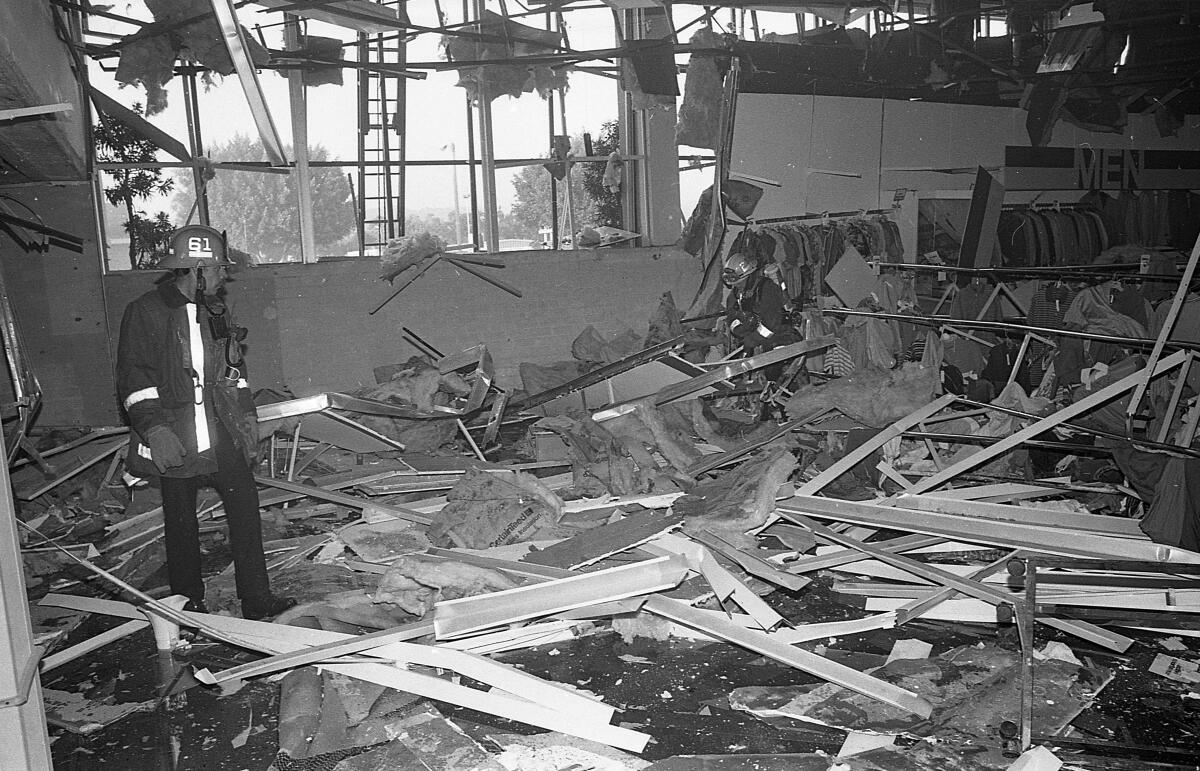
A 1985 methane explosion in L.A.’s Fairfax district turned a Ross Dress for Less into a disaster scene.
(Los Angeles Times)
The Ross Dress for Less fire profoundly altered L.A. urban planning for a generation. The disaster led to a fateful decision that many now believe held the city back — something that will finally be corrected this year, on May 8.
The explosion occurred during an epic battle over building a subway under Wilshire Boulevard from downtown. In the early 1980s, L.A.’s love of cars had already turned into a nightmare of traffic and pollution, and city leaders saw rail as the only solution. Mayor Tom Bradley was the chief advocate, arguing there was no better place to test whether residents would get out of their cars than building below L.A.’s most iconic and bustling boulevard.
But neighborhood opposition was fierce. Some feared crime once the subway was open; others predicted chaos and lost sales during the long construction. The explosion gave them a new weapon: The subway was unsafe because of methane gas. This was a legitimate concern for a while.
But before all the science questions were resolved, critics got Congress to essentially ban Wilshire Boulevard tunneling. As a result, L.A.’s first modern Metro Rail was re-routed up Vermont Avenue and into Hollywood. Even at the time, some felt the ban was more about politics than safety. Despite the methane risk, LACMA expanded, the Grove was built, along with dozens of new apartment complexes. It took two decades — and many more studies — for Congress to repeal the ban. By that time, Metro built rail lines in far-flung places far from L.A.’s main street.
The great Wilshire test 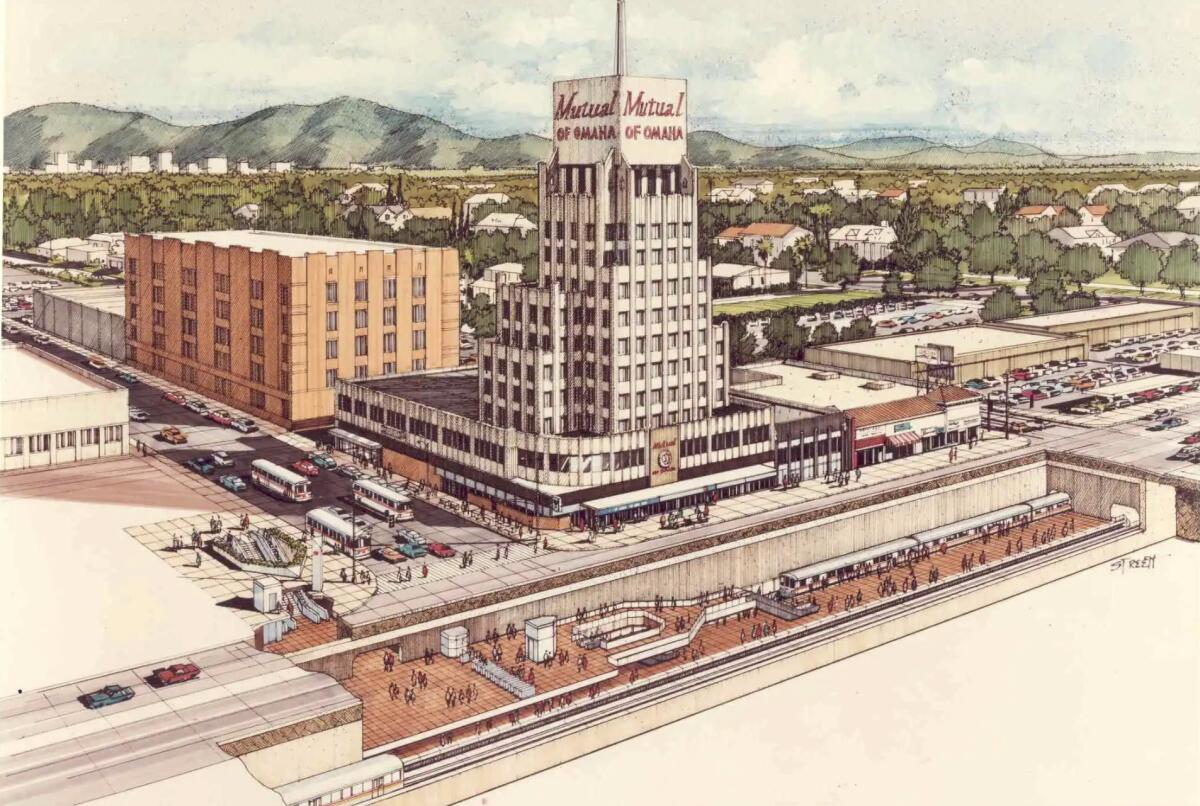
Artist rendering of the Wilshire subway station at La Brea Avenue, which was used by Metro to sell the plan.
(Metro Transportation Library and Archive)
But this May, L.A. will turn the page on the Ross Dress for Less fire once and for all. That’s when the Wilshire Subway will finally open, spanning from downtown to Beverly Hills and eventually to Westwood.
The D Line (as it is officially dubbed) is both a testament to how hard it is to build things in L.A. but also a tribute to the generation of leaders and activists who never gave up on it. And we will finally learn whether Tom Bradley’s instincts about Wilshire Boulevard were right. Metro has spent billions on light rail, but many agree the system is still not attracting the ridership L.A. needs. Will the Wilshire line be the magic bullet the system needs to connect the city and build a stronger culture of mass transit?
A ride to remember
The landscape above the Wilshire subway has changed so much since 1985. The May Co. where my grandmother took me shopping is now the Academy Museum. The old Orbach’s department store across the street is now the Petersen Automotive Museum. LACMA has been completely remade. The Grove now dominates the corner of Ogden and 3rd where the blast occurred, but Ross Dress for Less is still there.
As a kid, Metro’s subway maps and elaborate prototype renderings mesmerized me. I’d never taken a subway before but assumed I’d spend long days riding the rails one day, every stop an urban adventure. As an adult, I rarely ride our rail system. L.A. still charms and surprises me, but mostly from my Toyota or my electric bike.
The Ross explosion hit close to home for my family because the building that blew up used to be a Market Basket supermarket, where my father worked for years and my mother and I loyally shopped for groceries. He used to joke about how he cheated death. So when the D Line opens, I will ride it with one destination in mind. Get off at the Fairfax station. Walk a few blocks north to 3rd Street. Then a block east to the discount clothing store where fate delayed — but did not derail — L.A.’s destiny.
You’re reading the Essential California newsletter
L.A. Times reporters guide you through the most important news, features and recommendations of the morning.
By continuing, you agree to our Terms of Service and our Privacy Policy.
Today’s top stories 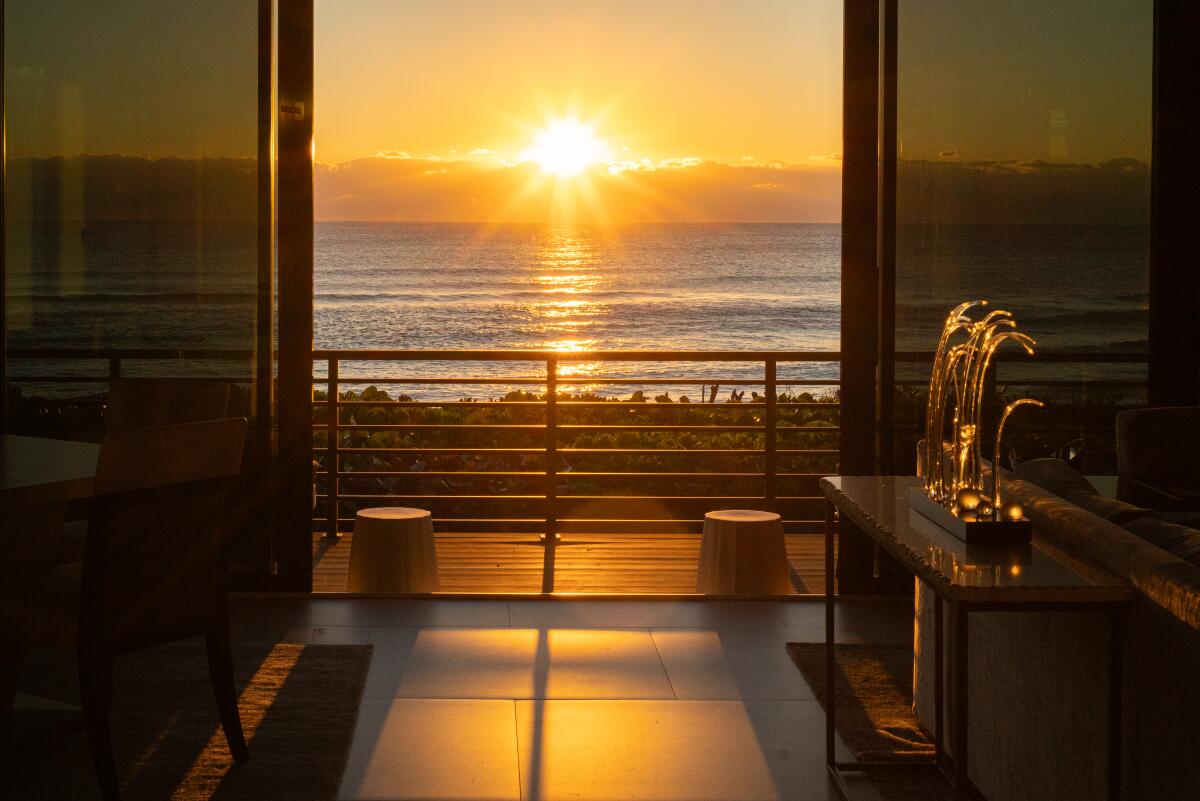
Wealthy Californian tech moguls, including Sergey Brin and Larry Ellison, have bought properties in south Florida. Above, the sun rises over Billionaire’s Row in Manalapan, Fla., on Feb. 24.
(Jennifer Ortiz / For The Times)
The exodus of California’s tech billionairesTech billionaires including Mark Zuckerberg, Larry Page and Sergey Brin are rapidly buying up properties in Florida to avoid California’s proposed 5% wealth tax on billionaires.California’s wealth tax is driving unprecedented demand for Florida luxury properties and reshaping south Florida’s economy.The migration reflects efforts to transform Florida into a tech rival to Silicon Valley, with major investments in infrastructure, education and business ecosystems.The new Iranian leader vows “never-ending” revengeIran’s new supreme leader, Mojtaba Khamenei, vowed retaliation Thursday against the United States and Israel and signaled that Tehran will continue to choke off the world’s most critical oil route.The new leader expressed condolences to families who lost children in a strike on a girls’ school in Minab that killed more than 165 people, many of them children.He also warned that the war could expand, declaring that the continuation of the conflict “depends on the interests of the parties.”The hottest new gig-economy job in L.A.Hundreds of people from Santa Monica to Los Feliz are strapping cameras on their heads and hands as they do chores at home so bots can watch how they make coffee, scrub toilets, water plants and wash dishes.As AI and robotics companies figure out how to make AI chatbots work in the physical world, the models need much more information about real-world movements.The quest to capture data on human movement has given rise to a micro-economy that supplies real-world demonstrations of what some call “physical AI” systems, such as humanoid robots.More big storiesCommentary and opinionsThis morning’s must readsOther great readsFor your downtime 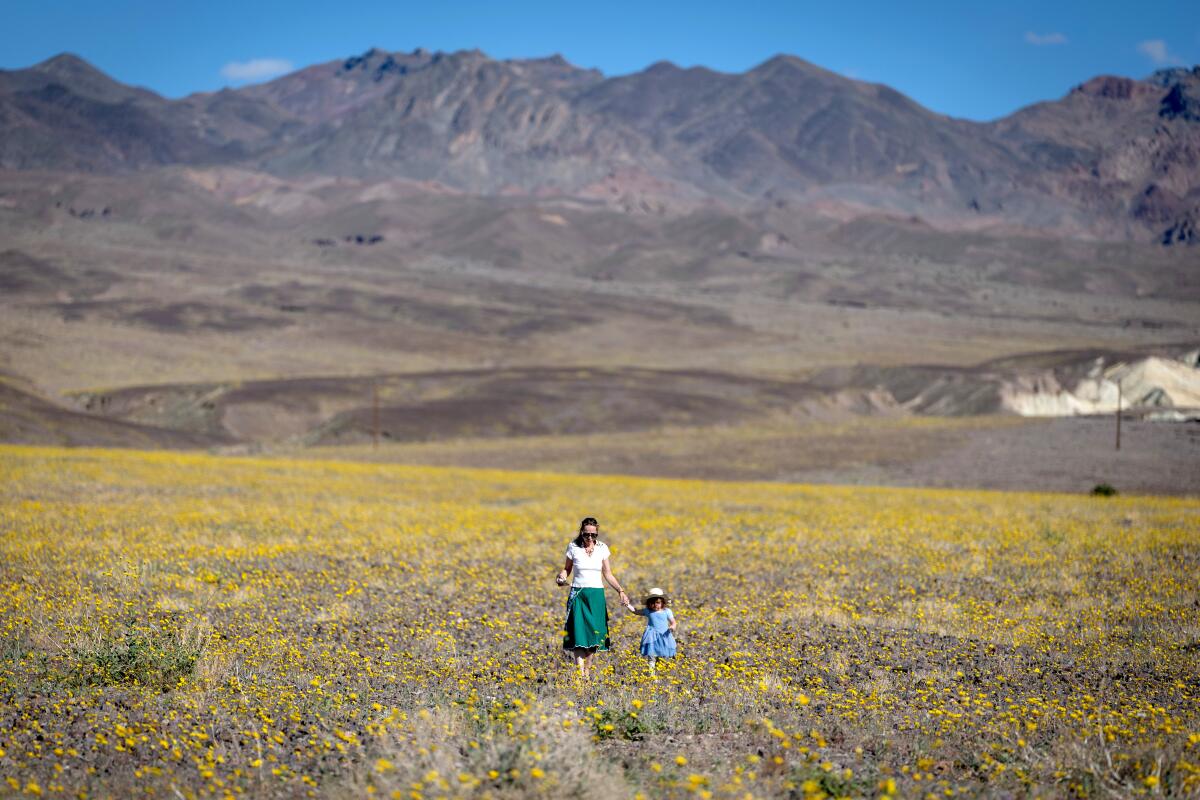
Melissa Whittier and daughter Kaylynn get up close with the blooms in Death Valley.
(Eric Thayer / Los Angeles Times)
Going outStaying inQuestion of the day: What movie do you think should win the Oscar for best picture?
Email us at essentialcalifornia@latimes.com, and your response might appear in the newsletter this week.
And finally … the photo of the day 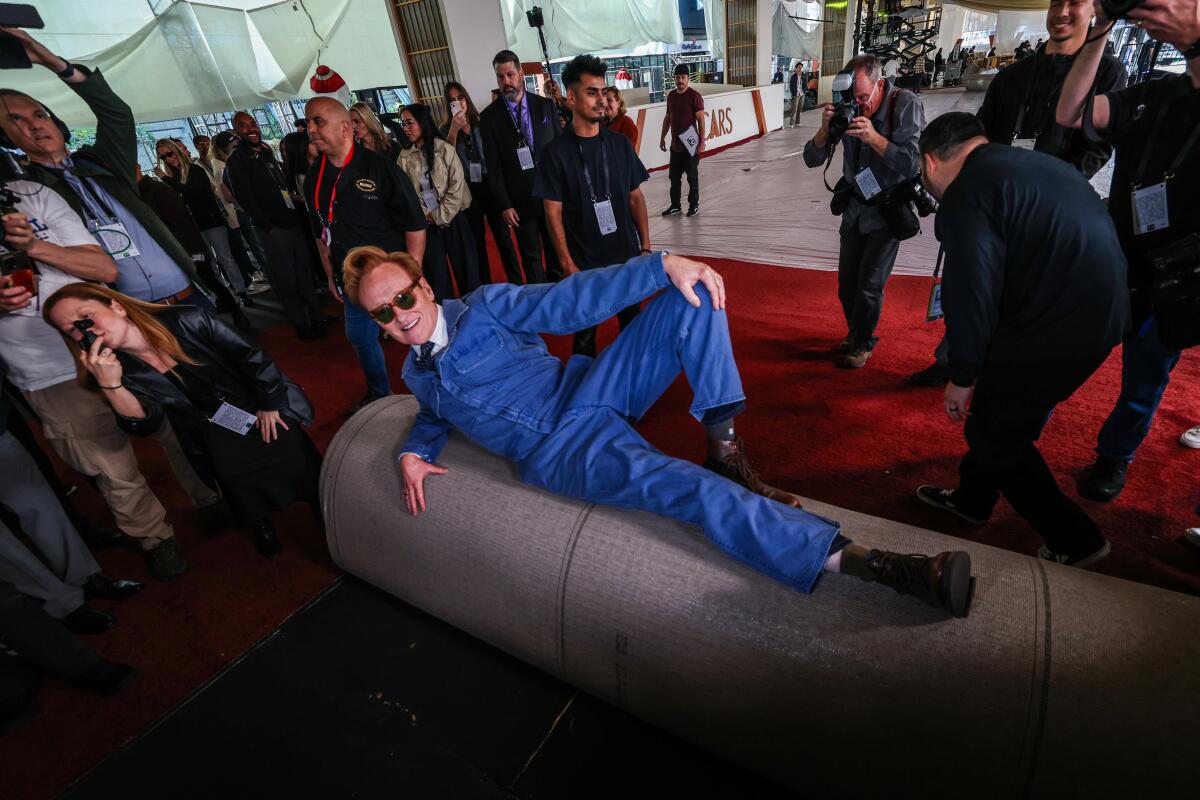
Conan O’Brien rolls out the red carpet at the Dolby Theatre ahead of the Oscars on Sunday.
(Robert Gauthier / Los Angeles Times)
Today’s great photo is from Times photographer Robert Gauthier at the Dolby Theatre, where comedian Conan O’Brien rolled out the red carpet ahead of Sunday’s Oscars.
As the host of this year’s show, O’Brien said “we will find the right tone” for the ceremony amid the war in Iran.
Have a great day, from the Essential California team
Jim Rainey, staff reporter
Hugo Martín, assistant editor, Fast Break desk
Kevinisha Walker, multiplatform editor
Andrew J. Campa, weekend writer
Karim Doumar, head of newsletters
How can we make this newsletter more useful? Send comments to essentialcalifornia@latimes.com.