
In 1926, the city of San Diego embraced a farsighted plan by landscape architect John Nolen to preserve Balboa Park as what he called “one of the most strikingly beautiful parks in the world.”
Exactly 100 years later, the mayor and six City Council members looked at Balboa Park and saw a source of ready cash to help fill a budget deficit.
The decision to monetize San Diego’s “crown jewel” by charging visitors to park there was arguably the city’s biggest political blunder in recent history. The mayor and the council didn’t anticipate how fiercely San Diegans would fight to protect their jewel.
That miscalculation could secure Balboa Park’s future if it galvanizes citizens to demand a new public-private governance structure. And a commissioned 2020 report that was never publicly circulated offers encouragement for doing just that.
The dire effects of paid parking — fewer visitors, declining revenues, staff layoffs — have worsened a problem with deep roots.
For decades, City Hall has put the park on a starvation diet. San Diegans kept hearing about master plan updates that would make the park more vibrant. But then we kept seeing the park decline as those plans were relegated to file cabinets. The result has been filthy restrooms, rundown buildings and wilting greenery.
Those same concerns prompted New Yorkers to launch the Central Park Conservancy in 1980. That flagship is the model of successful park stewardship built on citizen engagement and philanthropic support. It has been successfully adopted by Atlanta, New Orleans, St. Louis and other cities.
In a Jan. 17 letter to the Union-Tribune, James Ziegler wrote, “It’s time for the city to support an effective public-private partnership governing Balboa Park [which] already has the basics in place with an endowment and the Forever Balboa Park nonprofit conservancy.”
In fact, that idea was formally proposed following a 2019 national initiative by the Central Park Conservancy’s Partnerships Lab. San Diego was among eight U.S. cities chosen to receive $25,000 grants accompanied with what the Union-Tribune described as “six to 12 months of guidance … on how to plan, develop and maintain hallmark public spaces.”
A year later, the Partnerships Lab published a 17-page report for San Diego, “Recommendations for Balboa Park Conservancy,” with steps for moving Balboa Park from inflexible city oversight to dynamic management by a public-private enterprise.
“Many public and nonprofit park partnerships have emerged in cities during previous economic crises and have dramatically transformed and renewed parks — and Balboa Park has a similar opportunity,” the report states. “A focused, unified and multifaceted public/private partnership … is often a key component for long-term sustainability.”
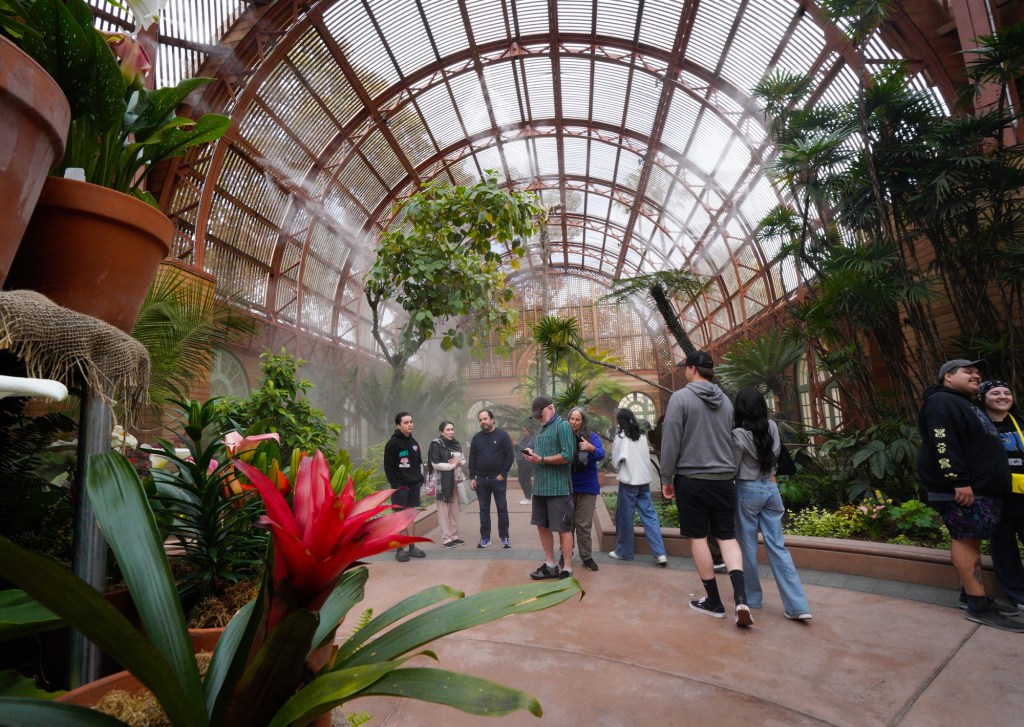
The report’s first recommendation was carried out when two park advocacy groups merged in 2021 to form Forever Balboa Park. That consortium has begun transforming the park with projects like the revitalized Botanical Building made possible by philanthropic gifts.
Private support is crucial. Donors will not contribute if they think their money might be siphoned off by City Hall. Only an independent conservancy can earn their trust by establishing a firewall. This may be the strongest argument for new park governance in San Diego.
The report noted that a high-level agreement for capital improvements initially promised in 2009 “was never completed … and is a crucial missing step.” And it suggested that the county and city parks systems consider a merger “to form a parks district for joint funding, management and usage.”
The real tragedy is that the people of San Diego have taken too passive a role in safeguarding Balboa Park. We’ve waited for someone else — elected officials, civic leaders, advocates — to step up and challenge the dysfunctional status quo. That will never happen.
Some think a ballot measure to eliminate the parking fees is the solution. It isn’t. The restoration of free parking won’t cure what is a systemic ailment. City Hall will still control Balboa Park’s budget — and its future. It can continue to underfund the park, and it can devise new schemes to wring money out of it.
On Saturday, March 28, the San Diego Community Coalition and Neighbors for a Better San Diego will co-host “The Future of Balboa Park: A Community Conversation.” This is an important step toward empowering San Diegans, the park’s real stakeholders, to explore how they might protect Balboa Park by restructuring its governance.
The forum will be held at the Mission Valley Library from 9:30 a.m. to 11 a.m. A summary report with follow-up “next steps” will be published.
Callen and Krueger are two co-founders of the San Diego Community Coalition. Callen lives in North Park and Krueger lives in Talmadge.