
By Lucy Roberts
Medill Reports
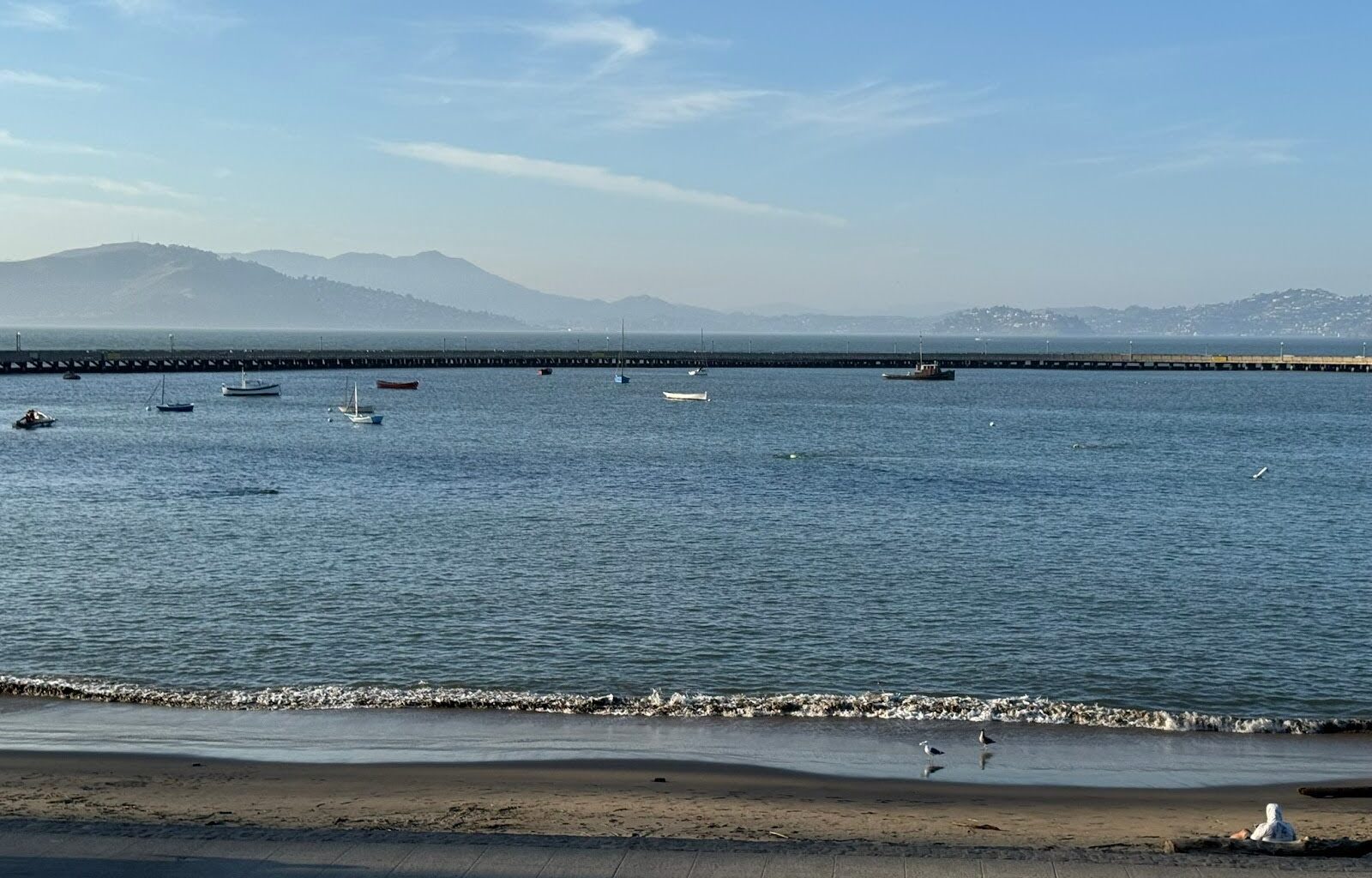
SAN FRANCISCO – The water in the San Francisco Bay rarely rises above 60 degrees, even in the summer. But these chill temperatures do not stop swimmers from diving into the bay, chasing not just the shock of the cold water, but also the warmth of community they find in it.
As interest in open-water swimming has grown in recent years, the historic South End Rowing Club has attracted people seeking not just a physical challenge, but also meaningful social connection in a large city.
“A lot of people are really looking for community and are feeling isolated,” club member Claire Buckholz said. “What an amazing feeling it is to be able to walk into a space in a big city and know so many people of all ages and backgrounds.”
Buckholz joined the club two and a half years ago after growing bored of swimming laps in a pool. Now, she goes around four times per week with the same group of people — many of whom she now considers her best friends.
“It’s just the most amazing sense of community,” Buckholz said. “I’ve got a crew of four or five of us who regularly swim together.”
According to Buckholz, there are more than 2,000 members of the South End community, with more people hoping to join. The club is one of two located on Aquatic Park, a protected cove in the San Francisco Bay, north of Fisherman’s Wharf.
The two clubs — the South End Rowing Club and the Dolphin Club — are volunteer-run organizations, relying on members to serve on boards, organize events and maintain facilities.
The Dolphin Club, founded in 1877, is known for its traditional roots. The South End Rowing Club, founded in 1873, tends to draw a relatively younger and more social crowd, members say. In the past, joining was as simple as paying dues. Now, because the club is full, Buckholz’s friend is on a four-year waitlist to join South End.
“In the past few years, it’s really blown up,” Buckholz said. “So now, both clubs are actually at capacity and there’s a long waitlist to join either one of them, which is nuts.”
The surge in popularity reflects a broader trend. According to a 2025 survey conducted by The Harris Poll, the COVID-19 pandemic inspired younger Americans to take better care of their mental and physical health. Data collected from the survey shows 82% of people older than 18 took up during the pandemic at least one new hobby or skill, many of which were health and wellness-related.
Sasha Matera-Vatnick joined the club two and half years ago, after she moved to San Francisco and was in search of community and a new form of exercise. She read Bonnie Tsui’s book, “Why We Swim,” which investigates the cultural and psychological allure of water. Like Buckholz, Matera-Vatnick found open-water swimming offered the challenge and community pool swimming did not.
Matera-Vatnick says swimming in the cold bay water — which can range from around 50 degrees in colder months to around 60 degrees in warmer months — has a unique effect on her.
“There was something that the water did to my brain and my body that’s really hard to describe, but felt so good,” she said.
This feeling is not unique to open water-swimming, according to Matthew Saldanha, a certified personal trainer, and health and fitness specialist. Temporary spikes in norepinephrine and dopamine can cause people to report an increase in mood, alertness or energy, but this can be achieved through other athletic means, such as running, he said.
“If someone wants to go swim in the bay, that’s something you need to train for because that’s endurance and your body handling the cold,” Saldanha said. “If you were to do a race in cold water, that stops being cold therapy and more of an obstacle, so it can be used as a stimulus for the body.”
Though the perceived physical benefits of open-water swimming may draw newcomers in, members say the relationships that they form with each other are what makes the early mornings and frigid plunges worthwhile.
“Joining the South End has changed my life in San Francisco,” Buckholz said.
Lucy Roberts is a sports media specialization graduate student at Medill.