
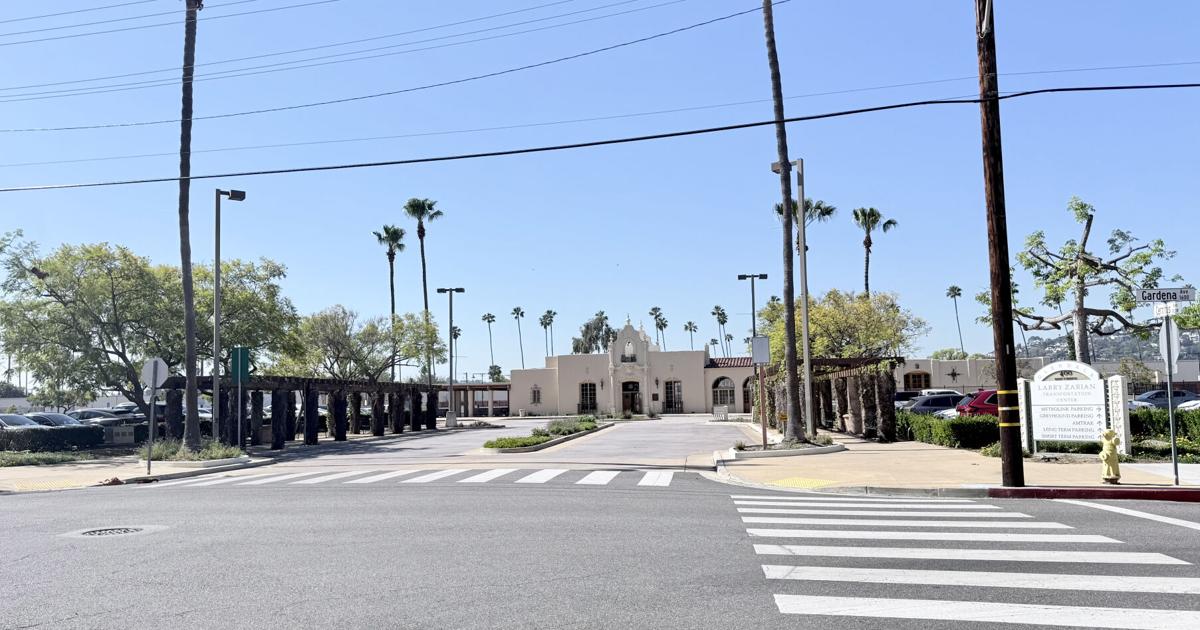
Community members and elected officials from Glendale and those from neighboring cities are bracing for Senate Bill 79, the Abundant and Affordable Homes Near Transit Act. Some have expressed enthusiasm and others uncertainty in regard to the bill, which passed on Oct. 10 2025, and goes into effect on July 1, mandating increased residential development near transit stops.
The Glendale City Council, at a meeting on Tuesday, March 3, approved by a 4-1 vote an amendment to De Novo Planning Group’s professional service agreement (PSA) with the city to assist with the detailed parcel-by-parcel analysis, and to update the draft environmental impact report (EIR) for the city’s general plan to address potential development associated with SB 79, extending the contract’s timeline to Dec. 31.
Councilmembers and staff discussed the impact that Metro’s North Hollywood to Pasadena Bus Rapid Transit (BRT) Line might have on housing development, with regard to SB 79, in areas of Glendale the BRT will pass through.
The council also approved staff to conduct additional analysis in an effort to adopt a delayed effectuation ordinance prior to July 1, which Principal Planner Teresa Santilena said, if adopted, would exclude certain sites throughout Glendale from SB 79 for the next three to four years until the next housing element cycle. Santilena noted that the California Department of Housing and Community Development (HCD) has to review the ordinance both before and after adoption.
Councilmember Vartan Gharpetian was the lone dissenter.
“This item has been front and center, with the community, with councilmembers, numerous conversations, numerous contact with agencies, as it relates to, trying to seek clarification on this bill,” City Manager Roubik Golanian said.
The Abundant and Affordable Homes Near Transit Act, Santilena said, is one of many recent state laws that seeks to spur residential development to address the housing crisis, while overriding local zoning standards.
“The law increases the residential development potential specifically near public transit stops and allows greater height, density, and floor area ratio based on the type of available transit and the project’s proximity to a transit stop. Cities cannot opt out of SB 79,” Santilena said.
Santilena said SB 79 involves several moving parts and leaves unanswered questions, but that cleanup legislation is expected to expand the bill, which may change how the law applies to Glendale.
Glendale, Santilena said, has made multiple efforts to clarify, mitigate, and oppose SB 79, including through meetings with State Sen. Sasha Renée Pérez’s office, a veto request sent to the governor, letters sent in opposition to SB 79 and a letter in opposition to SB 677, a cleanup bill. Additionally, she said, Glendale sent a letter to Metro asking if the city’s BRT stops will qualify as Transit Oriented Development [TOD] stops under SB 79, but that the agency’s response was inconclusive, adding that it too is studying the legislation and seeking clarification.
“Resolving this ambiguity is critical because the BRT stops have the greatest potential to impact Glendale’s neighborhoods and the city’s infrastructure,” Santilena said. “If the BRT is determined to be subject to SB 79, a parcel by parcel analysis will be needed to clarify the actual development potential. As of now, implementation will apply to the area surrounding the GTC.”
Currently, Santilena said there is one confirmed TOD stop located in the city — the Glendale Transit Center (GTC), classified as a tier 2 stop under SB 79, which applies to light rail transit, high frequency commuter rails with at least 48 trips per day, and BRT routes with full-time dedicated lanes and service, at minimum, every 15 minutes during peak commuter times. A project’s proximity to a TOD stop, Santilena said, determines how much development is permitted for a housing project.
For example, Santilena said, an SB 79 project that is within half a mile of a tier 2 TOD stop can be up to 55 feet tall with 80 dwelling units per acre. Moving closer, she said, for a project within one quarter mile of a tier 2 TOD stop, standards are increased to 65 feet tall with 100 dwelling units per acre.
“Additionally, an adjacency intensifier allows even greater development for projects that are within 200 feet of a TOD stop,” Santilena said. “So in addition to all of these by right standards, projects can also apply for density bonuses to achieve even greater development.”
In 2023, Glendale adopted TOD zoning near the GTC, in the city’s Tropico neighborhood, to allow densities of up to 100 dwelling units per acre, which Santilena said meets or exceeds all of the permitted SB 79 densities.
Santilena said all of the Tropico TOD zone sites have densities high enough to qualify for delayed effectuation, which would temporarily exempt those areas from SB 79.
However, because Tropico includes some commercial and lower density residential areas, Santilena said additional analysis is needed to see if the entire zone could be excluded.
Santilena said staff are in the process of finalizing objective design standards (ODS) to ensure basic development and design criteria for new residential developments. She added that staff anticipate taking an ODS ordinance to the planning commission in April and bringing it to City Council in May for adoption so those standards will be in place by July 1.
“Additionally, we are currently updating the general plan, including the land use, mobility, and environmental justice elements. These three draft elements are being analyzed under one environmental impact report with the assistance of our consultant De Novo Planning Group because SB 79 will create impacts to the city, the draft EIR and certain technical studies must be amended,” Santilena said.
To complete the required updates to the draft EIR, Santilena said staff requested the amendment to De Novo’s PSA, so the agency can conduct additional analysis needed for a delayed effectuation ordinance and help clarify if a TOD alternative plan is appropriate for Glendale.
Councilmembers, at the March 3 meeting, spoke about the ambiguities surrounding SB 79.
Since the 1980s, Mayor Ara Najarian said the cities of Glendale, Burbank and Pasadena have advocated for a transit line that takes commuters from one end of the county to another. In one form or another, Najarian said, the BRT will make its way to Glendale.
“We may adjust issues such as headways, areas of dedicated lanes, onboard, all door boarding, synchronized lights, but it’s coming. So those who think in the audience or on the dais that the BRT is not gonna come, it’s coming,” Najarian said.
The mayor suggested that issues regarding SB 79 should be raised with the coalition and legislators who supported it.
Councilmember Dan Brotman said he agrees with the state and housing advocate’s intent with SB 79, to build housing near transit, but disagrees with the approach, in that it limits the city’s ability to control where and how housing is designed and implemented.
He added that Glendale will need to spend a significant amount of money on infrastructure to compensate for the increase in density, when the city does not have the tax base to support it.
“We need the help. We’re not getting it, and the situation is untenable,” Brotman said. “It’s destined to fail and cause political backlash that will affect both the interest in adding housing and in transit. SB 79 is a transit killer bill. So, I don’t think it helps anybody, the way … [State Sen. Scott Wiener] and the state has gone about this.”
Public comments were a mix of support from housing advocates and concern from other residents in opposition, who worry SB 79 will upzone neighborhoods, attract unwanted density in Glendale, impact fire evacuation routes, reduce quality of life and strain the city’s infrastructure, environment and resources.
“While increasing housing near transit can provide benefits, it is equally important that the city maintain thoughtful planning and protect infrastructure capacity and neighborhood quality of life,” speaker David Mnatsakanyan said.

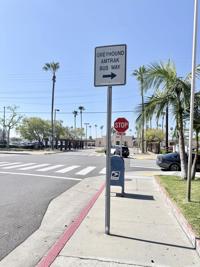
SB 79, the Abundant and Affordable Homes Near Transit Act, goes into effect on July 1.
At a meeting on March 10, Councilmembers Elen Asatryan and Brotman and Mayor Najarian voted to have staff prepare a letter to send to Metro, advocating for the BRT’s exemption from the impacts of SB 79. Councilmembers Ardy Kassakhian and Vartan Gharpetian were recused.