
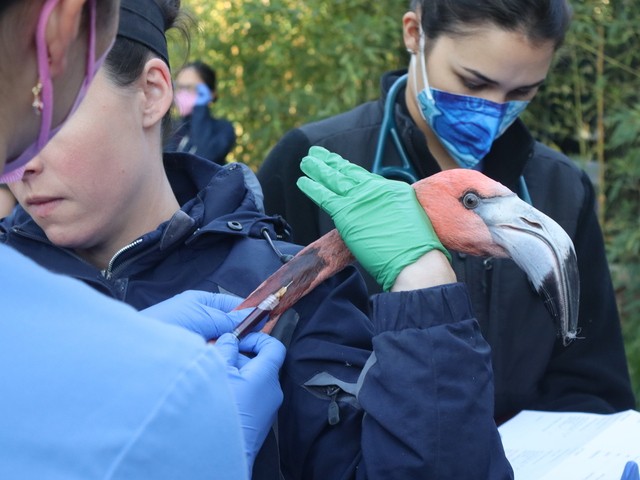
A chorus of squawks echoed from the Caribbean Flamingo Dome at the Sacramento Zoo early Thursday morning.
The zoo conducted an annual complete health exam, called the “flamingo roundup,” for its 51 Caribbean flamingos, also called American flamingos, which includes five chicks that hatched last year and their oldest bird, who is 57.
These birds are usually found along the north coast of South America, several Caribbean islands and the Yucatan Peninsula.
The roundup is a collaboration with the UC Davis Veterinary Teaching Hospital, involving veterinarians, students and technicians.
The birds were examined at multiple stations where their blood was drawn and their bodies were checked.
Chief Animal Programs Officer, Matt McKim, said the entire exam is something humans might get at a doctor’s office.
“We get them in hand, and we check their eyes, their beak, their feet, their body condition,” McKim said. “We give them some medications, we draw blood, we do it all, and that’s our chance to just make sure the flock is healthy.”
The birds are rounded up in their exhibit and taken to an enclosed blue tent area. One by one the team of vets take the birds to three separate areas to be examined.
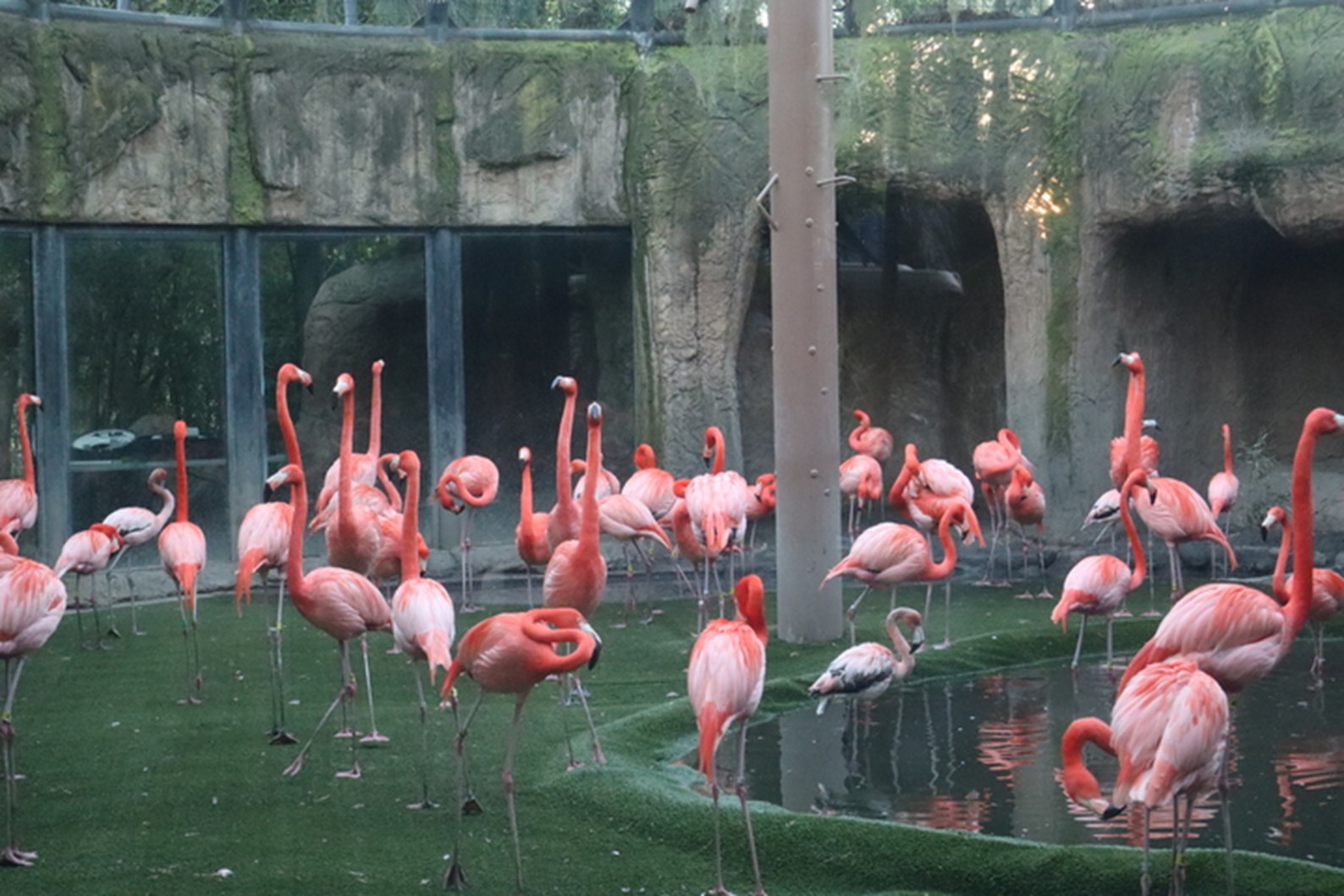 A flock of Caribbean Flamingos in the Flamingo Dome ahead of their annual health examination at the Sacramento Zoo Thursday March 12, 2026.Keyshawn Davis/CapRadio
McKim said the zoo has been conducting the flamingo roundup for several years, and the team has an efficient system for its procedures.
“Our goal is to have this be as smooth as efficient as possible for the birds, so that it’s less stressful for them,” he said.
Students from the UC Davis Veterinary Teaching Hospital were present and helped with the flamingo examination procedures.
Janessa Gjeltema is an associate professor of clinical medicine at UC Davis and serves as the head veterinarian at the Sacramento Zoo.
Gjeltema said the zoo uses the event as an opportunity to help veterinary students to gain hands-on experience working with the animals they learn about in class.
“We are able to mentor them through the process of these medical techniques, showing them what the normal anatomy and normal flamingo health looks like,” Gjeltema said. “So that allows them to really develop their clinical skills as they learn to become a veterinarian.”
Gjeltema explained the process of identifying health concerns through physical exams and blood work. She said if they find anything wrong during the exams, they would then take the flamingos to a hospital at the zoo.
“We’ll look for any kind of blood work abnormalities. We’ll look for physical abnormalities,” she said. “So, making sure that all their joints look healthy, that all of their organ values are normal, sometimes we can see subtle changes, either on an examination or on their blood work that might indicate that an underlying health problem exists.”
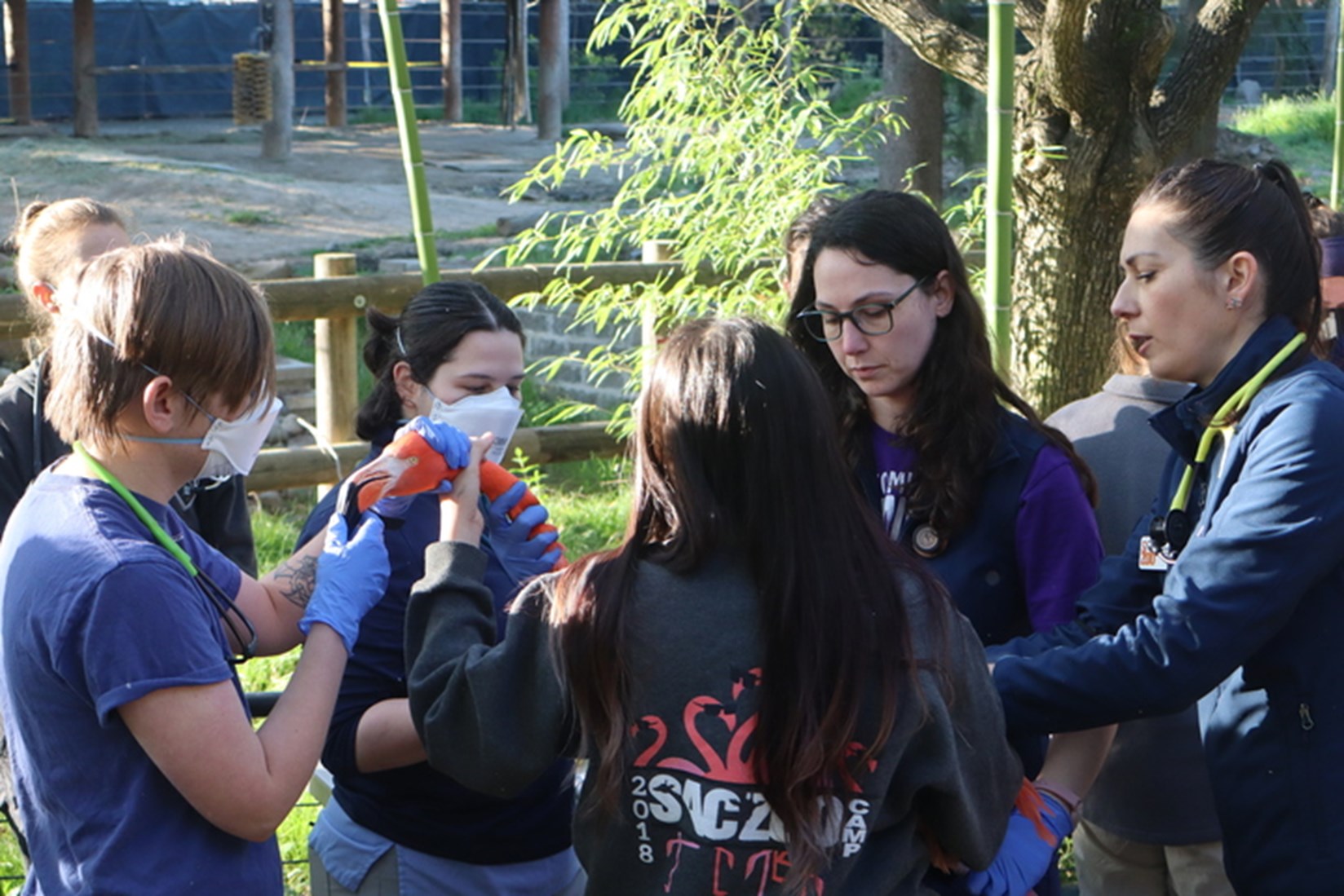 A team of vets with the UC Davis Veterinary Teaching Hospital examine a flamingo during their annual health examination at the Sacramento Zoo Thursday March 12, 2026.Keyshawn Davis/CapRadio
Gjeltema mentioned that one of her favorite parts of the roundup event is being able to share the experience with the future generations of veterinarians.
“We have our top animal care staff members that are in charge of the handling to make sure that the animals are held appropriately,” Gjeltema said. “We’ve got our clinicians who are helping make sure those exams are done very well. And then, of course, we have our students and the teaching that goes along with this event that makes it a really special day.”
CapRadio provides a trusted source of news because of you. As a nonprofit organization, donations from people like you sustain the journalism that allows us to discover stories that are important to our audience. If you believe in what we do and support our mission, please donate today.