
Read Mission Local often?
Help grow our newsroom, joining the 3,250 readers who support us by giving below.
Fernando Velasco, a member of the oldest car club in San Francisco, grew up in an era when low riders got pulled over for cruising. But on Saturday morning, he and some 500 other low-riding fans gathered at the U.S. postal office in Bayview to see their hobby unveiled as a set of new stamps.
A lot, he said, has changed. “Now, we don’t worry about the police getting involved. They actually block the streets off or we have police escorts when we do these big events now.”
Now, they also have a commemorative postal stamp that officially recognizes lowrider culture as having “a significant impact on American history, American society, and American culture,” according to USPS Pacific Northwest Processing Division Director Brian Gaines, who spoke at the event.

Want the latest on the Mission and San Francisco? Sign up for our free daily newsletter below.
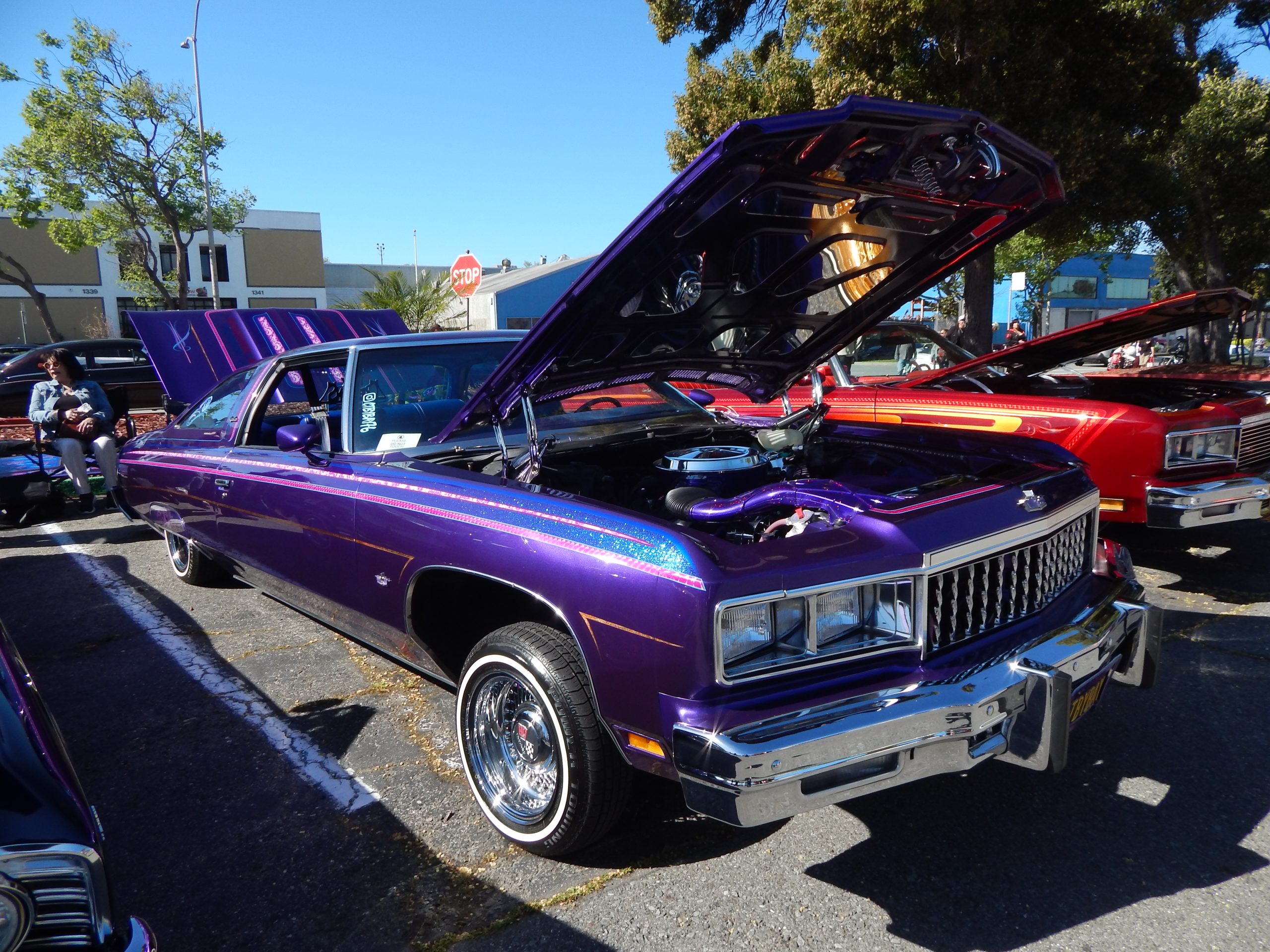 Fernando Velasco’s 1976 Chevy Capri Classic. She’s named La Morada. Photo by Sophia Rerucha.
Three of the five photographs on the stamps were taken by Humberto “Beto” Mendoza, who was head photographer at Lowrider Magazine from 2011 to 2020. The other two were taken by Phil Gordon, who passed away in December 2025.
Mendoza said he’s still processing his photos being used.
“It’s incredible,” he said at Saturday’s festivities at 1300 Evans St., which included performances by Danza Azteca Xitlalli and a mariachi band.
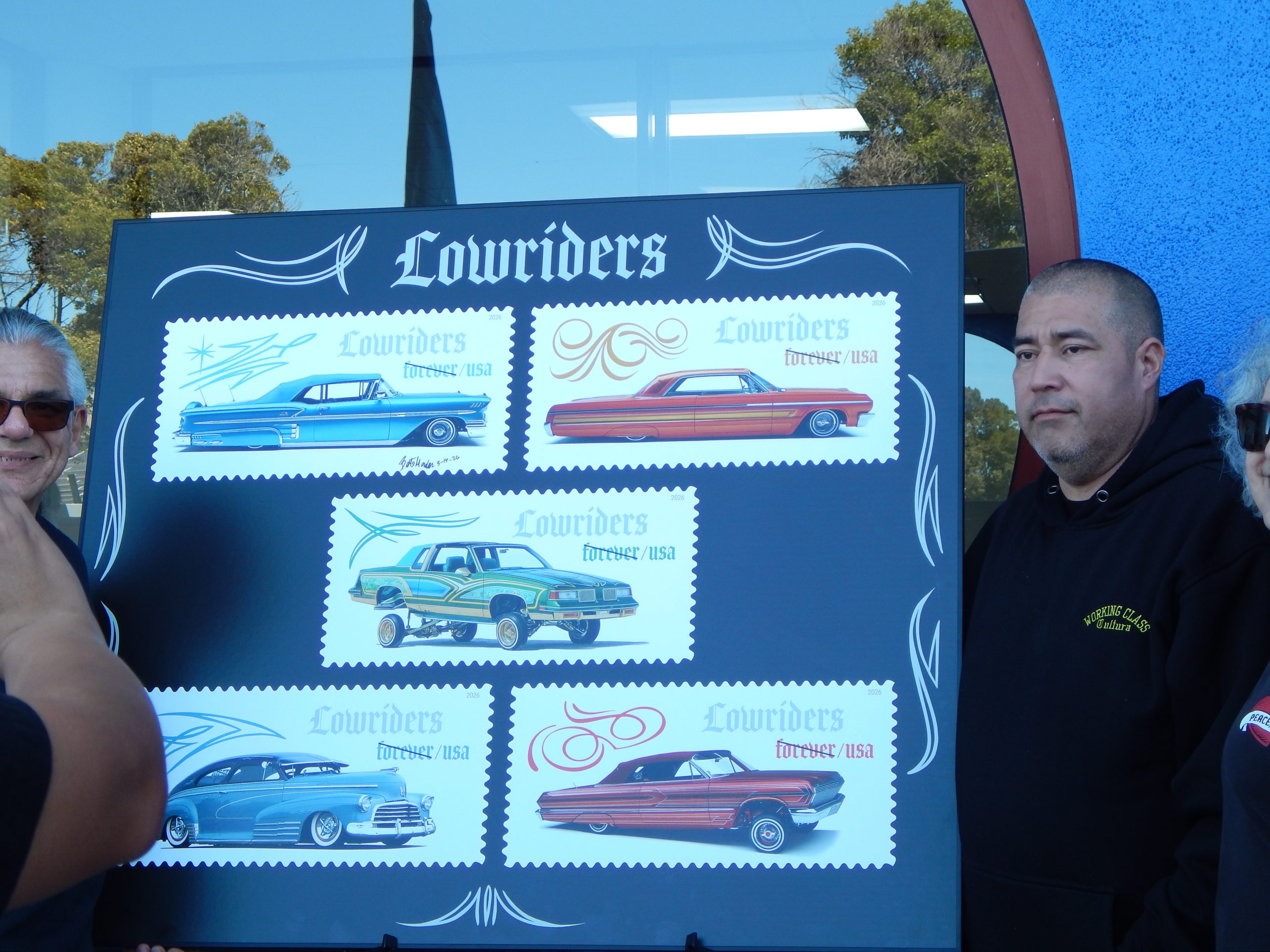 Beto Mendoza poses next to a board with the lowrider stamps. Photo by Sophia Rerucha.
“If you look at the evolutionary trajectory of it, lowriding used to be really confined to a very hyper-localized barrio experience,” said John Ulloa, a scholar and historian of the culture who, along with Velasco, is a member of Low Creations. “Now it’s mushroomed out to all corners of the world.”
Although lowrider culture originated in Southern California in the 1940s, Ulloa said it’s now extended to Brazil, Japan, Germany, and beyond.
“There’s an old low-rider saying, ‘It doesn’t matter the color of your skin, it matters the color of your car,’” said Ruben Espinel, a painter and founder of Colores Car Club. Sam Reveles Sr., a member of City Classics jumped in: “It has nothing to do with Mexican culture, it’s about the car. It’s like, ‘Oh you got a beautiful car, what did you do to it?’ There are no cultural barriers.”
Phil Fisher, Public Relations Director for the Sacramento Lowrider Council, said AB 436, signed into law on Jan. 1, 2024, helped mainstream low-riding culture in California by removing restrictions such as cruising and minimum height requirements.
Multiple attendees referred to lowriders as “rolling art,” noting that each car is a direct artistic expression of each rider.
“This car was stock when he got it,” Ulloa said, referring to Velasco’s 1976 Chevy Capri Classic named La Morada. “It was a completely original blank canvas and this was his vision. Same with my car, same with any of these cars.”
Ulloa’s 1973 Buick Riviera is named Conspiracy.
Reveles said the postal stamp has been “a long time coming.”
“I’m very happy with the acknowledgment from the federal government of lowrider culture,” he said. “Especially to put our cars on stamps that people all across the U.S. will use.”
Reveles has a 1949 Chevy Fleetline Deluxe named La Morena.
Andrew Bayardo came from Fairfield with his mother, uncle, aunt, best friends, sister, and brothers for the unveiling of the stamp. Although he said he’s been fascinated with lowrider culture all of his life, it wasn’t until he turned 43 and beat his substance dependency that he got his first car.
“I’m no longer a spectator, I’m a participant,” he said, pointing to his 1941 Chevrolet Special Deluxe named La Bonita One. He said the trip from Fairfield to Bayview was the furthest he’d ever driven the car.
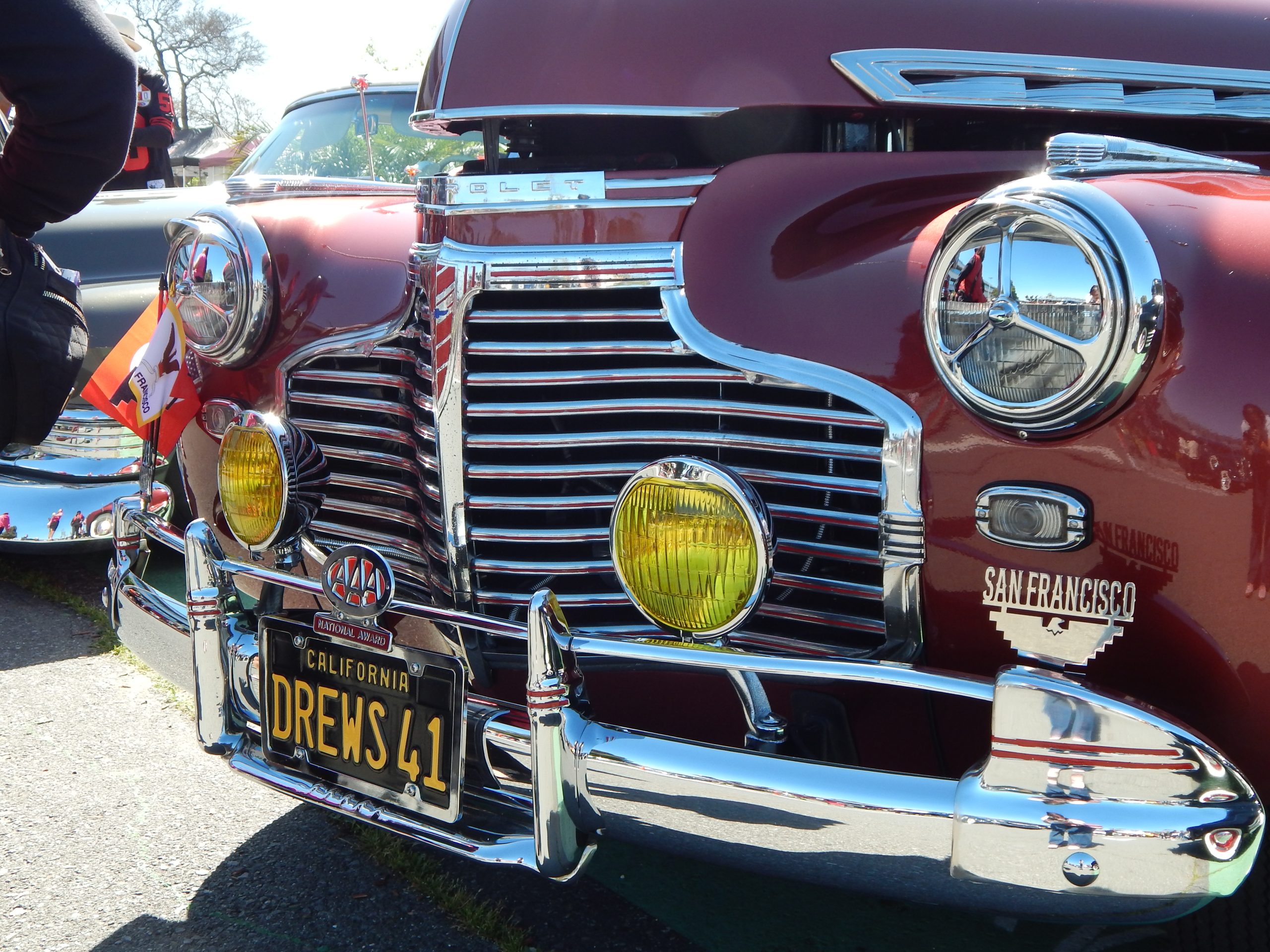 The front of Andrew Bayardo’s 1941 Chevrolet Special. Photo by Sophia Rerucha.
Elena M. Vera founded the car club Nuestro Estilo with her husband in 1994.
“My mom was an artist, but her art was on a canvas. My art is on the car,” she said.
Vera grew up on 24th and Shotwell, surrounded by lowriders.
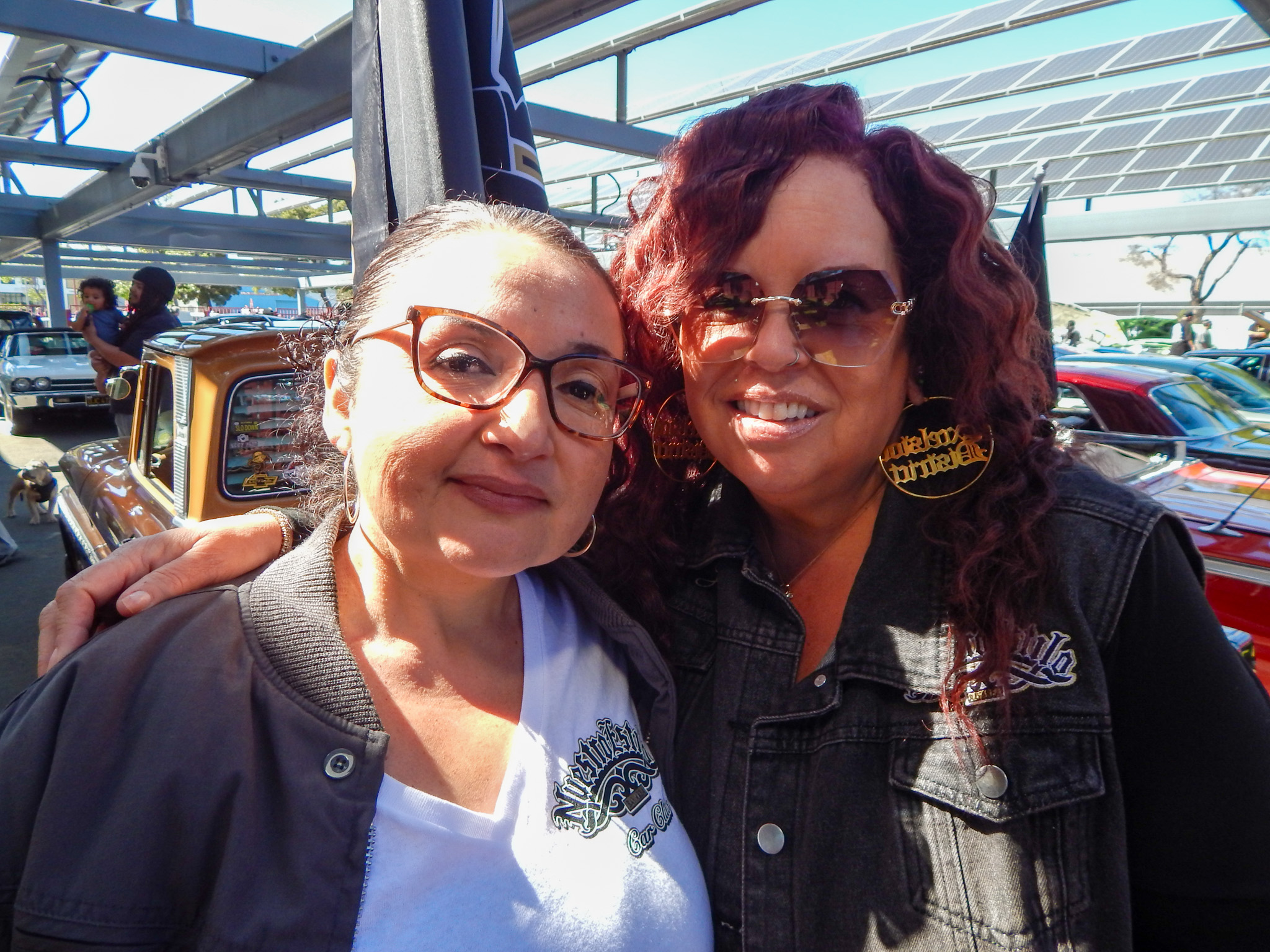 Elena M. Vera and Jojo Batres of Nuestro Estilo Car Club pose for a picture. Photo by Sophia Rerucha.
“My tía ended up buying a lowrider, so I started going with her and it was so great,” she said. “It became a part of my heart, my whole life, my soul.”
Vera said the public perception of lowriders has changed dramatically. In the ‘90s, she said somebody threw a bottle at her husband’s car. But three years ago, when she was in the Mission, something unusual happened.
“I had parked in the red and I saw a cop, so I thought, ‘I’m in trouble, I better run.’ And he goes, ‘Who owns the car?’ And then he goes, ‘Can I get in and take a picture?’ And I was like, Are you kidding? I cried because I was like, absolutely, get in, do whatever you want.”
“This all means a lot,” she said.
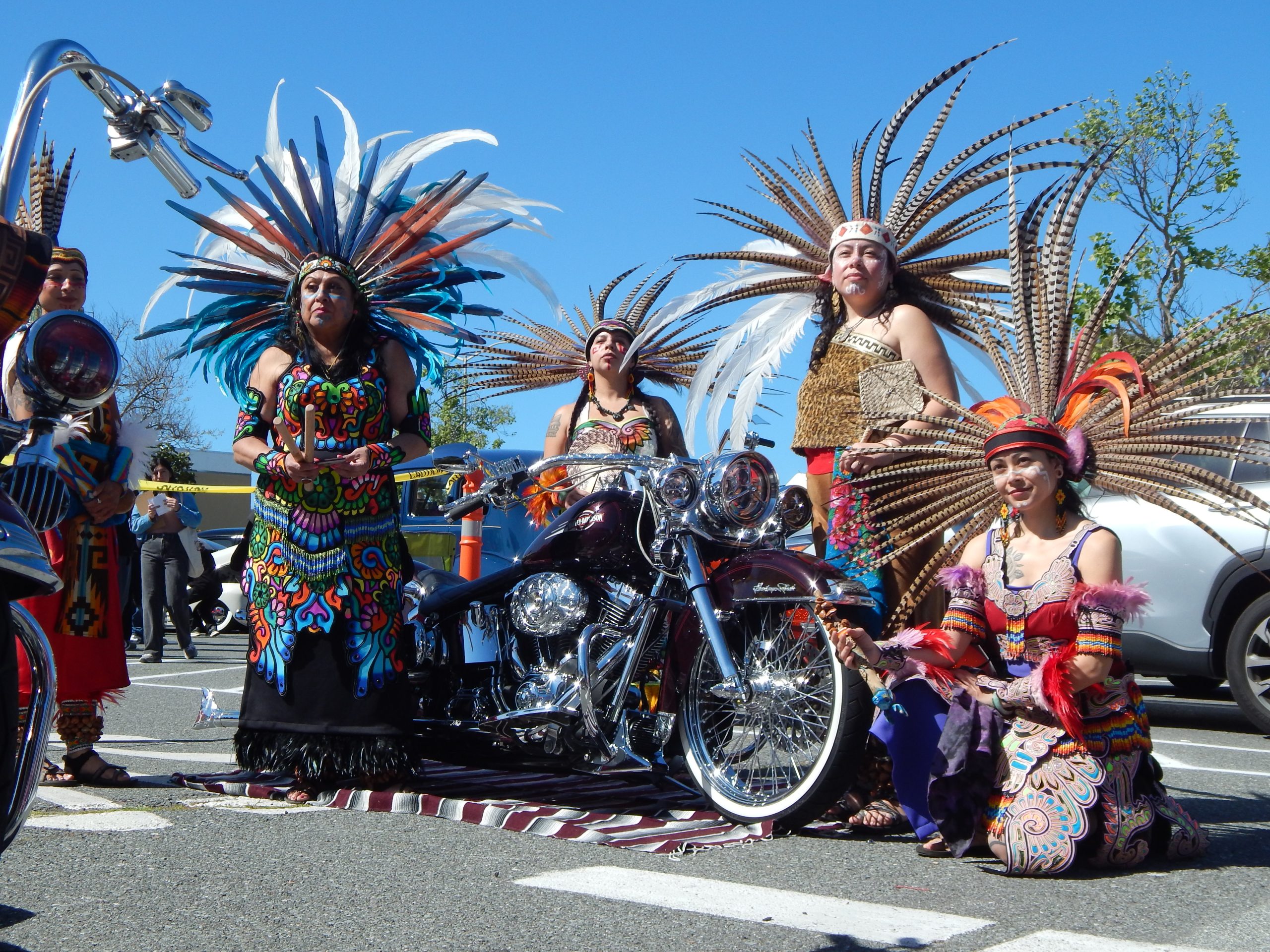 Dancers from Danza Xitlali pose next to a motorcycle. Photo by Sophia Rerucha.
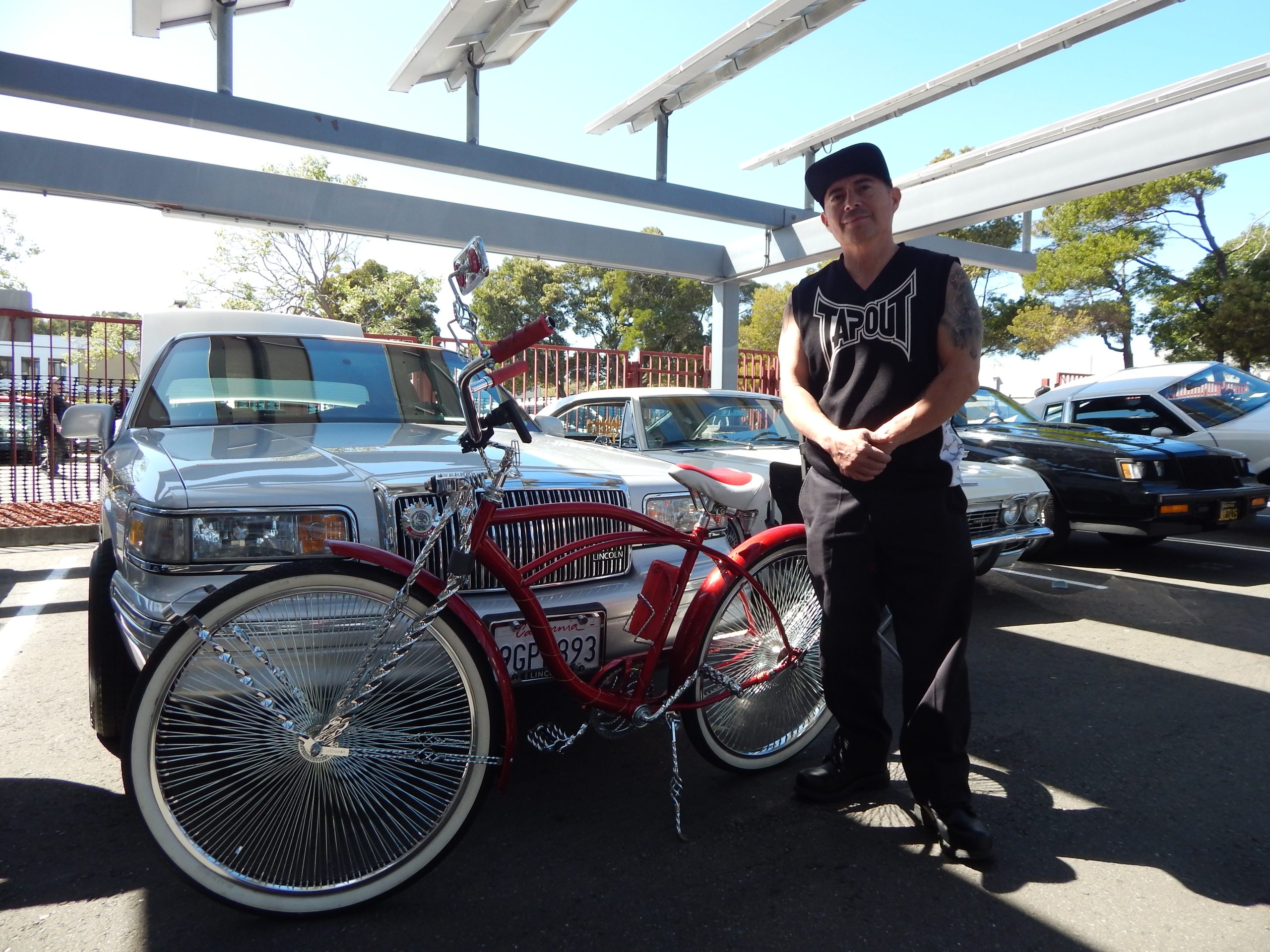 Victor Ochoa poses next to his customized bike and car. Photo by Sophia Rerucha.
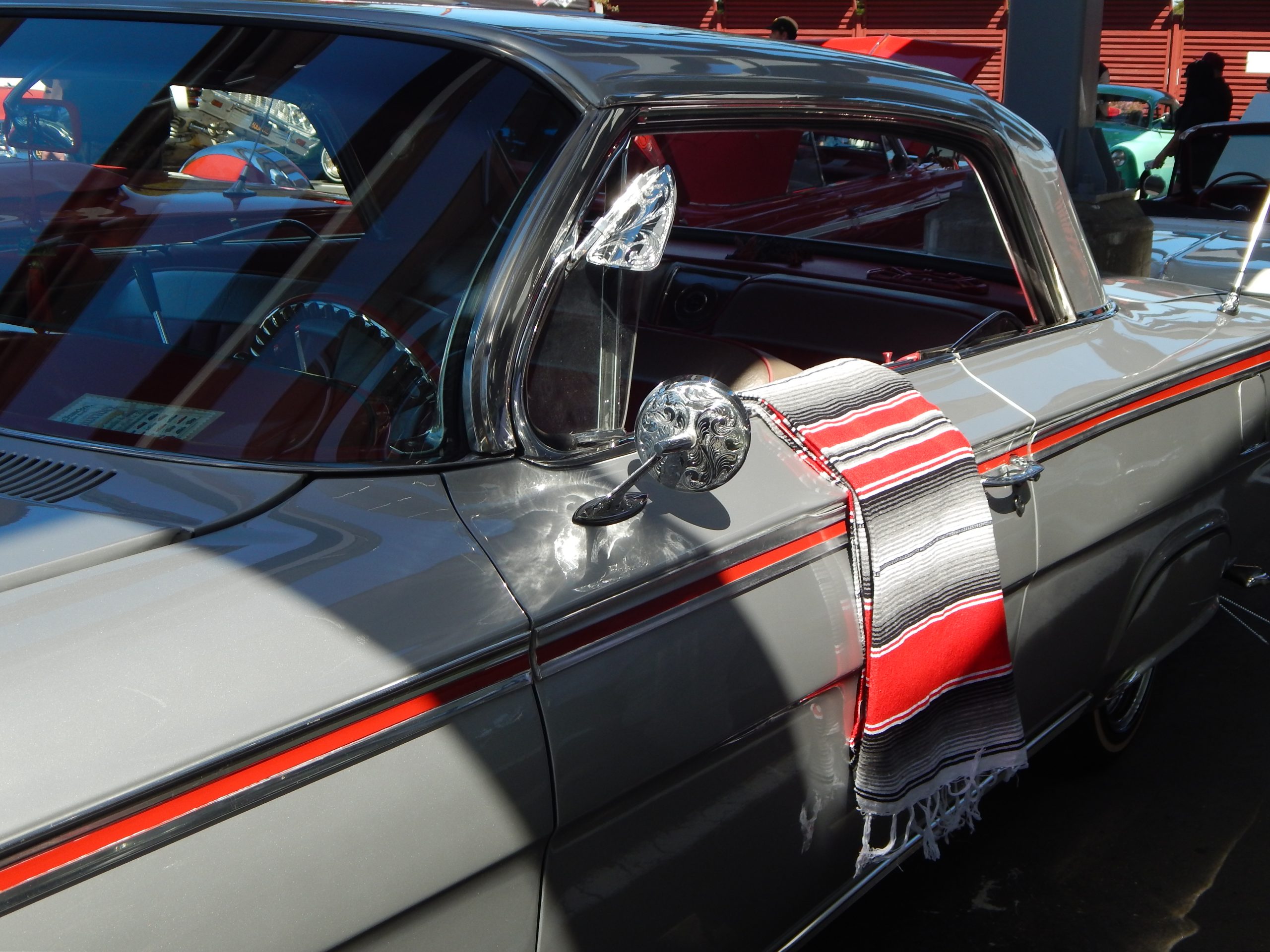 A car with a matching serape, courtesy of Blvd Kings Car Club. Photo by Sophia Rerucha.
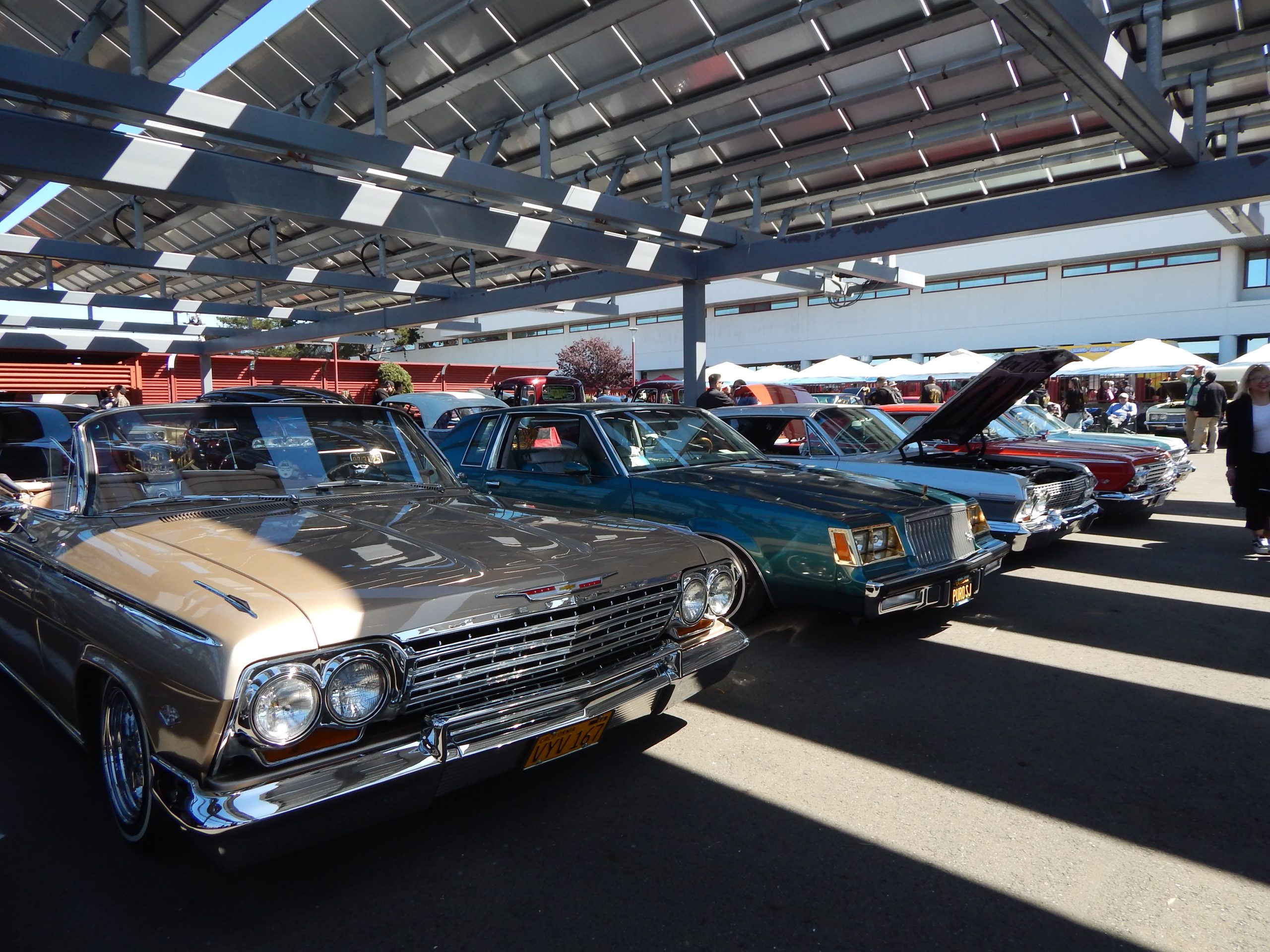 Rows of lowrider cars parked in USPS’ parking lot in Bayview. Photo by Sophia Rerucha.
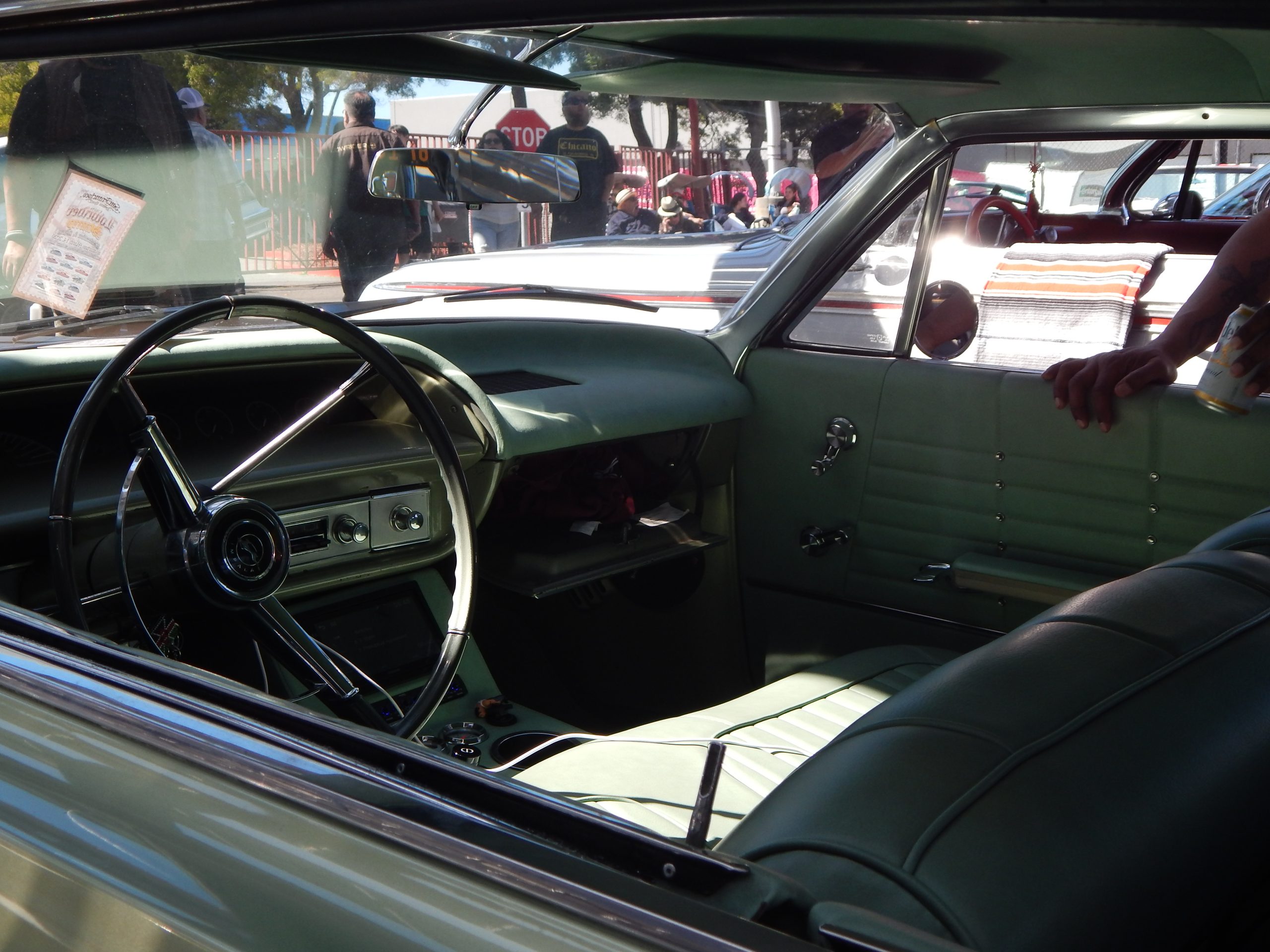 Interior of a Chevy Impala. Photo by Sophia Rerucha.
Join the 3,300 readers who keep Mission Local free for all!
Because of you, Mission Local reached and surpassed our $300,000 year-end fundraising goal. All we can say is thank you.
Thank you for choosing to invest in a local newsroom rooted in San Francisco’s communities — one that listens first and reports deeply.
If you haven’t yet had a chance to give, it’s not too late to be part of this community. Your contribution today helps sustain the reporting our city relies on all year long.
We’re grateful you’re here — and we’d be honored to have you join our donors.