
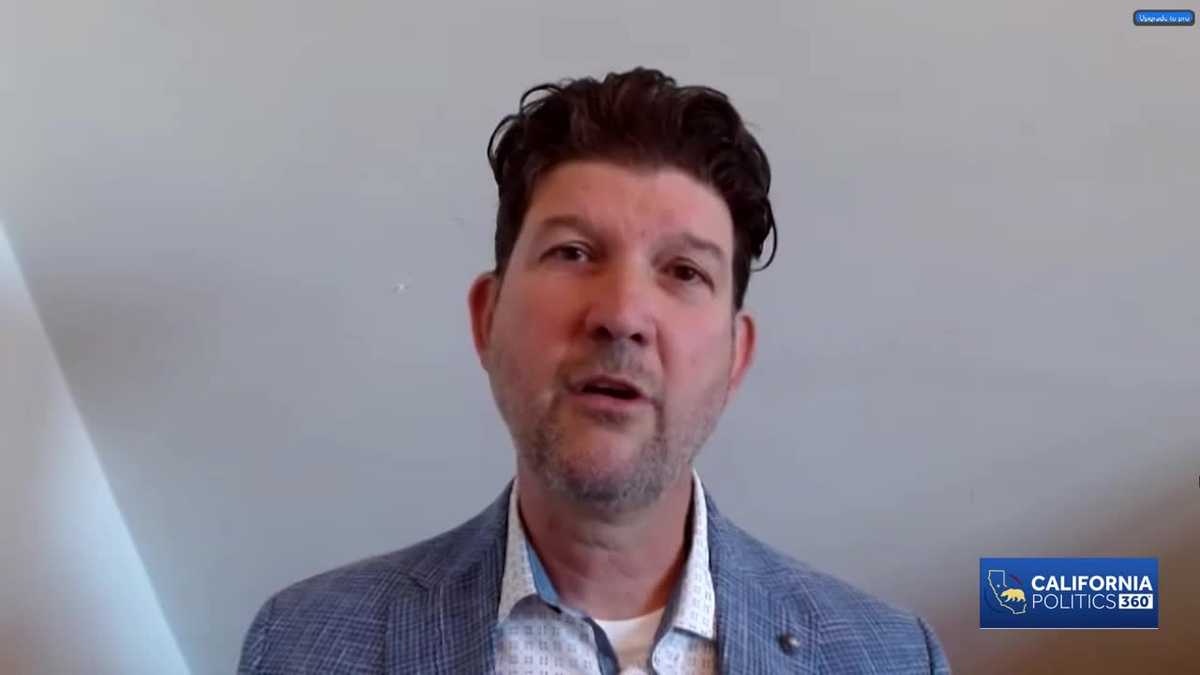
California Teachers Association president denies organization ordered coordinated strikes | California Politics 360
David Goldberg with the California Teachers Association, thank you so much for making time for us. Well, it’s my pleasure to be here. So why are we seeing so many teacher strikes across the state at the same exact time? Uh, first and foremost, it’s *** result of, uh, the conditions under which educators are working under in decades of disinvestment. We have educators who are overwhelmed, uh, and who are just frankly struggling to survive. Um, they’re happening at the same time for *** number of reasons. One is our contracts, um, expire, um, towards the end of the year, uh, and now, uh, folks have been pushing to get *** new contract, and many of these districts have been just shining them on for months. The second thing is. Educators are talking to each other and trying to figure out how do we, they’re realizing that the only way our students are going to get what they deserve and educators are going to get what they deserve in *** district that has continually disrespected them and their work and their students is to really fight, um, and that’s what’s happening now. But California, I mean just looking at the state budget, is spending more money than ever on schools. How is this happening? Well, it’s happening for *** number of reasons. First of all, California is the 4th largest economy in the world. We just, not even the 4th largest state economy. We just passed Japan, so we have, we don’t have an education system that’s funded anywhere near in commensurate with the size of our economy. The second thing that’s happening is while California compared to other states, uh, does spend well on education compared to many states, it’s partly for *** number of reasons. One is because other states are actually decreasing their funding in public education. And the other thing that’s really *** huge factor is people, our members can’t afford the cost of living is so high in California that members can’t live anywhere near where they work. We have members who are paying 1,500 $1500 out of their pocket or $1800 out of their pocket just to cover their insurance, for their health insurance. And so we have *** number of factors, including many of these districts like the ones in your area. They’ve frankly been hoarding money, even though they’ve been getting money, they’ve been hoarding money and actually disinvesting in schools, and students and in educators for *** number of years in *** way that’s become *** crisis point. So even California spending more compared to other states does not keep up with the cost of living, and educators are just frankly struggling to survive. We do, we do *** survey of our members, and 80% of them are struggling to meet some of the basic cost of living expenses that they have to take on. Many are working 2nd and 3rd jobs just to survive as educators. I want to circle back to the school districts in *** second, but I mean, why did CT line up all of these contracts at the same time? What exactly is the end game there by doing that? Uh, let me be clear about one thing. CTA doesn’t line up contracts. We have 1000 different locals across the state. This is *** bottom-up approach to really what they. Um, came up with common demands around similar issues around well-funded schools, around educators that can get paid in *** way that they can actually stay in this profession, which serves the students. Uh, they then spent the last year or so learning from each other and learning how to really build power that they need to win this. They’ve been asking, they’ve been begging, they’ve tried everything. Every other way of trying to get what they deserve and what their students deserve and frankly um it’s not happening and so that’s what’s happening this year is that educators are saying we’ve had enough and we’re gonna learn from each other and we’re gonna really push it and say that this is our moment to say that educator unions need to fight for what workers deserve and what students deserve and that’s the really beautiful part about all these strikes. Is that they’re elevating not just worker demands and educator demands, but special ed demands, and demands around how do we keep kids safe at schools. Some in the Thomas they have 800, 800 students that don’t have ***, they have *** permanent sub basically, because educators leave that district year after year to go to the other districts where they pay more and they actually get healthcare. So the way that these districts are treating the students and the educators is actually terrible for the district itself. I just want to clarify, so CTA didn’t deliberately line up these contracts because that would be contrary to all of the reporting around these strikes and even contrary to *** press release that you all sent last year about how you were deliberately, I mean lining up contracts so that you could launch this campaign. Right. Yeah, so let me, uh, maybe it’s ***, just *** distinction that’s important for people to know, but CTA, the statewide union, we don’t bargain local contracts. The educators themselves in each one of these unions made *** decision to line up their contracts. We as CTA have been supporting this effort and been really supporting through resources and helping them to learn from each other, but CTA does not mandate to any union or any district that you line up their contract. That’s the distinction I’m making. This is, this is members themselves bottom up saying this is what it’s going to take to fight to what what we deserve, and CTA saying we’re all in on supporting you. All in on this whole we can’t wait campaign. So CT is all in as *** statewide organization supporting this, but different than other statewide unions. We don’t align contracts. Local associations and local unions do that. OK, so you said earlier that some districts are hoarding money, but many of these school districts are limited with their budgets and even more so now with cities across the state and the state itself having these massive budget deficits. I mean, I ignoring that? I’m not sure what you, city budgets don’t impact, uh, school budgets. Um, I, I guess I’m, so you’re asking me, so when we do analysis of, for example, the districts in your area, Twin Rivers, when we can, uh, compare Twin Rivers to the 40 other districts that have *** similar size, uh, district with similar students, has more money squirreled away than any other district in the state. So that’s. That’s the facts. Um, Natoma also, these are different than other parts of the states. Um, these districts actually have increasing enrollment where they get more and more money per student. There’s no reason for them. We also look, as *** statewide organization, we are committed 100% to also getting more statewide revenue. In fact, we lead on that. In fact, we have an. *** ballot initiative we’re trying to put on the ballot right now which will increase the taxes on the wealthiest Californians and make it *** permanent extension of the tax. It’s not an increased tax because we already have it now, but it’ll continue to try to stabilize some of this funding. But we, uh, education, look, we have more billionaires than anywhere in the state. Anywhere in this nation, anywhere in this world in California, we have some of the biggest corporations in the history of this world. Education is not getting anywhere near what it deserves. When you compare us to other states, it’s really frankly *** false equivalence. Our economy is the 4th largest economy when we compare it to other nations, and so there is not enough funding, and that is true, and we’re committed to working with frank, frankly. We would have wished the districts would have been pushing around this *** long time ago, but at the same time, we’re also really committed to the fact that because money can be scarce, that every dollar that districts get should be spent on students now, on educators now, and not hoarded away as they are in these districts, both Twin Rivers and Atomma. But some of these districts, Sac City Unified for example, they’ve they’ve struggled. To say no to you, they’ve given what it has wanted, and now it’s in *** situation where they’re really strapped for cash because they have given in to CTA’s demands in the past. I mean, local school districts are not revenue generators. I mean, why flex this political muscle with this campaign against these school districts that are struggling and relying on public funds? Yeah, again, I do want to make the distinction. They’re not saying no to CTA about anything. These are local unions and local members and local educators who are making these. We support each one of them in these struggles, but this is not, this is not *** flex of political muscle. This is *** flex of worker power and workers’ pent up frustration about not being able to survive, not being able to stay in the district. You, because you bring up Sack City, I’ve talked to every strike line I’m on. Yesterday, um, you have many people from Sack City who used to work in the Thomas and Twin Rivers were coming back to support their colleagues and saying, I’m sorry to have left you guys in your district to gone to Sack City for the healthcare benefits. What’s happening is these districts that are on strike are fighting for the same thing that other districts are around them and saying, why do we deserve less here than anywhere else? OK, so on that note then, clearly there’s *** broader conversation about funding to be had then I mean with these strikes happening across the state, being the statewide lobbying arm for them. I mean why not take this to lawmakers at the state capitol who are there to address statewide issues? That’s, that’s exactly what we’re doing. This is just part of that process. We’re, as I said, we have *** statewide initiative that we’re putting on the ballot in the process of doing that. I was at *** press conference two days ago in front of the state Capitol, calling on lawmakers to fund public education, but that’s not disconnected. They’re all things can be true at the same time. In fact, when we fight for more funding at the statewide level, parents and community rightfully should say, well then. We want to push our districts to do the right thing with it. If my district’s hoarding millions of dollars, maybe they don’t need the money, which is not true. So it’s all connected. Fighting for what educators deserve and need in classrooms and schools in their local districts is also connected to fighting for state funding and fighting. Also around ballot initiatives as well, and we’re engaged as much as we can in all three of those things. In fact, this week we’re engaged with all three of those things simultaneously, and we’re going to have to be. That’s the situation we find ourselves in. But this campaign was announced *** year ago. Why didn’t the work start then? This work has been going on for decades around fighting for funding. We have, in fact, I, uh, as I mentioned, the initiative that we’re trying to is *** renewal of the initiative that we already got passed, uh, almost 10 years ago. And then we renewed it with it was Prop 30, then Prop 55 was around state funding. That’s about, and now we’re trying to permanently renew Prop. We’ve been fighting for state funding since day one, and, um, we fight every year around in the legislature around state funding. We fight every year to protect Prop 98. Uh, this is, they’re not, those two things are not contradictory. In fact, they’re related in the way that we’re our fight is, is aided when they see when people believe that districts are using the money well. And that’s why this part, the exciting part about this is this is allowing us to fight on all levels and really make the case to the public that we’re going to continue to fight for state resources. We’re going to continue to do that as we have since day one, and we’re also going to make sure that we fight at the school level that districts don’t squirrel this money away. David, before I let you go, I mean, are you concerned at all about the possibility of some political blowback here because of the images that you’re painting across the state of local school districts hoarding funds? I mean. That could cause some parents, teachers to either pull their kids out of public schools, um, they, it could appoint some people to elect different people for their school boards. I mean, do you worry that this could potentially backfire on CTA? Well, if we weren’t doing anything about it, I really would be worried, but if we’re making this case at the same time we’re trying to correct this and push districts to be right and we see parents and educators and students frankly overwhelmingly support and getting that we are fighting for what they deserve and what they need. I’m not worried about political blowback. I think frankly it’s there’d be political blowback if we did not do this, if we allowed students to continue to not get what they deserve and educators continue to not get what they deserve and frankly to leave this profession. I think this is the righteous struggle. It’s an incredible. Beautiful gift of really educators putting not getting paid and willing to struggle for themselves, their communities, and their students is actually something that should be uplifted, and I think parents overwhelmingly get this, and I’ve seen it manifested at at uh strike lines and support across the state as educators have been doing similar things. All right, David Goldberg with CTA, thank you so much for your time. We appreciate your insight. Really appreciate you and thank you for raising this important topic.
California Teachers Association president denies organization ordered coordinated strikes | California Politics 360

Updated: 8:25 AM PDT Mar 15, 2026
As teacher strikes continue across the state, the leader of the California Teachers Association denies that the powerful statewide organization directed local educator unions to strike at the same time. From Los Angeles to Sacramento, teachers have either been preparing to strike or walking off the job as part of a campaign CTA launched last year. More than two dozen districts aligned their contracts with one another to expire at the same time this year. “CTA doesn’t line up contracts,” said CTA President David Goldberg, stating local unions coordinated the effort that was then supported by the statewide group, not mandated. “It’s the result of the conditions in which educators are working under decades of disinvestment.” Goldberg noted that teachers statewide are asking for better pay and more resources for students. He said school districts in the Sacramento area, such as Twin Rivers and Natomas, are “hoarding millions.” But school districts are not cash cows or revenue generators. Several school districts impacted are struggling financially, and they rely on state tax dollars. California has been grappling with back-to-back-to-back state budget deficits that are expected to persist over the next several years.When asked if CTA is ignoring that fact, Goldberg replied, saying in part, “There isn’t enough funding, that is true.” “Frankly, we wish the districts would’ve been pushing this a long time ago,” Goldberg said. “This is not a flex of political muscle,” Goldberg added. “This is a flex of worker power and worker pent-up frustration of not being able to survive.” When asked why CTA is not taking all of this energy to state lawmakers, who are meant to address statewide issues, Goldberg said, “That’s exactly what we’re doing; this is part of that process.”Goldberg noted that CTA is in the process of putting together a statewide ballot initiative to boost more public-school funding.Watch the full interview with Goldberg in the video above. KCRA 3 Political Director Ashley Zavala reports in-depth coverage of top California politics and policy issues. She is also the host of “California Politics 360.” Get informed each Sunday at 8:30 a.m. on KCRA 3.
As teacher strikes continue across the state, the leader of the California Teachers Association denies that the powerful statewide organization directed local educator unions to strike at the same time.
From Los Angeles to Sacramento, teachers have either been preparing to strike or walking off the job as part of a campaign CTA launched last year.
More than two dozen districts aligned their contracts with one another to expire at the same time this year.
“CTA doesn’t line up contracts,” said CTA President David Goldberg, stating local unions coordinated the effort that was then supported by the statewide group, not mandated. “It’s the result of the conditions in which educators are working under decades of disinvestment.”
Goldberg noted that teachers statewide are asking for better pay and more resources for students. He said school districts in the Sacramento area, such as Twin Rivers and Natomas, are “hoarding millions.”
But school districts are not cash cows or revenue generators. Several school districts impacted are struggling financially, and they rely on state tax dollars. California has been grappling with back-to-back-to-back state budget deficits that are expected to persist over the next several years.
When asked if CTA is ignoring that fact, Goldberg replied, saying in part, “There isn’t enough funding, that is true.”
“Frankly, we wish the districts would’ve been pushing this a long time ago,” Goldberg said.
“This is not a flex of political muscle,” Goldberg added. “This is a flex of worker power and worker pent-up frustration of not being able to survive.”
When asked why CTA is not taking all of this energy to state lawmakers, who are meant to address statewide issues, Goldberg said, “That’s exactly what we’re doing; this is part of that process.”
Goldberg noted that CTA is in the process of putting together a statewide ballot initiative to boost more public-school funding.
Watch the full interview with Goldberg in the video above.
KCRA 3 Political Director Ashley Zavala reports in-depth coverage of top California politics and policy issues. She is also the host of “California Politics 360.” Get informed each Sunday at 8:30 a.m. on KCRA 3.