
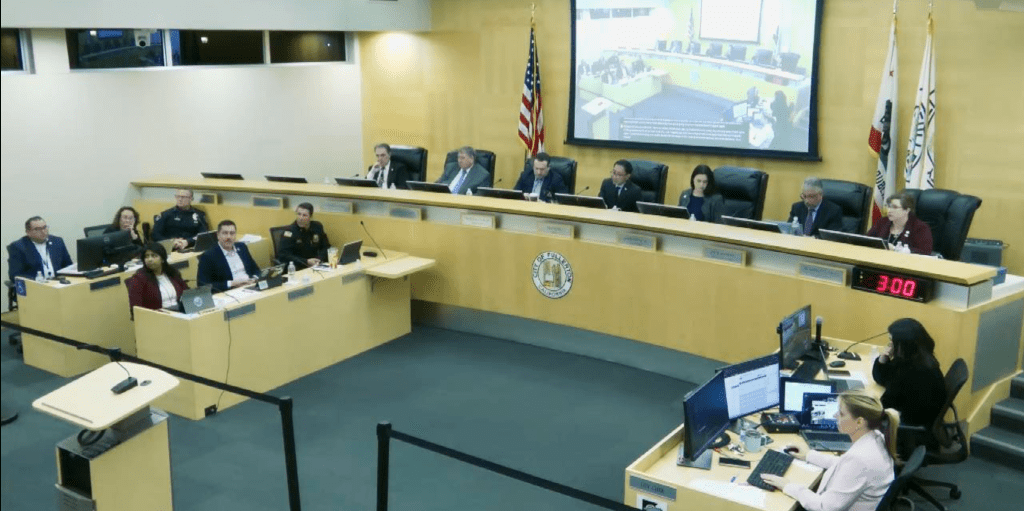
The agenda for the upcoming meeting on March 17 is brief, featuring a single action item to receive and file the second quarter financial report and mid-year budget adjustments. Further details can be accessed through this link: https://fullerton.legistar.com/Calendar.aspx.
During the meeting, Orange County Supervisor Doug Chaffe is scheduled to present a report on a gun buyback program. Member Valencia is expected to make an appointment to the Youth Advisory Committee. However, she has yet to fill a vacancy on the Active Transportation Committee, which has remained unoccupied for over 15 months. This delay has been attributed to a lack of scheduled meetings for the committee, raising questions about the responsible staff members overseeing it.
Item #4: City Treasurer Appointment
The Fullerton City Council plans to update its list of Authorized Officers for managing Local Agency Investment Fund (LAIF) accounts, necessitated by recent staff changes within the city and the Fullerton Successor Agency. LAIF is a short-term investment option that allows California municipalities to securely invest idle cash while maintaining daily access for operational needs.
To comply with state regulations, the City Council must adopt a resolution to formalize the list of authorized individuals. Proposed officers include Steven Avalos, Interim Director of Administrative Services; Julio Ortega, Revenue Operations Manager; and Michele Watanabe, Business Registration Supervisor. Ortega will replace the previous Utility Services Supervisor on the list.
This update ensures that only current, authorized employees can access city funds, reducing risks of financial mismanagement or fraud. It is crucial for both the City of Fullerton and the Fullerton Successor Agency to adhere to state protocols to avoid compliance issues.
The council’s approval will allow state officials to recognize these individuals as official managers of the accounts. Resolutions will be sent to the State Treasury Office to maintain effective management of public funds. This agenda item was drafted by the acting director of human resources, Laura Giannetti‑Mercer, reflecting ongoing changes within staff positions.
Item #6: Housing Element Annual Progress Report for Calendar Year 2025
The City of Fullerton is preparing to submit its Annual Progress Report (APR) for the 2025 calendar year to the Governor’s Office of Planning and Research and the Department of Housing and Community Development. This report is essential for tracking the city’s compliance with housing obligations as mandated by California law, but it does not indicate whether Fullerton is meeting its housing targets.
The APR details several key metrics, including the number of housing units permitted, the income levels they serve, and the effectiveness of housing policies within the Fullerton General Plan. It serves primarily as a scorecard for housing activities rather than evidence of meeting housing quotas. Fullerton still needs to permit thousands of housing units by 2029 to fulfill its requirements.
The report assesses the city’s progress in implementing its Housing Element, designed to address local housing needs. California cities have been required to adopt Housing Plans as part of their General Plans since 1969. Fullerton’s General Plan, known as the Fullerton Plan, was adopted in May 2012 and has been certified by the Department of Housing and Community Development.
This year’s report will highlight advancements in housing, safety, and infrastructure. Officials note that public policies concerning zoning and land use must align with the city’s established housing goals. Compliance with the housing element is becoming critical for eligibility in various federal and state funding programs, including grants from CalTrans and the Affordable Housing and Sustainable Communities program.
Fullerton must plan for 13,209 housing units as dictated by the Regional Housing Needs Assessment (RHNA) covering October 2021 to October 2029. The city is breaking down this target into different affordability levels and has requested credits for units built in the early years of the RHNA cycle. While the city can facilitate housing development through zoning, it cannot compel developers to build.
Recent reports show that accessory dwelling units (ADUs) have made up a significant portion of the housing permits issued in recent years. These units include new constructions and conversions of existing structures. Many property owners are taking advantage of state regulations allowing them to convert accessory structures into ADUs, with one case involving the transformation of 20 carport spaces into eight new units.
From 2021 to 2023, Fullerton issued permits for fewer than 600 new housing units. However, there are currently over 1,100 housing units approved or under construction. The city is now focusing on rezoning efforts to meet the new state-mandated target of 13,209 units, a substantial increase from its previous cycle.
Item 8: Amended and Restated Agreement with the County of Orange for National Pollutant Discharge Elimination System Stormwater Permit Implementation
Fullerton has renewed its involvement in a regional program aimed at managing stormwater pollution and complying with federal environmental regulations, sharing costs with other cities in Orange County. The agreement will lead to gradual improvements in storm-drain pollution controls and water-quality infrastructure.
Over the past decade, stormwater regulation has become increasingly costly for cities due to stricter federal requirements under the Clean Water Act. Modern permits demand measurable pollution reductions, prompting cities to invest in expensive infrastructure like filtration systems and monitoring programs.
Heightened monitoring obligations require cities to regularly track pollutants, leading to additional financial burdens. Non-compliance can result in legal actions and costly infrastructure upgrades. Older urban areas like Fullerton face unique challenges due to limited space for new infrastructure.
To address these challenges effectively, cities in Orange County are collaborating to share costs and develop regional strategies for pollution reduction and compliance with water regulators. This cooperation underscores the significance of updating agreements for successful stormwater management across the region.
Item 9: Agreement with the County of Orange for OC Animal Care Services
The Orange County Board of Supervisors has made a significant advancement in animal welfare by approving the Master Agreement for the Provision of OC Animal Care Services, which is set to commence on June 1, 2026. This agreement allows various cities, including Fullerton, to continue partnering with the County for essential animal care services through May 31, 2031.
The proposed motion, which is expected to be finalized soon, includes authorization for the City Manager to sign the agreement. Funding for these services will come from the City’s annual operating budget within the General Fund. Costs will be outlined based on the established County fee schedule and billing methodology. Although the anticipated costs for the upcoming fiscal year have not been finalized, the FY 2025-26 Notice of Intent (NOI) indicated that expenses could total approximately $1.57 million. This amount is subject to change depending on service demand and unforeseen circumstances.
A significant change in the new Master Agreement is the exclusion of the City’s capital investment for the regional animal shelter, which is expected to save Fullerton approximately $246,000 annually. Previously, the City’s financial contribution supported the construction of a new shelter in Tustin, funded through participation agreements established in 2016 among several Orange County cities.
OC Animal Care, which will continue to operate the shelter, provides a range of vital services, including animal control, care for stray and surrendered animals, licensing and rabies control, investigations of animal cruelty, and public education programs. The updated agreement ensures that Fullerton maintains access to these crucial services without changes to the scope or cost structure.
The controversy around OC Animal Care has grown over the past several years and has become one of the more visible policy debates before the Orange County Board of Supervisors. The issues involve shelter capacity, animal outcomes, transparency, and how the county manages a system used by more than a dozen cities—including Fullerton.
A heated discussion about the placement of political signs occurred at the March 3 meeting, with no resolution reached. Currently, political signs are prohibited on public property. Still, enforcement lacks consistency, allowing certain areas, such as the corner of State College and Yorba Linda, to become popular locations for sign placement. A previous incident involving the removal of a political sign sparked a lawsuit, which was ultimately dismissed.
Like this:
Like Loading…
Related
Discover more from Fullerton Observer
Subscribe to get the latest posts sent to your email.