
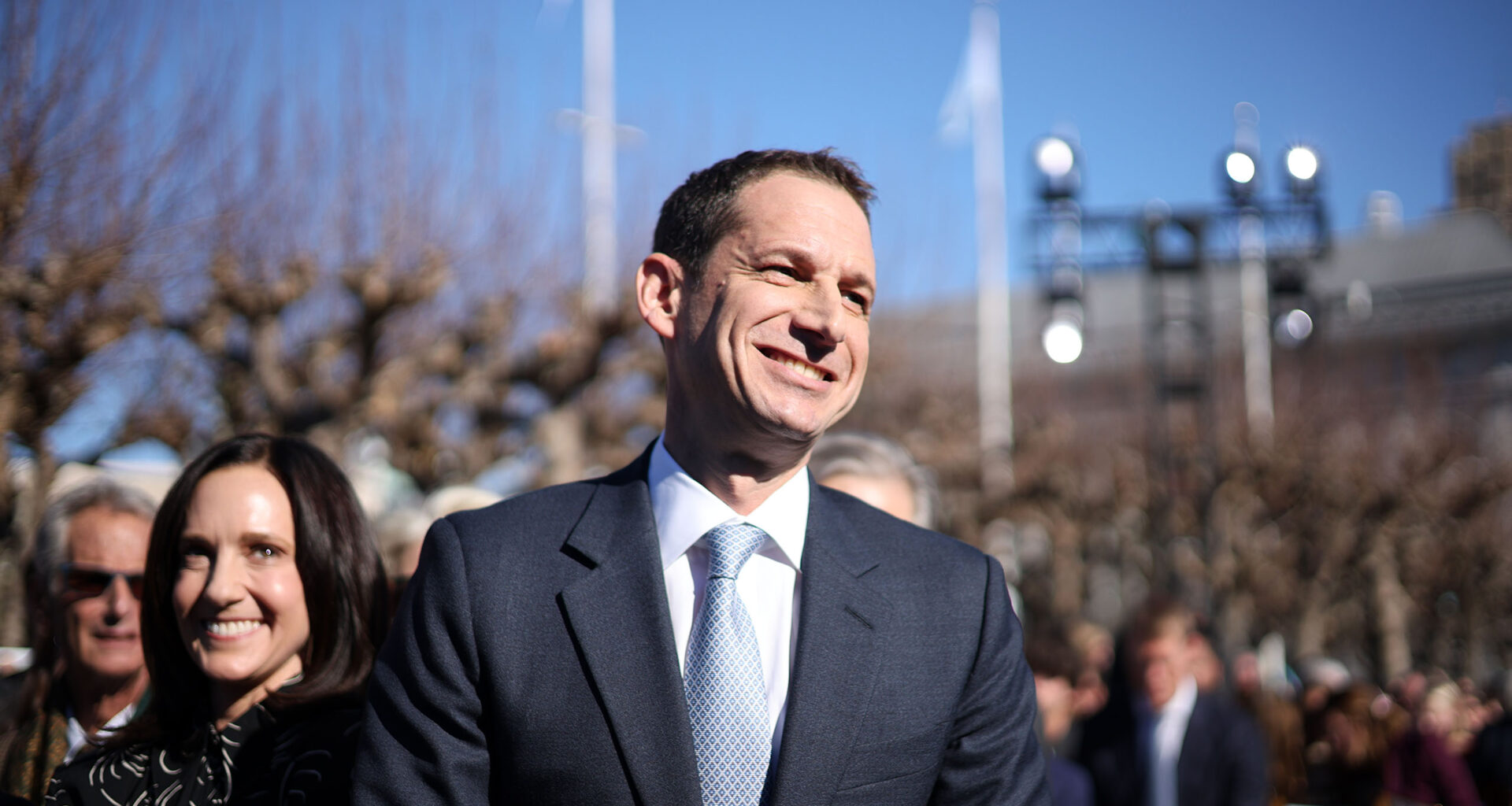
Mayor Daniel Lurie has filed papers to put a trio of measures onto the November ballot to remake the city charter — the constitution that undergirds San Francisco government. Experienced government hands often liken tinkering with the charter to brain surgery. A more apt metaphor, however, might be entering into a marriage: The consequences (likely) aren’t fatal if you make a mess of it, but, for the sake of everyone’s sanity, well-being and bank account, you’d really want to do your due diligence and get it right.
Just reading the words “charter reform” can numb voters like a few shots of NyQuil (but without the medicinal benefits). Hey, we get it — it’s not sexy. It is important: Altering the charter can induce profound consequences with ramifications that can carry on for years and cannot be easily reversed.
But, separate and apart from the substance of the mayor’s proposals, let the record show that:
Lurie is gathering signatures to enact a ballot measure that will make it harder for you to gather signatures to enact a ballot measure.
He is cluttering the ballot to stave off future cluttered ballots.
He is doing this in the name of fostering greater cooperation between the mayor and Board of Supervisors — but Lurie is choosing to bypass the Board of Supervisors and go straight to the voters, at great monetary expense.
And that’s the way it is, regardless of one’s feelings about the content of these three measures. Also: There could be more. The Board of Supervisors may yet add several additional charter amendments to what appears to be a loaded November ballot. Vamos a ver.
Regarding the content of the mayor’s three amendments-to-be, there’s a lot in here: Even people who participated in the charter reform working group that was created to push out this legislation — people who ostensibly should know what’s in these proposals —did not know what’s in these proposals. Multiple participants said they’re surprised to learn about some of what’s actually in here, and how much it would enable Lurie to do.
Most notably, one of the measures would give the mayor the ability to vastly reshape city government by reorganizing or even consolidating 24 city departments. That includes the big ones, the ones you’ve heard of: police, fire, public works, public health. At present, any reorganization or consolidation would require a vote of the people or, more likely, a series of votes. Pass this measure and it doesn’t.
Is this, on its face, a terrible idea? Not necessarily. It’s hard to say San Francisco is presently running like a Swiss watch.
But it makes one a bit uneasy that legislation enabling the mayor to make sweeping changes to two dozen departments — perhaps reducing some to husks and shunting their duties and vast workforces elsewhere — has been undersold in promotional materials as merely reorganizing “department reporting structures.”
It also makes one a bit uneasy that, according to participants in the charter reform working group, these extremely consequential details were not discussed.
Multiple sources have confirmed to Mission Local that, in fact, the proposals you’ll be voting on were circulating before that so-called working group even finished its meetings.
If voters approve Lurie’s charter amendments — and it’s difficult to imagine these haven’t been polled extensively — the possibilities for him to reshuffle the city’s departmental deck are broad.
He would all but certainly advance his quest to detangle San Francisco’s Gordian permitting Knot by consolidating the planning and building inspection departments, a goal he made public in January. Where things would go beyond that is murkier, but the Department of the Environment’s general fund budget has already been gutted, so it may essentially be wound down, with its present duties and personnel placed elsewhere.
That’s the crux of what this amendment would allow the mayor to do. There are mandatory duties enshrined in the city charter and that’s not changing. What would change is this: Now the mayor could reassign those duties to a different department. He could make one department subservient to another or reduce a department to little more than a plaque on an office door, with all its personnel and responsibilities migrated elsewhere. Pass this charter amendment, and the mayor can start deconstructing and reconstructing some of the city’s biggest departments like Lego sets — without going back to the voters to cross every t or dot every i.
That, to borrow Joe Biden’s inelegant phrasing, is a Big Effing Deal.
A common critique among government players was that the mayor’s forthcoming ballot measures were small-time. Well, like Rick Blaine, they were misinformed. Being granted the ability to reorganize or consolidate two dozen departments sounds big-time.
It sounds an awful lot like charter effing reform.
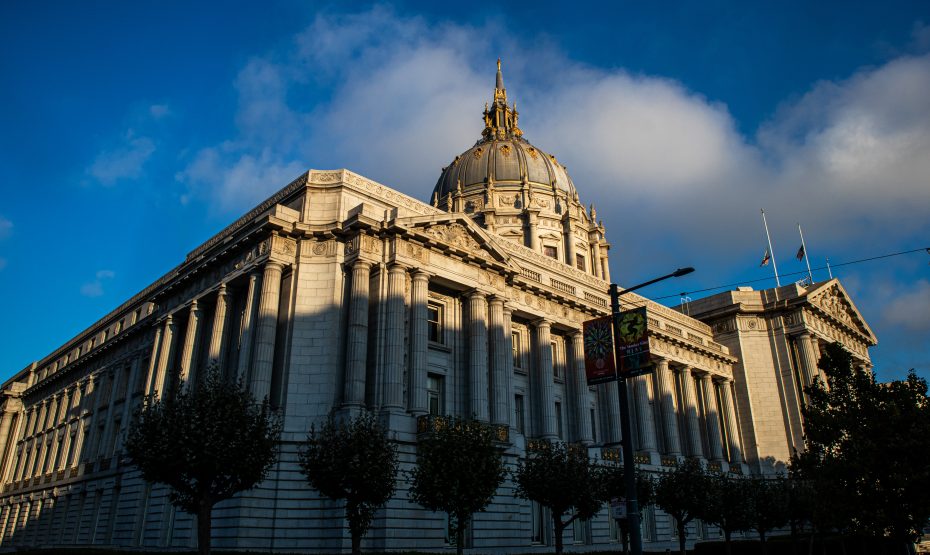 San Francisco City Hall is illuminated during sunset on Sept. 11, 2025. Photo by Mariana Garcia.
This sure seems like a bigger (effing) deal than unilaterally hiring or firing department heads — which pretty much happens already — or being able to boot commission appointees on a whim, for no reason. Those are the charter reform bullet points you’ve read already (assuming you’ve read any).
Another Lurie proposal would centralize city procurement under the City Administrator. Maximizing city buying power is a solid idea — but the mayor and his allies appear to already be overselling it. In a letter accompanying the proposed charter amendments, Lurie and Board President Rafael Mandelman cited the 2022 example of the $1.7 million Noe Valley commode as an example of decentralized procurement gone awry.
As Mission Local wrote at the time, 57 percent of that $1.7 million was soft costs — design, fees, management, insurance, etc. Experts told us that’s three or more times what a project’s soft costs should be — which, of course, has nothing to do with procurement. Those swollen soft costs were indicative of inefficiencies and even corruption within departments that can’t be rooted out by mere legislation, let alone procurement legislation. So the use of this example by the mayor and board president is concerning.
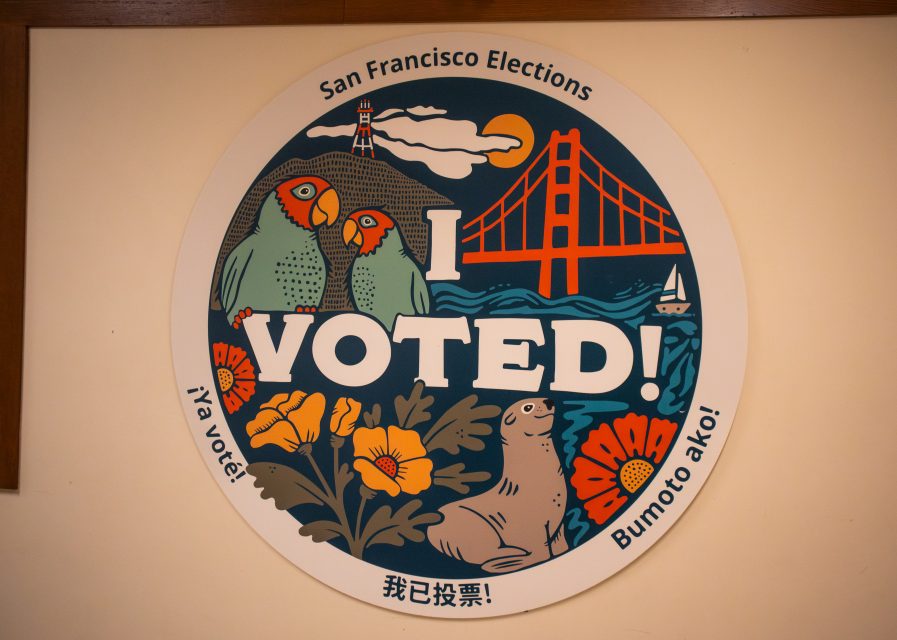 An “I voted” sign hangs on the wall at San Francisco City Hall on Jan. 16, 2026. Photo by Mariana Garcia.
Voters may glaze over when they hear the term “charter reform,” but their reaction to terms like “election reform” may not be so benign. The most contested of Lurie’s three amendments would figure to be the one about ballot access.
San Francisco has, by far, the lowest threshold in the state for getting material onto the ballot. The power of labor, the last bastion of the city’s desiccated progressive movement, would clearly be mitigated if it was harder to place items on the ballot via signature-gathering — or via a minority bloc of the Board of Supervisors.
“Over the last year [Lurie has] seen how City Hall can at times water down reforms,” wrote a spokesman for the mayor’s campaign. “These issues are too important to be delayed by City Hall factionalism.”
That would seem to explain why Lurie isn’t even trying to get six votes for his proposals from the supes and is going straight to the voters. In the event labor deigns to spend money to fight this among the many issues on a packed November ballot, voters may be hearing more about “election reform.”
To be fair, Lurie is also moving to reduce his own access to the ballot too. Only in San Francisco can the mayor unilaterally put a measure before voters. And only in San Francisco can that bloc of four of 11 supervisors put a measure before the voters. Lurie’s proposal would nix his own ability to unilaterally place items on the ballot. And the board would require six votes moving forward.
This would fundamentally shift the M.O. of wheeling and dealing at City Hall. It would do more than merely force our lawmakers to make laws: Removing the mayor and legislators’ ability to even threaten to easily lob items onto the ballot would radically alter both the sorts of legislation introduced and the means of negotiating it. It would likely tone down the vituperative and high-energy style of politics that has come to define San Francisco City Hall.
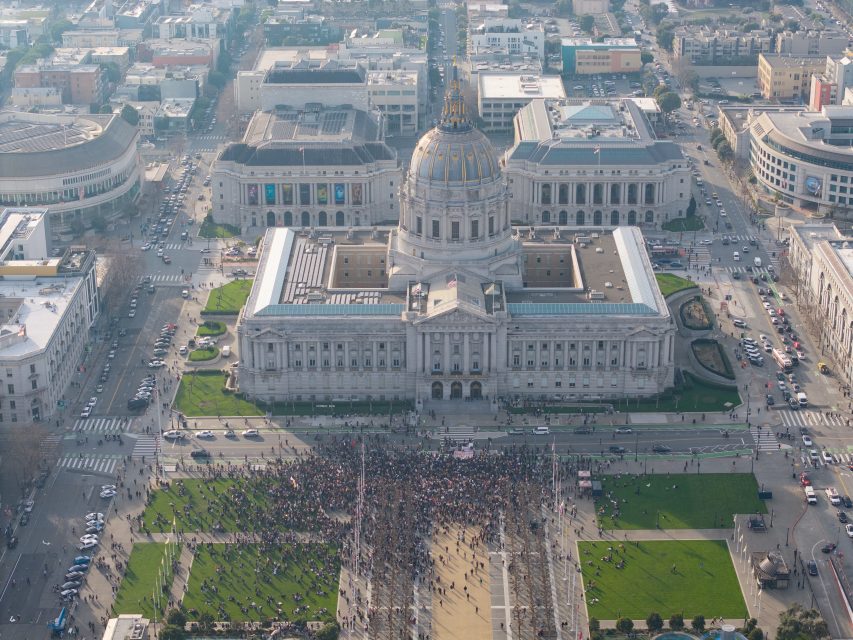 “ICE Out” protest at San Francisco City Hall on Jan. 30, 2026. Photo by Vincent Woo.
But Lurie went further: The mayor’s charter amendment would also quadruple the signature requirement to place items before voters.
You must amass 2 percent of the registered voters to place items on the ballot in this city. Berkeley requires 5 percent. Los Angeles requires 15 percent. We’re anomalies here. By a lot.
Those are the facts. But these are also the facts: Gathering signatures costs money. So quadrupling the signature requirements is essentially a monetary barrier. For the wealthiest among us, who are increasingly overt in their aims to funnel obscene sums into politics in a truly vulgar display of power, this is no real barrier.
Every extra percent of signatures required is just, to crib Sergio Leone, a few dollars more. You can state that San Francisco’s ballot threshold is too low and also state that raising it only burdens the non-rich. Both of these things can be true.
Daniel Lurie is calling for charter reform to help him better govern despite having a reliable majority on the Board of Supervisors and the most pliant board in recent memory. But it may not always be so. If, in the future, he can’t reliably push items through the supes, he may yet rue his decision to make it harder to go directly to the voters.
There are, Oscar Wilde wrote, two tragedies in life: One is not getting what one wants. And the other is getting it. It remains to be seen which will befall Mayor Lurie.