
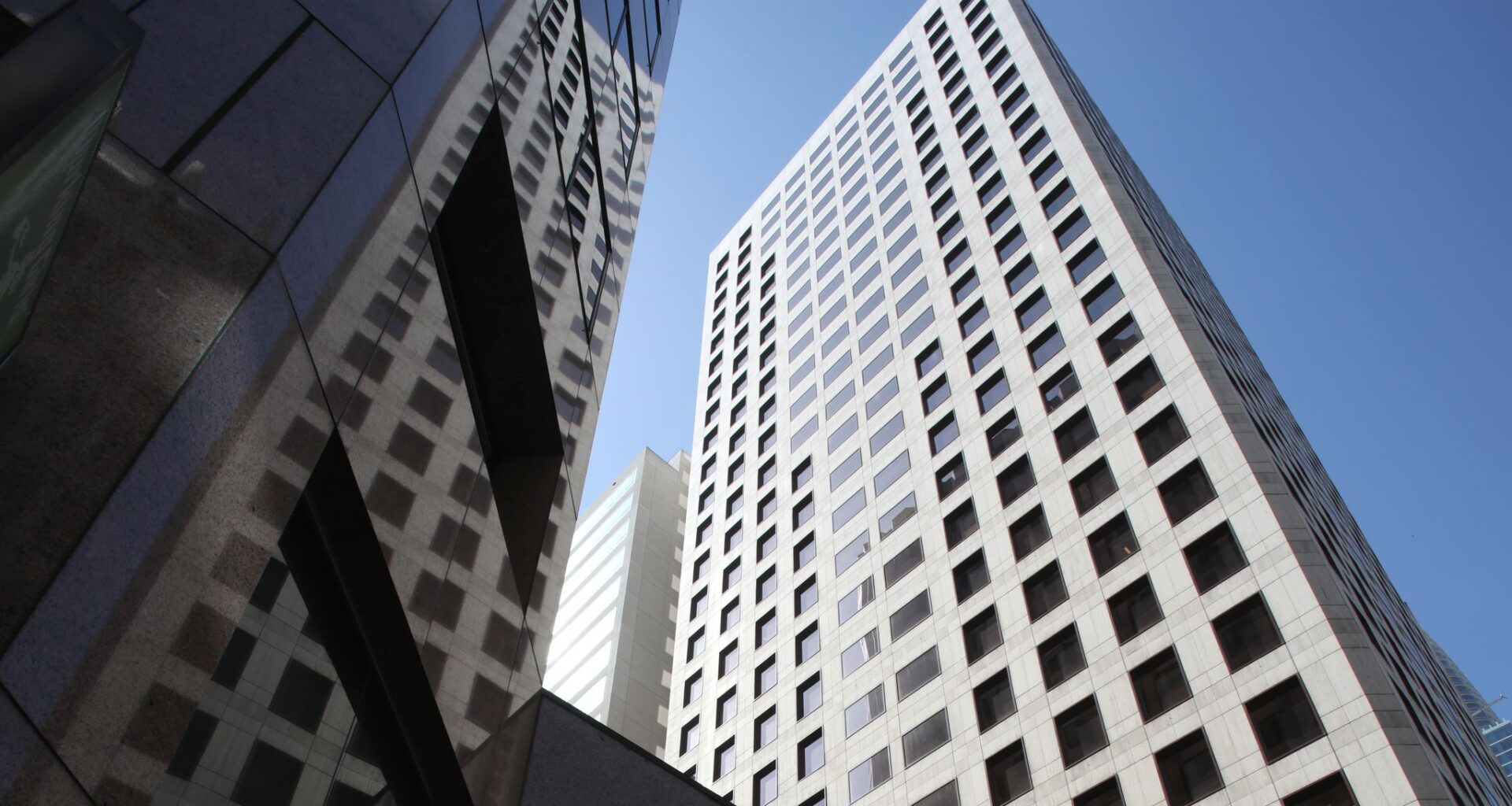
Juul purchased 123 Mission St., an office tower in San Francisco, in 2019 for $400 million. A debt deal has reduced the building’s value to a fraction of that price.
Liz Hafalia/The Chronicle
The 29-story office tower at 123 Mission St. in the heart of San Francisco’s Financial District has been sold, serving as a poignant example of the rise and fall of the city’s pre-pandemic tech boom.
Juul Labs, the embattled electronic e-cigarette maker, purchased the 360,000-square-foot office building three blocks from Salesforce Tower in 2019 for nearly $400 million during a phase of rapid growth when tech properties were booming. The tower was meant to house the company’s large local workforce. But as the pandemic swept over the city in 2020, 123 Mission had become a poster child for the real estate market collapse, struggling with significant vacancy and multiple failed attempts to lease and sell the property.
While the tower was meant to serve as Juul’s headquarters, the company left San Francisco without ever fully moving in its workforce — once estimated at 3,000 employees. Juul was still based in the Dogpatch area when it purchased the Financial District skyscraper for a massive expansion, but by mid-2020, it had cut more than half of its workforce.
Article continues below this ad
On Friday, the debt tied to the property sold for under $100 million, or less than $300 per square foot, to Madison Capital and the investment arm of Prudential Financial Inc., PGIM, which now have the option to formally take control of the building through foreclosure or a negotiated transfer, multiple sources confirmed to the Chronicle. For contrast, Juul paid more than $1,000 per square foot for 123 Mission more than half-a-decade ago.
While the exact terms of the deal are not known, Madison’s head of acquisitions, Jonathan Nachmani, said the debt was bought in the “low $90 million” range, meaning Madison has claimed the tower for less than 25% of its pre-pandemic value. Nachmani said that Madison and PGIM will likely pursue a deed in lieu of foreclosure, meaning Juul would sign over the deed voluntarily instead of the investors going through the court to take over the property.
San Francisco Chronicle Logo
Make us a Preferred Source to get more of our news when you search.
Add Preferred Source
The plan is to make “hospitality-driven” improvements to the building, confirmed Nachmani, who called 123 Mission a “blank canvas opportunity.” He confirmed that the building is largely empty.
“We have a lot of neat ideas,” he said, adding that Madison had vied to purchase the building in 2019, but the deal “fell through during COVID-19.”
Article continues below this ad
A real estate source confirmed that at the time, Madison had agreed to pay $1,200 per square foot for 123 Mission St.
Neither Juul nor Affinius Capital, the Juul lender that sold the debt on the property last week, responded to inquiries for comment Monday. Steve Golubchik, Darren Hollak and Ramsey Daya of real estate brokerage Newmark worked to facilitate the transaction, and also declined comment. Public records show that Affinius, which previously operated as Square Mile Capital Management LLC, provided a $220 million loan for Juul’s 123 Mission acquisition.
The layoffs coincided with growing scrutiny that Juul faced from both the city and the state over its marketing practices in light of what lawmakers described as a “teen vaping epidemic.” The city’s Board of Supervisors accused the company of targeting children for its products, and voted unanimously to ban the sale of most e-cigarettes that lacked U.S. Food and Drug Administration marketing approval — including those produced by Juul — in the summer of 2019.
Juul responded aggressively, pouring some $10 million into a ballot measure that sought to fight the unprecedented legislation, but voters rejected the company’s effort to repeal the city’s ban on its products.
Juul’s collapse came quickly in the months following the controversy: A barrage of lawsuits — including a complaint by the California General Attorney — were filed against the company, and federal lawmakers began to investigate teen vaping. By 2020, the company had moved its headquarters to Washington D.C., leaving its newly purchased skyscraper in San Francisco sitting largely unused.
Article continues below this ad
The tower was listed for sale in early 2020, and was expected to fetch about $450 million. But the timing couldn’t have been worse for Juul: The COVID-19 pandemic resulted in the widespread closure of the city’s offices, which plunged the downtown real estate market into one of the nation’s highest vacancy crises as companies abandoned space and rents collapsed.
Two separate deals that Juul had negotiated to sell its prime office tower — one with a partnership that involved Bay Area developer Lane Partners and investment firm PIMCO, and the other with PGIM and Madison, which last week claimed the tower’s debt— were derailed that year. Another attempt to sell the building in 2022 was unsuccessful.
Public records show no default in regard to loan payments made to lenders for the tower in recent years; though Juul’s exit from the city and the sale of its real estate debt to new investors suggests that the financial situation around the debt has long been strained.
It does not appear that Juul has plans to return to the San Francisco market. Despite financial pressure, the company, which spent billions of dollars settling lawsuits, has continued operating, reorganizing its operations while avoiding bankruptcy. As of 2019, it claimed about 60,000 square feet of office space within the San Francisco tower, though it no longer has a presence in the building today.
Article continues below this ad