
DES MOINES, Iowa (Gray Media Iowa State Capitol Bureau) – Iowa continues to have one of the highest cancer rates in the country, and state-funded researchers say a critical piece of the puzzle behind that trend is missing: detailed data on how much pesticide exposure Iowans actually experience.
Experts at the University of Iowa say the state lacks monitoring systems that would show long-term pesticide exposure for the general population.
Dr. Mary Charlton, a member of the state-funded research team, said the extent of pesticide exposure among non-farmers remains unknown.
“What we don’t know in Iowa is what is the exposure to non-farmers or non-occupational people in terms of agricultural exposures. We have — we don’t even know if and how they’re exposed to pesticides,” Charlton said.
Pesticides are commonly used on corn and soybeans in Iowa.
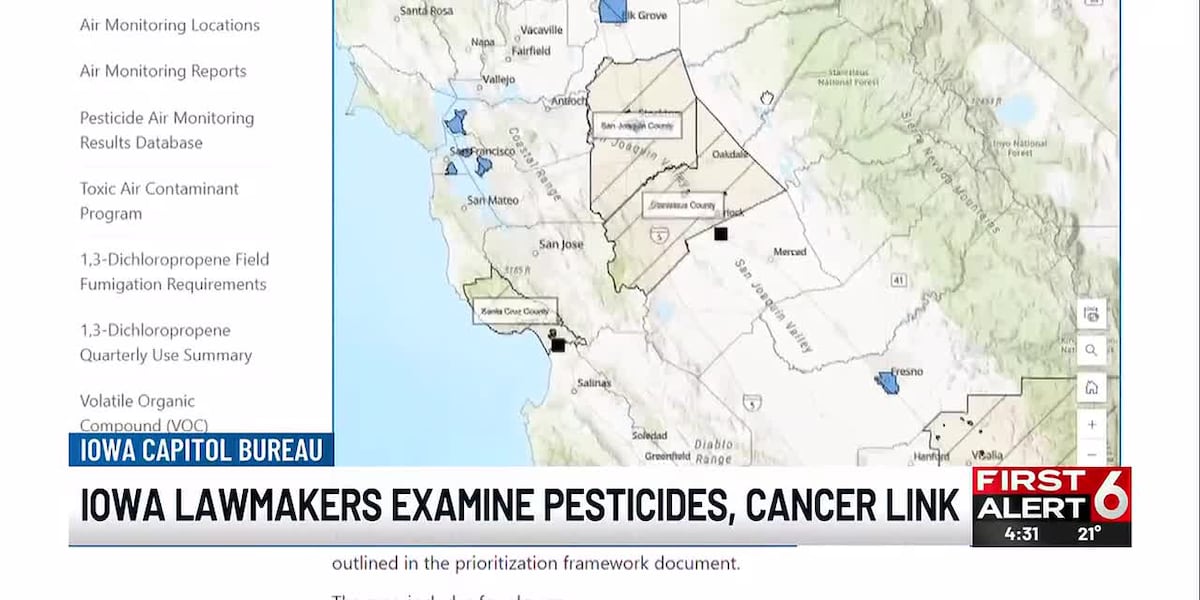
Charlton said California could offer a model for how Iowa approaches the issue. In California, the Department of Pesticide Regulation tracks when and where pesticides are used and collects air samples in farming communities.
“We talk a lot about water quality and we should, but we don’t talk a lot about air quality and what’s in the air relative to people who may live near farms,” Charlton said.
She said systems like California’s can give researchers a clearer picture of long-term exposure. Iowa currently does not have that level of statewide monitoring.
Gov. Kim Reynolds said the current focus should be on ensuring the data researchers already have is accurate.
“There’s other reports out there that will, I’m sure, factor into everything. But right now, we’ll probably continue down the path that we’re on right now, see where they’re at, and then we’ll reassess,” Reynolds said.
Phase two of the state-funded research will focus on environmental factors. Nitrate levels and radon are among the elements that could be addressed in new findings expected in June.
Copyright 2026 KCRG. All rights reserved.