
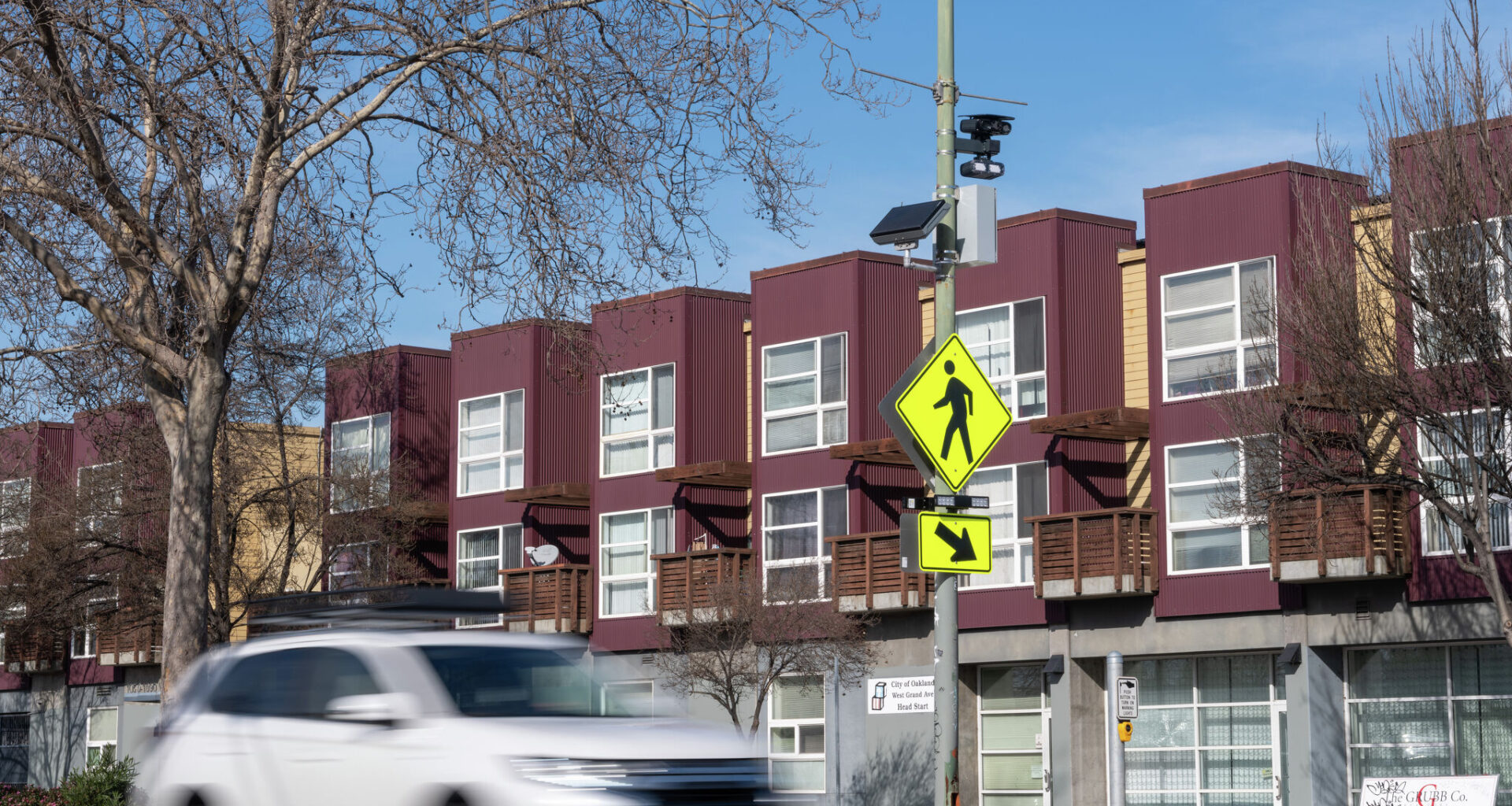
A vehicle drives by a speed camera looking out over West Grand Avenue in Oakland in January. Oakland issued more than 140,000 warnings to speeding drivers during a pilot period. Tickets will be issued starting Sunday, March 15.
Jungho Kim/For the S.F. Chronicle
Drivers passing through Oakland recently may have gotten a warning in the mail: Slow down, or they may soon have to pay the price.
During a five-week trial run, Oakland’s new network of automated speed cameras issued 140,445 warnings to motorists caught traveling at least 10 mph above the speed limit, according to a city report released Friday examining the pilot program.
Article continues below this ad
The city installed 35 cameras at 18 locations across Oakland in January, targeting corridors that see higher levels of severe and fatal collisions. The new speed camera program is the result of a 2023 state law that authorized six cities to conduct five-year pilots of the automated camera systems. San Francisco installed 33 cameras and began issuing tickets in August.
The new cameras also come at a time where cities are struggling to recruit new police officers who might usually catch speedsters.
San Francisco Chronicle Logo
Make us a Preferred Source to get more of our news when you search.
Add Preferred Source
In the past two months, drivers caught speeding by the cameras have received only warnings. But beginning March 15, the cameras will issue tickets.
Citywide, about 1.5% of vehicles passing the cameras triggered warnings — a small share of drivers that nonetheless accounts for tens of thousands of speeding incidents.
Article continues below this ad
It’s a number that frustrates Oakland Transportation Director Josh Rowan, who said the data underscores how a relatively small group of drivers can create an outsize safety problem.
“Many cities — not just Oakland — spend a lot of money trying to combat speeding, whether it’s through infrastructure changes or repairing the damage,” Rowan said in an interview. “We’re doing all of that for just 1.5% of drivers.”
In Oakland, an average of two people are killed or seriously injured by traffic violence each week, according to city statistics. Just 8% of streets account for about 60% of severe and fatal collisions.
The site that saw the highest number of speeders was at 73rd Avenue between Fresno and Krause avenues in East Oakland, just north of International Boulevard. It’s a stretch many drivers use as a shortcut between Interstates 580 and 880.
“We just have a lot of long, straight streets that are really favorable to speeding,” Rowan said.
Article continues below this ad
Some of the other top corridors were Broadway, between 27th and 28th streets, and Hegenberger Road between Spencer and Hawley, just north of the Coliseum BART Station.
While the cameras will soon start issuing fines, Rowan said enforcement is only one part of Oakland’s safety strategy. The city also wants to use traffic calming — a redesign of streets so drivers instinctively slow down. That can mean adding speed bumps, narrowing lanes, installing medians or introducing curves that discourage drivers from accelerating.
At nearly every camera location, the typical speeding driver was traveling 11 to 15 mph over the limit, the report found. One location stood out: Foothill Boulevard between 19th and 20th avenues near San Antonio Park, where the average speeding driver was clocked at 19 mph above the limit.
The data also showed that most drivers — 64% — only triggered a warning once. But a smaller group of repeat offenders accounted for nearly two-thirds of all violations during the pilot period. About 30% of warned drivers were caught two to five times, and 4% received six to 10 warnings.
Article continues below this ad
A handful of drivers pushed the numbers even further: 11 motorists racked up more than 30 warnings each during the five-week pilot.
“Who are those 11 people, and why are they driving?” Rowan said.
Beginning Sunday, speeding drivers will start to see citations arrive by mail — starting at $50 for drivers going 11 to 15 mph over the limit, and as much as $500 for excessive speeds. Low-income drivers will be charged reduced fines.
During its first month of operations, San Francisco’s new system issued 16,500 tickets — worth about $1.2 million.
Article continues below this ad
If Oakland’s level of citations stays consistent with the warning period, the cameras could generate about $5 million in revenue for the city in their first month of operations. Per state law, money generated from the fines must be used toward road and safety improvements.