
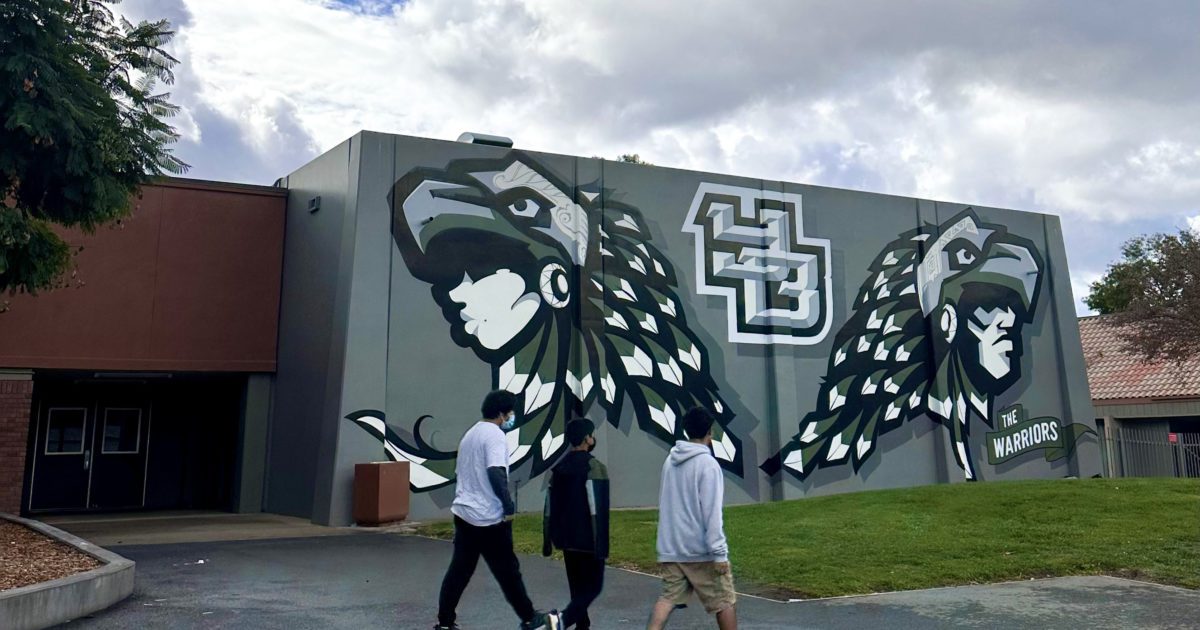
A school district in East San Jose is laying off employees as it faces a budget deficit and declining student enrollment.
East Side Union High School District is giving pink slips to more than 80 workers, with layoffs taking effect at the beginning of the 2026-27 school year. The decision follows a vote by the school board in late January amid a projected $30 million budget deficit. The loss of one-time federal COVID dollars and a drop in enrollment from 23,336 students in 2017-18 to 19,141 in 2025-26 led to this decision, Superintendent Glenn Vander Zee said.
“These cuts are really hard for both the administration and the board to make knowing the needs of our students. We are a district with a student population that demands all the resources available to support our kids,” Vander Zee told San José Spotlight. “East Side has been very aggressive in generating resources, making prior cuts and passing a parcel tax … and we will continue to invest in them.”
East Side Union High School District’s $49 parcel tax sailed through with 72.6% voter approval in 2024. The five-year tax, effective fiscal year 2025-26, is expected to generate about $6.4 million per year.
The layoffs will affect 44 certified employees including special education teachers, counselors, social workers, teachers across a range of subjects including English and math, as well as some associate principals. Up to 41 classified employees are also losing their jobs, including clerk typists, custodians, community liaisons and parent and community involvement specialists.
Jack Hammer, president of the East Side Teachers Association, is frustrated with the loss of teachers, social workers, counselors and advisors.
“Social workers deal with the mental health and wellness of our students. Counselors deal with the academic support and the well-being of our students and advisors … make sure that our campuses are safe,” he told San José Spotlight. “(These are) people that work with kids on a daily basis.”
Hammer said low-income English learners, homeless and foster youth depend on people in these positions for their success. He said almost 70% of district students fall into this category.
“To take away those positions that support our kids is catastrophic,” he said. “When you have that many kids in your district that are that vulnerable, you must maintain those services.”
Julio Pardo, president of the East Foothills chapter of the California School Employees Association, said union leaders met with the district a few weeks ago to try to save some classified positions. Most concerning are the loss of parent and community involvement specialists and community liaisons, he said, who are indispensable to immigrant and non-English speaking families.
“Those are the ones that make connections with the families to inform them what resources are available … and connect them with social workers and other social agencies,” Pardo told San José Spotlight. “They also work with the students — sometimes these students have issues that they just can’t discuss with other people, but they feel more comfortable talking with our parent community specialists.”

Vander Zee said the district understands these services are valuable and will try to bring back some of the workers and deploy them across the district.
He said East Side Union High School District is funded almost 40% less than other more affluent high school districts in Santa Clara County — such as Mountain View-Los Altos Union, Fremont Union and Los Gatos-Saratoga Joint Union — due to property taxes.
School funding derived from property taxes and state dollars based on attendance has disadvantaged marginalized communities with low attendance and property taxes. Vander Zee said while ESUHSD spends $14,000 per student a year, Palo Alto Unified School District spends $26,000 per student. He said the lack of funding has impacted hiring math specialists and reduced the number of courses offered.
Vander Zee said these cuts could have been avoided without this disparity, allowing students to receive the services they need.
“The state currently underinvests in East Side students,” he said. “We are at a greater risk … because of the structural inequity that’s built into the California school funding system.”
Contact Lorraine Gabbert at [email protected].