
Remember when San Diego was known as “America’s Finest City”? Back then, it was the model of good governance with competent political leadership under mayors like Pete Wilson, who went on to become governor with a reputation for fiscal prudence. Regrettably, San Diego has slipped into the same bad governance morass in which other major cities such as Los Angeles and San Francisco find themselves. This is especially true when it comes to taxes. For San Diego politicians, there is double trouble.
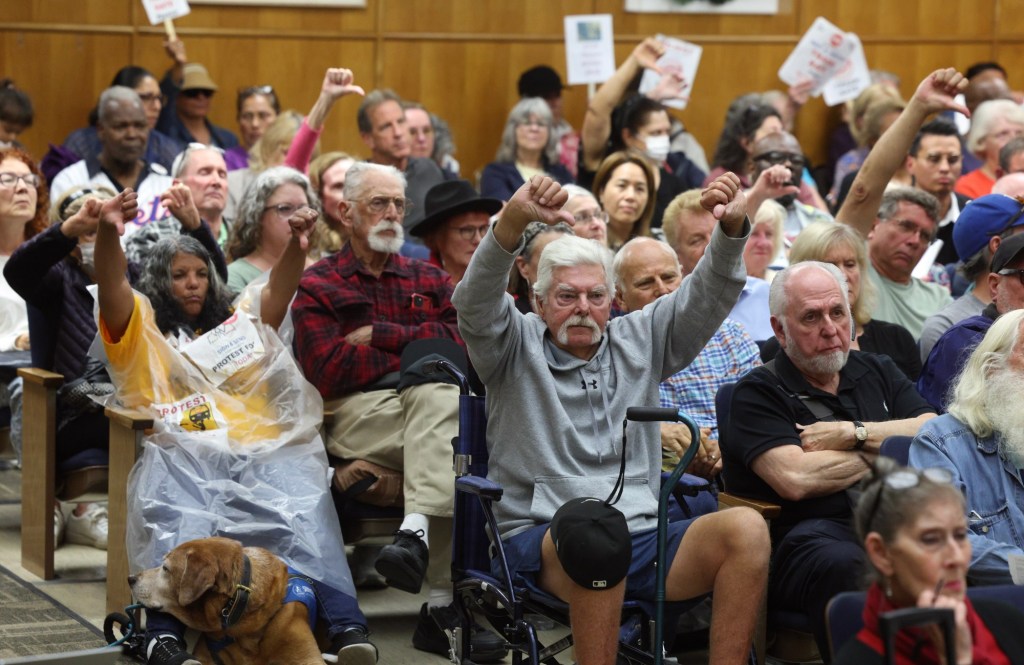
First, San Diego imposed a first-ever trash fee on single-family homes, which has generated a lot of hostility among the city’s homeowners both because of the amount of the fee as well as the deception used to bring it about.
More than 100 years ago, San Diego voters approved the “People’s Ordinance,” which provided for free trash collection for single-family homes. Although it also allowed for trash collection fees, none were ever proposed. The ordinance was amended on a few occasions, but, for the most part, owners of single-family homes continued to receive trash collection paid out of the city’s general fund. In 2022, the city placed Measure B on the ballot to move towards collecting trash fees from those who were previously covered by the People’s Ordinance. Voters were told the fee for the current level of service would range from $23 to $29 per month. Even at that modest amount (relative to other residential trash fees in California), Measure B barely passed with less than 50.5% support.
More importantly, Measure B was not itself an approval of a trash fee but only an authorization for the city to propose a rate structure for trash collection. The reason it was not a direct authorization is that “property related” fees are subject to separate substantive and procedural requirements under the Right to Vote on Taxes Act, a Howard Jarvis Taxpayers Association-sponsored initiative approved by voters in 1996. Substantive requirements for a trash fee include a limitation on the amount of revenue tied to the actual cost of service and a prohibition against using the fee for any purpose other than trash collection. Procedurally, Proposition 218 also requires a specific property owner approval process with notice, a hearing and an opportunity to protest.
The trash fee survived the protest procedure in large part because the failure of a homeowner to submit a protest was counted as approval. Had the fee been subject to a regular election, it would have been easily defeated.
As a result, opponents of the fee hike, including former Mayor Kevin Faulconer, have begun collecting signatures to effectively repeal it. Given the negative publicity over the levy and a record level of written protests, the trash fee may soon itself be trashed.
San Diego’s second tax controversy is even more confounding. On March 3, the San Diego City Council backed placing a huge “vacant house” tax increase on the June ballot. It proposed an initial annual tax of $8,000 on more than 5,000 homes unoccupied for more than half a year — plus a $4,000 surcharge for corporate-owned dwellings. In subsequent years, the tax would increase to $10,000, with the surcharge going up to $5,000.
Not only is this unwarranted tax unlikely to achieve its stated objective of increasing housing availability, but it will also result in litigation that the city is bound to lose. A similar tax in San Francisco was recently rejected in a Superior Court ruling that determined it was both unconstitutional and pre-empted by state law. That case is on appeal, but the legal footing for the levy is on very shaky grounds.
Perhaps the San Diego City Council will come to its senses and rethink imposing higher taxes to paper over its bad management. But don’t count on it. It might take a one-two punch of the voters rejecting the trash fee and a court ruling.
Coupal is president of the Howard Jarvis Taxpayers Association.