
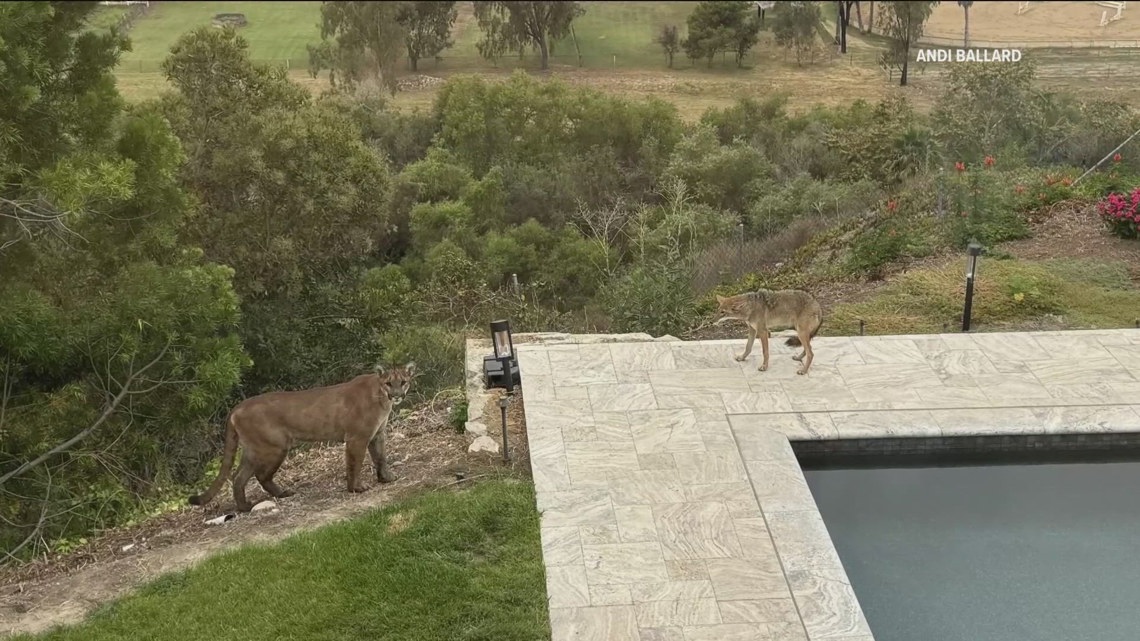
Rattlesnakes sightings are on the rise across the county and wildlife experts say you can expect to start seeing coyotes and mountain lions as well.
RAMONA, Calif. — With temperatures in Ramona already climbing into the mid‑90s, San Diego County is bracing for an early‑season heat wave that is pushing some areas into triple‑digit territory. And while people are certainly feeling the heat, wildlife experts say animals are being affected too — and they’re becoming active much earlier than usual.
Over the weekend, former Chargers quarterback Drew Brees posted a video to Instagram showing an encounter with a large rattlesnake while out on a trail. He described turning a corner and coming face‑to‑face with what he called one of the biggest rattlesnakes he had ever seen. It’s the kind of encounter experts say is becoming more common as warm temperatures arrive weeks ahead of schedule.
“We do see changes in wildlife behavior patterns adjusting because of the heat,” said Autumn Welch, Wildlife Operations Manager at the Ramona Wildlife Center. She noted that rattlesnakes, squirrels, and rabbits are all more active than they typically would be in mid‑March.
That uptick in activity creates a ripple effect. As smaller animals emerge in search of food, larger predators follow. “A lot of birds of prey are very active right now,” Welch explained. “They’re looking for squirrels, lizards, other animals that are coming out because of the heat wave.” Coyotes, mountain lions, and other predators are also moving more frequently during daytime hours.
The heat is also drying out natural water sources faster than usual. With fewer places to hydrate, wildlife is traveling longer distances — often pushing animals into neighborhoods as they search for water, shade, and food.
Experts say there are a few simple steps residents can take to avoid attracting unwanted wild visitors. “If you don’t want wildlife in your neighborhood or coming close to your house, such as coyotes or other animals seeking food, water, [or] shelter, we usually recommend not leaving food out,” Welch said. “Even bird seed will attract predators like coyotes. They’ll eat just about anything.”
Pet owners are also urged to take extra precautions during the heat wave. Hot asphalt can burn paws, and animals need constant access to fresh water to avoid heat‑related illness.
As temperatures continue to soar, wildlife officials remind residents to stay alert on trails, keep yards free of attractants, and give animals plenty of space when encountered.