
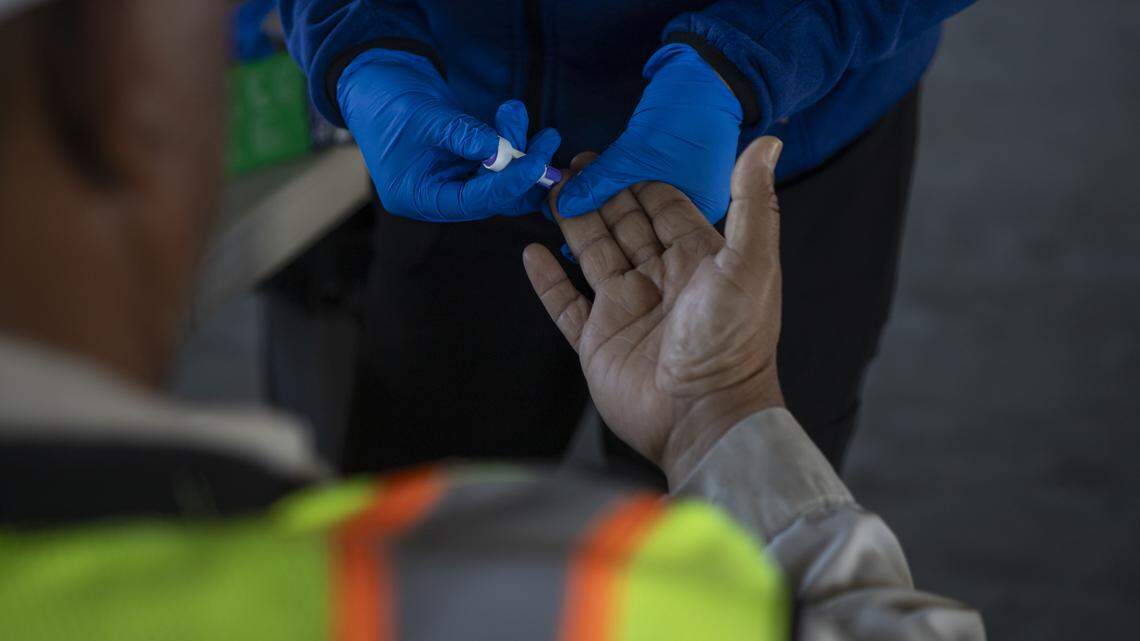
Fresno County staffers said they are getting a clearer picture of how changes to federal eligibility for Medi-Cal and other benefits under President Donald Trump’s “Big Beautiful Bill” will hit the county’s $5.3 billion pocketbook and residents in need of care.
The changes that require greater oversight for eligibility, fines for errors in awarding funding and the greater costs to care for the indigent were estimated to impact the county’s budget and fall between $68.5 million and $294.5 million, according to Joe Prado, Fresno County Public Health director.
Prado’s presentation Tuesday to the Board of Supervisors was something of a snapshot of potential funding issues for the county. The departments of Public Health, Behavioral Health and Social Services split those expenses.
“We’re using these population figures as just an estimate,” Prado said. “If more people fall into indigent care, these numbers just go up and up and up.”
Congress last summer approved the Trump Administration’s H.R. 1, known as “The One Big Beautiful Bill Act,” which included cuts to the federal Medicaid program totaling nearly $1 trillion. Medicaid provides money for low income public health insurance programs in each state, including Medi-Cal in California.
About 520,000, or half, of Fresno County residents can access Medi-Cal, according to county staffers. Of those, about 153,000 have work requirements.
The federal bill requires a greater level of scrutiny than has been the policy of the past, including doubling the amount of audits for those who have work requirements. That would likely require more employees and staff time, staffers said.
The issues could be compounded by the state requirement for the county to provide care to those considered indigent, which city staffers said is more expensive than Medi-Cal. The county’s average cost for Medi-Cal is about $4,000 per patient while the indigent care costs are about $8,000, staffers said.
“It’s ironic that there’s more scrutiny there, but yet we need more staff,” Fresno County Chief Administrative Officer Paul Nerland said. “It’s an advantage in Fresno County to keep more of our local population on Medi-Cal because it’s less expensive through Medi-Cal than it would be to pay for it through our indigent care program.”
Indigent care also is a large factor for those who need mental health care. Those with mild or moderate mental health care needs who can’t qualify for Medi-Cal would likely fall into indigent care, according to Susan Holt, the director of Behavioral Health.
“Their impairment will escalate and they will hit our system completely unfunded,” she said.
For residents who access Supplemental Nutrition Assistance Program (SNAP) benefits, what was once called food stamps, the county is held accountable for the “error rate.” That includes those who have been awarded fraudulently and those awarded by mistake, city staffers said.
The county was penalized $2.9 million and $16.5 million in 2023 and 2024, respectively, for errors.
Staffers said the most recent year had an error rate of 4.25% but she said the rate could be much higher as HR 1 is implemented. She said a technical calculation at the state level determines the penalty amounts.
Supervisor Luis Chavez has expressed skepticism over the Trump Administration’s efforts.
“The big ugly bill gets uglier as we discuss it more,” he said.
Related Stories from Fresno Bee
Merced Sun-Star
Reporter Thaddeus Miller has covered cities in the central San Joaquin Valley since 2010, writing about everything from breaking news to government and police accountability. A native of Fresno, he joined The Fresno Bee in 2019 after time in Merced and Los Banos.