
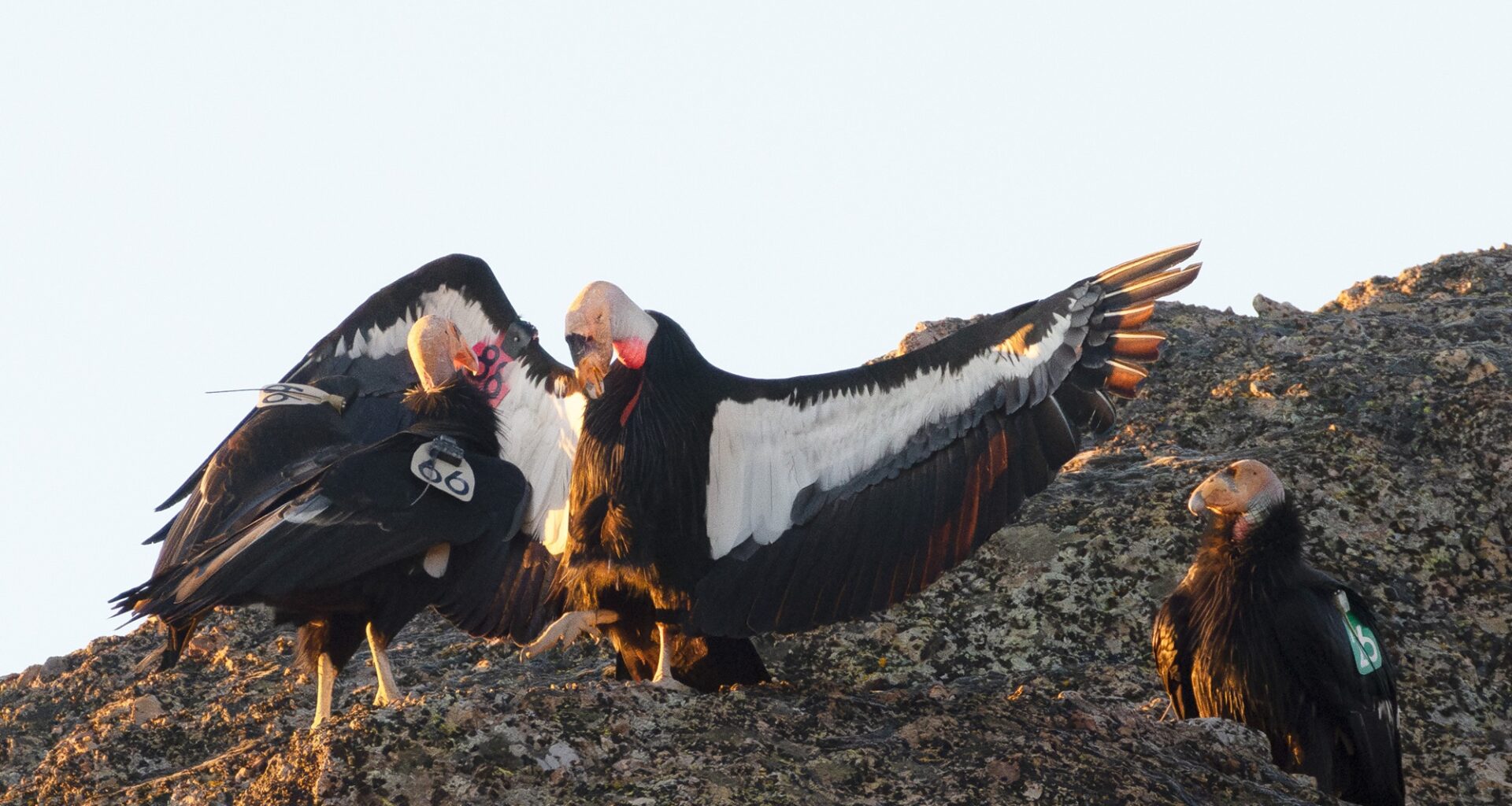
“Condors are very long-lived, so very small changes in their survival rate can make big differences on whether or not they will go extinct or not go extinct,” said Myra Finkelstein, an environmental toxicologist at UC Santa Cruz and senior author on the paper.
“The goal is that for us to stop releasing captive-bred birds, and currently right now, we still have to. The population is declining unless we release captive-bred birds.”
Finkelstein published research in 2012 that showed the lead poisoning from ammunition was preventing the condor’s recovery. The findings built support for California to pass a lead bullet ban for hunting wildlife in 2013, which fully phased into effect in 2019.
When the law passed, Finkelstein was very excited. “Not only does lead poison California condors, it will poison any scavenging species, and there’s no level of lead exposure that’s known to be without long-term effects for young kids. So [no lead] is just a win-win all around.”
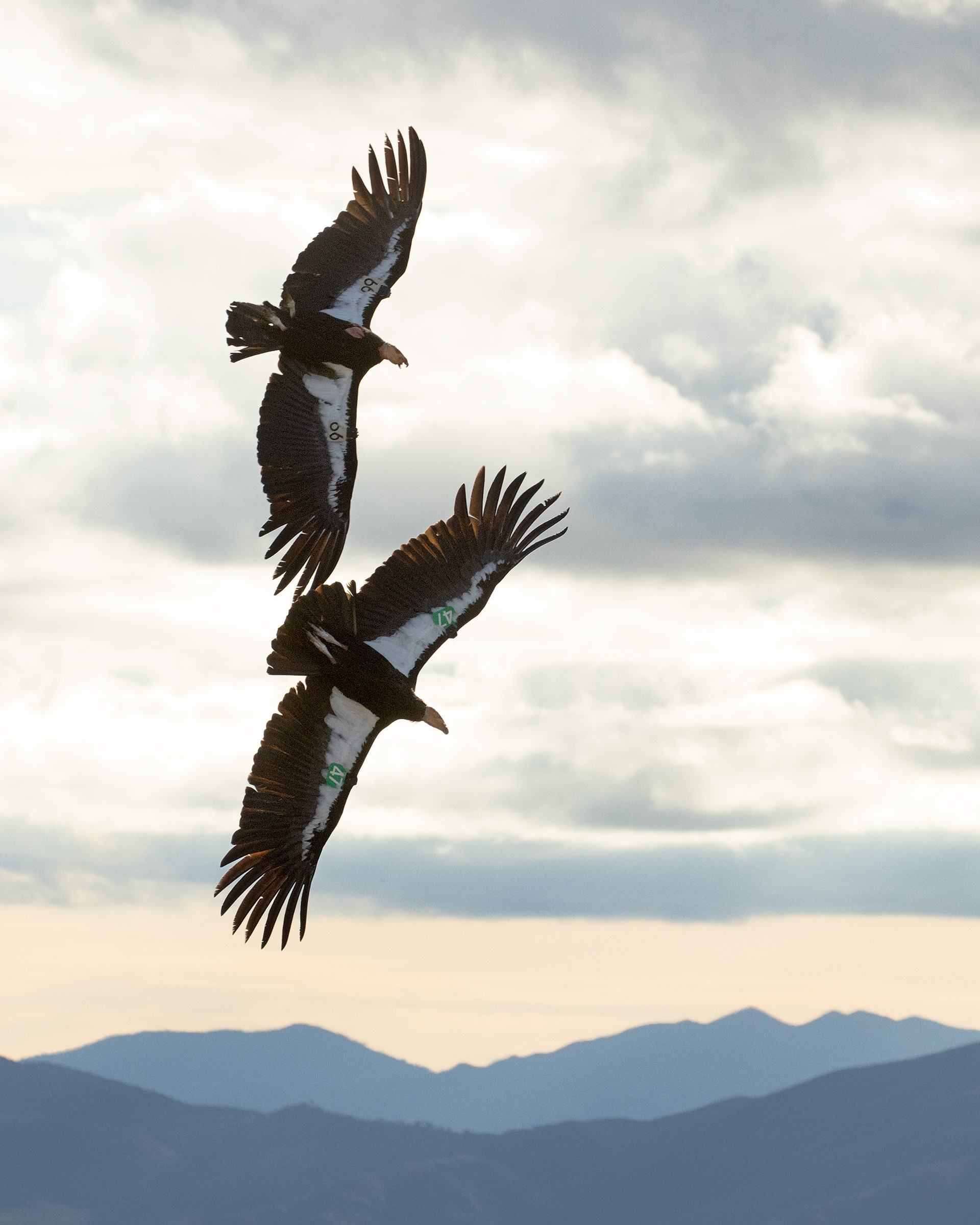 California condor 966 Pixchi chases 747 Boeing through the late afternoon skies above Pinnacles National Park. (Courtesy of Tim Huntington)
But in the years that followed the ban, she and her colleagues continued their research, but they did not see the lead mortality decrease as expected. In fact, it worsened. The amount of lead in the blood of Central California condors actually jumped after full implementation of the ban. This, on the face, made no sense.
“We didn’t think that people were out there using more lead than they were before the ban,” she said. In fact, every indication from the hunting community was that people were largely, albeit not entirely, complying with the ban.
Finkelstein said her research team felt under some pressure to be able to provide an explanation. If they can’t explain the cause, other states and countries could look at California’s example and conclude that “lead bullet bans don’t work to protect endangered species, we shouldn’t bother with them,” she said.
Fortunately, condor researchers in California are lucky in that they have extremely robust datasets. While most biologists study what they hope is a representative subset, Finkelstein and colleagues have access to three decades of near-daily data on every single condor in the state.
“We use every single bird,” Finkelstein said. “We have all the blood lead levels that have been collected. And we have all of the outreach that has been done. We have so much data. And with all these data, we were able to start looking at what could be influencing condor lead risk. Why is it worse now than it was five years ago?”
They noticed two things: one, that an individual condor’s behavior was highly linked with how soon it died of lead poisoning. The birds still depend on the lead-free carcasses left by conservationists at certain sites. But more and more birds are venturing further afield, presumably picking up lead contamination in the carcasses they find. But where would that increased lead be coming from?
Combining data from deer hunts, pig hunts and elsewhere, Finkelstein said they found, “lo and behold, what explained the problem in central California was an increase in pigs.”
Feral pigs have become a nuisance, with most living on private land. They damage crops and vineyards and are a health hazard; they carry viruses, bacteria and parasites that can affect humans, pets, and livestock. Pig hunting tripled after 2008, and doubled again after 2019. Sometimes they’re killed without a tag, which is like a permission slip from the California Department of Fish and Wildlife to kill an animal. It’s impossible to know how often.
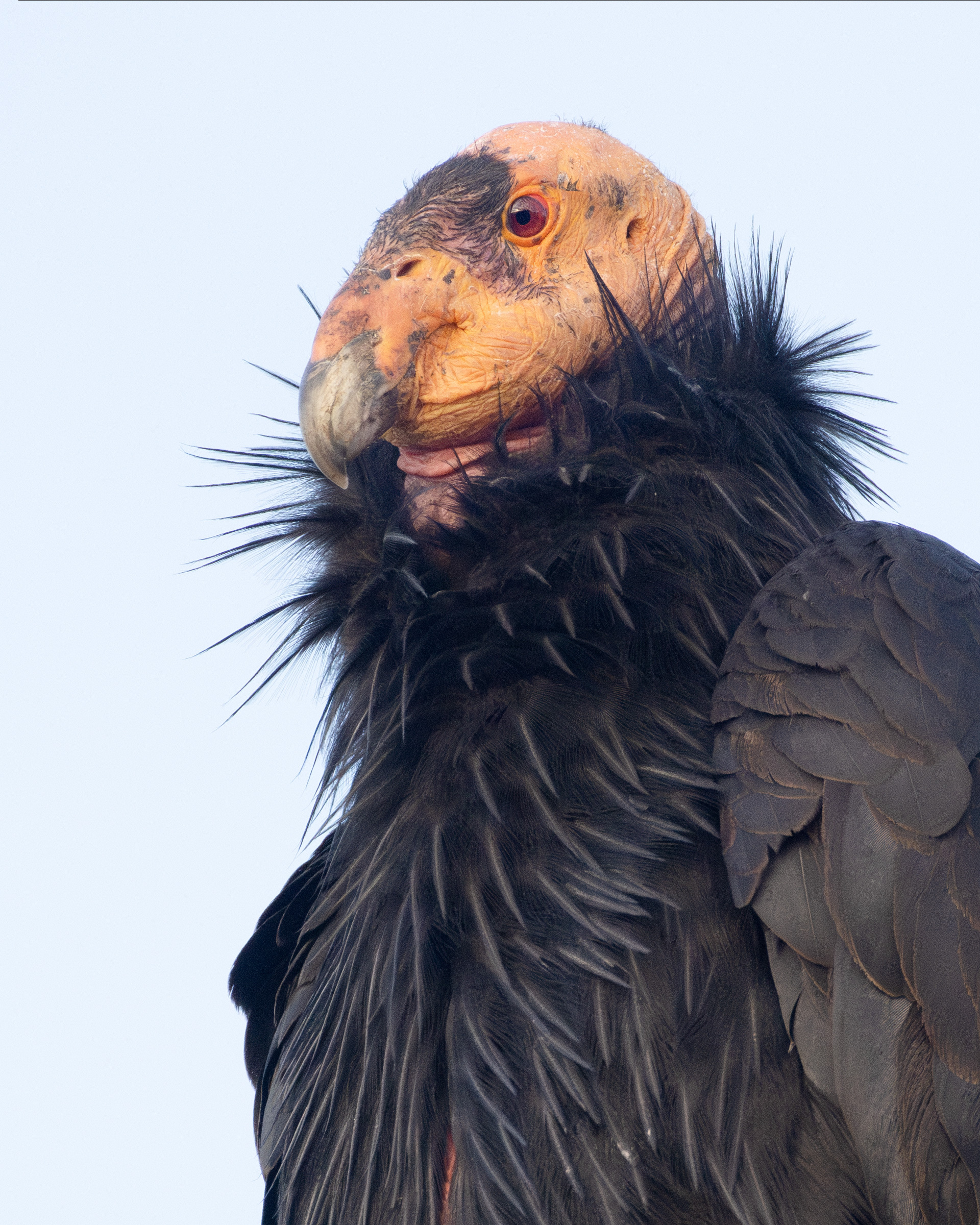 California condor 966 Pixchi at Pinnacles National Park. (Courtesy of Tim Huntington)
But it doesn’t take much of an increase in lead on the landscape to affect condors. The paper, published in Nature Communications, explains that fewer than 10 lead-contaminated feedings per year are enough to explain this increase in lead exposure seen in California’s condors. And a condor can be taken down by fewer feedings than that.
“I think people don’t understand that just one feeding, one tiny little sliver of lead can kill a condor — and condors are supposed to live 60 plus years,” Finkelstein said. “They never lived that long. We have a bunch of teenagers flying around out there, you know? Very few adults … It’s just tragic.”
However, the research team found that the lead ammunition bans are effective. Without them, condor mortality would be much worse. And, while California condors are not self-sustaining at the moment, they are almost there. A small additional decrease in lead, and they could get there. Interestingly, deer hunting appears to have a protective effect on condors. Deer hunters are overwhelmingly abiding by the lead ammunition ban, and so entrails left over from a deer being dressed in the field provide a safe meal for a condor.
“We only need to lower lead mortality by 1%, and the condor population is expected to become self-sustaining. Now that to me sounds like we’re on the verge of success here,” said Kelly Sorenson of the Ventana Wildlife Society, who has led major recovery efforts for condors across central California. Sorenson did not participate in the study. “And hunters and ranchers are being a part of that by switching to non-lead.”
The Ventana Wildlife Society, in addition to doing outreach and education, gives away non-lead ammunition to hunters. This year, it plans to give away $60,000 in supplies. It is still legal to buy lead in California and to fire it at some shooting ranges. Sorenson laments that not all calibers are readily available at stores in non-lead options, which can also be more expensive. In California, people are not allowed to order ammunition online; they must buy it in person from a store.
“The prohibition of online sales is really a big deal, severely limiting availability,” Sorenson said. “The people who are really having a hard time [switching over to non-lead options] are the ranchers who are shooting sometimes hundreds of rounds of rimfire every weekend.” Rimfire is a type of low-cost ammunition popular for small-game hunting. Non-lead ammunition for one of the most common rifles used in the U.S., the 22 Long Rifle, often used for controlling ground squirrels, is not available in most stores, Sorenson said.
While other states do ammunition sales differently, they have their own problems. Currently, California is the only one with a lead ammo ban for shooting wildlife. But other states are considering similar actions and looking to California’s example.