
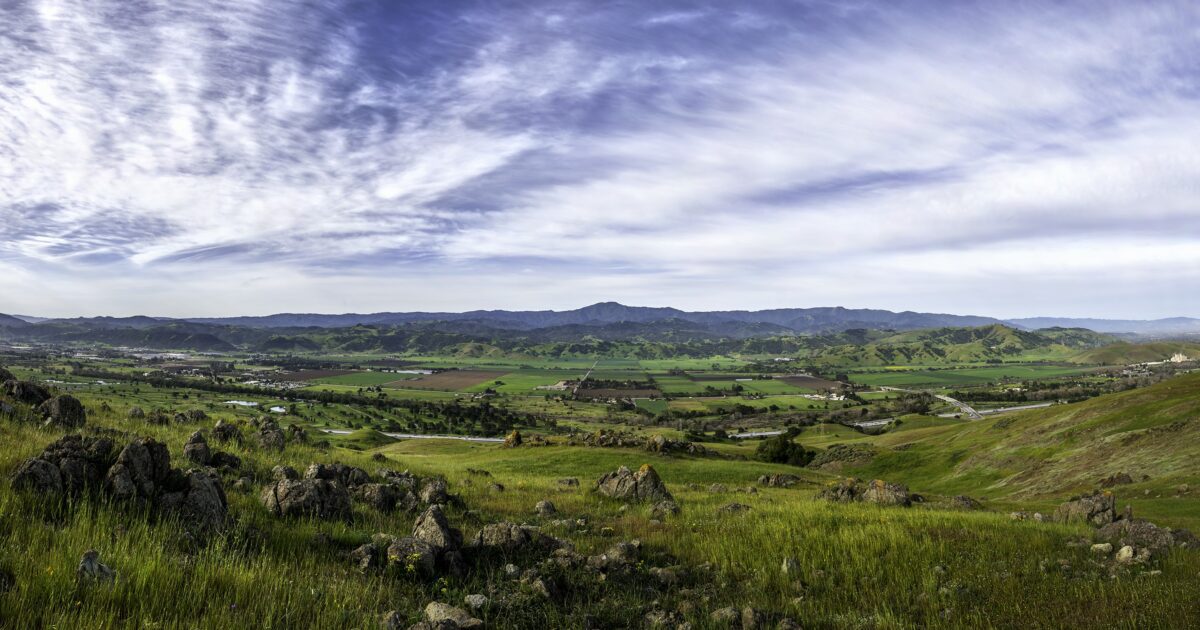
Santa Clara County residents will vote on yet another tax measure this year — but instead of hospitals, they’ll be asked to help expand public access and protect wildlife along Silicon Valley’s sweeping foothills, woodlands and grasslands.
Voters in June will be asked to accept a tax of two cents per square foot of building area on property owners within the legal boundaries of the Santa Clara Valley Open Space Authority, which includes San Jose, Milpitas, Campbell, Santa Clara and Morgan Hill. Officials say Measure D would raise $17 million annually to help the agency restore and maintain open space, waterways and farmland for public benefit.
The average single-family residence would pay an additional $32 annually under the measure if approved, with a maximum tax cap per parcel of $7,500 and exemptions for older adults and low-income property owners. Commercial and industrial property owners would pay more.
“We’re operating on the same revenue stream as we were since 2014,” Andrea Mackenzie, the Open Space Authority’s general manager, told San José Spotlight. “By 2041, we estimate we’ll have over 1 million visitors a year in our open space system. That’s why anticipating public demand and meeting it in the next 15-20 years is essential.”
One of the region’s fiercest tax opponents say the measure will compound with other tax measures across the county — and worsen living costs for residents under the Open Space Authority’s jurisdiction.
“Every government agency always has a story to tell about why they need more money. Sometimes the stories even sound plausible, each one by itself,” Joe Dehn, chair of Libertarian Party of Santa Clara County, told San José Spotlight. “But add up all the new taxes and borrowing, and it’s no surprise that more and more people can no longer afford to live in Santa Clara County. We can’t all live off our neighbors by demanding they pay for everything we would like to have.”
The agency has been studying a tax measure for the last two years to boost its $12 million annual revenues that are no longer sufficient to steward a growing network of public lands, from the hills east of San Jose to Coyote Valley and Coyote Ridge. The total acreage of the authority’s open space preserves has swelled from 16,000 to 30,000 over the last decade, while visitors have risen from 150,000 in 2014 to 500,000 today, according to the agency.
“We project that in the next 15 to 20 years, we’ll grow by another 10,000 to 15,000 acres,” Mackenzie said.
While the Open Space Authority was exploring a tax measure, the ballot question does not directly come from the agency itself. In September, former Santa Clara County Supervisor Ken Yeager, Valley Water Board Director Shiloh Ballard and Green Foothills Executive Director Julie Hutcheson started a signature-gathering effort which on Feb. 10 successfully qualified the tax measure for the June 2 primary ballot.
The reason was strategic. Since it’s a voter-sponsored initiative, the tax will only require a simple majority of more than 50% voter approval, rather than the more difficult two-thirds threshold required of board-sponsored special taxes.
“Our community consistently values access to nature, open space and safe places to recreate — and protecting these resources for the future,” Ballard told San José Spotlight. “Measure D gives voters the chance to reaffirm those priorities.”
Last November, voters approved a county-sponsored five-eighth cent sales tax increase to bring in $330 million in extra revenue annually to stave off the threat of hospital closures in the wake of H.R. 1, the federal spending cut bill that President Donald Trump signed last July. Meanwhile, several Bay Area counties, including Santa Clara, are getting behind a potential half-cent sales tax increase on this year’s ballot to save BART, Caltrain, VTA and other transit agencies from hundred-million-dollar deficits.
“We’re at a point in time where we’ve acquired a lot of land,” Open Space Authority board member Helen Chapman told San José Spotlight. “We want to make sure the agency moves forward to meet the expectations of the public and serves the public in a meaningful way.”
While the tax would mean another cost for already-burdened county residents, Chapman said her agency has pared its own spending back in recent years and been forthcoming about its intentions with the tax.
“We knew our expenses were not meeting the income we had,” Chapman said. “We were conscious to make our finances manageable, and I think we’ve been very transparent about where the money will be going.”
Contact Brandon Pho at [email protected] or @brandonphooo on X.