
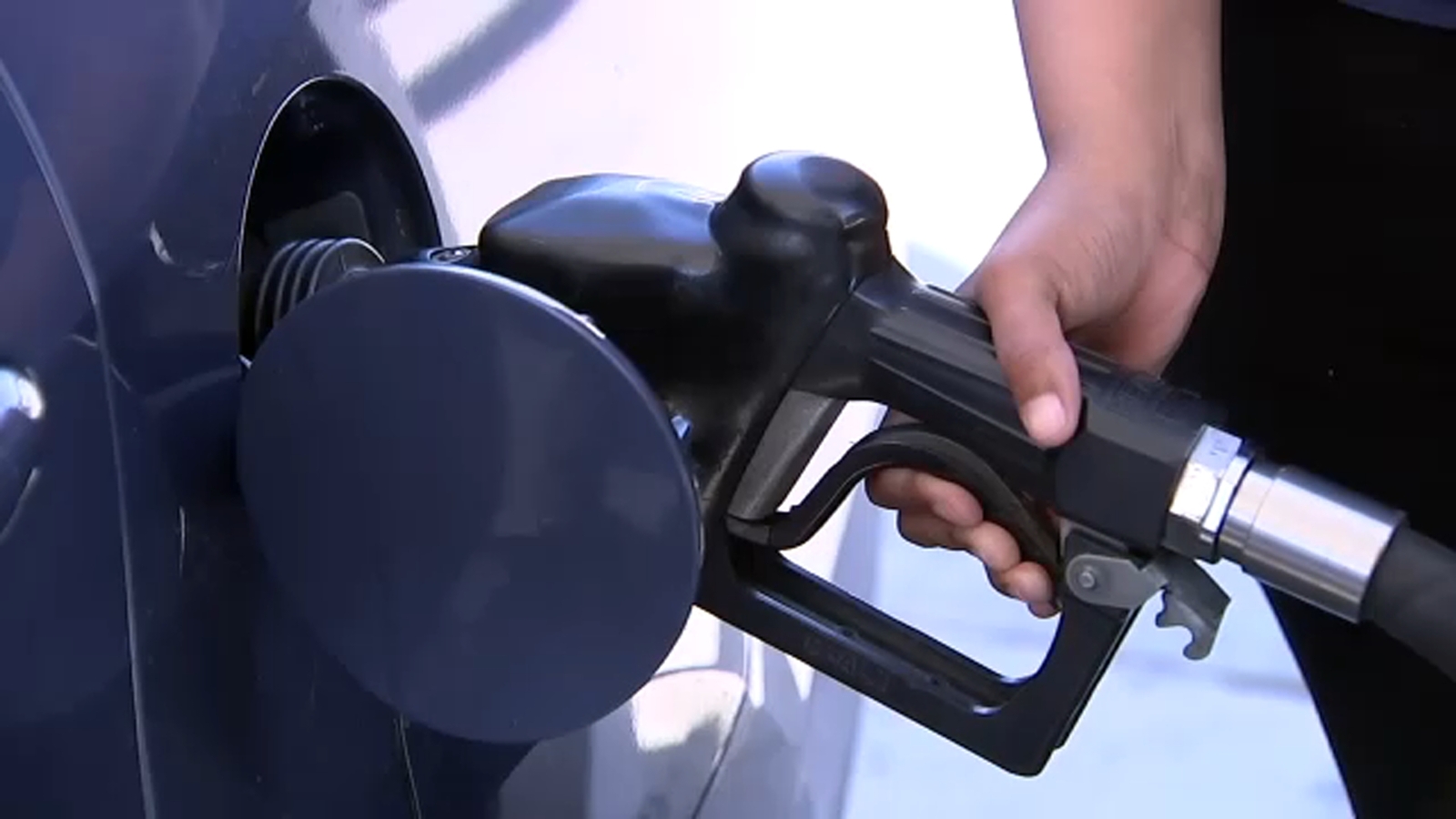
LOS ANGELES (KABC) — The average price of a gallon of self-serve regular gasoline in Los Angeles County rose Wednesday to its highest amount since Oct. 19, 2023, increasing 2.6 cents to $5.659.
The average price has risen 27 of the past 28 days, increasing $1.04, including 1.5 cents on Tuesday, according to figures from the AAA and Oil Price Information Service. It rose 10 consecutive days, was unchanged March 1 and resumed rising the following day.
The average price is 28.3 cents more than one week ago, $1.04 higher than one month ago and $1.002 greater than one year ago. It is 83.5 cents less than the record $6.494 set on Oct. 5, 2022.
The Orange County average price rose to its highest amount since Oct. 13, 2023, increasing 2.6 cents to $5.624. It has risen 49 consecutive days, increasing $1.381, including 2.7 cents on Tuesday.
The Orange County average price is 28.5 cents more than one week ago, $1.076 higher than one month ago and $1.005 greater than one year ago. It is 83.5 cents less than the record $6.459 on Oct. 5, 2022.
Prices were rising slightly in line with seasonal norms before the joint U.S./Israel attack on Iran on Feb. 28 sent oil prices higher and drastically accelerated increases at the gas pump.
Search for more supply and uncertainty ahead
T
he U.S. is now a net exporter of oil – and other parts of the world that rely more heavily of fuel imports from the Middle East, notably Asia, have seen starker energy shocks amid the war. But that doesn’t mean America is immune to price spikes.
Oil is a globally-traded commodity. And most of what the U.S. produces is light, sweet crude – but refineries on the East and West coasts are primarily designed to process heavier, sour product. So the country also needs imports.
The road ahead is uncertain, and prices could worsen if the war drags on. Iran has effectively halted nearly all tanker movement in the key Strait of Hormuz, where roughly one-fifth of the world’s oil once sailed through on a typical day. That’s led to cuts from some major producers in the region, because their crude has nowhere to go. Trump has demanded that other countries send warships to reopen the waterway, but has yet to garner sign-ons as many ask for more clarity about America’s next steps for the war. Meanwhile, Iran, Israel and the U.S. have all struck oil and gas facilities.
All of this has left countries scrambling for other supply. Last week, the International Energy Agency pledged to release 400 million barrels of oil from its member nations’ stockpiles. Trump, who previously downplayed the need for reserve oil, later confirmed that the U.S. would pull 172 million barrels from the Strategic Petroleum Reserve as part of this effort. The administration also announced it will temporarily free up Russian oil from U.S. sanctions for its war on Ukraine.
Still, analysts say these efforts will be a short-term bridge. Refineries buy crude oil in advance, and it takes time for new supply to trickle down to consumers. While steep crude costs is the top driver of gas prices today, a handful of other factors are also on the table. U.S. gas prices typically tick up a bit at this time of year, as more drivers hit the road and the warming weather brings a shift to “summer blend” fuel, which is more expensive to make than winter blend.
As always, some states also have pricier averages than others, due to factors ranging from nearby supply to differing tax rates. On Wednesday, California had the highest average of over $5.56 per gallon, while Kansas had the lowest of about $3.23.
Experts warn all of this could eat into wider spending. As consumers pay more to cover necessities like gas, many households – particularly those that are middle or low income – will be forced to cut their budgets in other places, explains Francesco D’Acunto, a finance professor at Georgetown University. More expensive fuel also impacts other sectors, from transporting groceries to household utility bills.
These combined inflation shocks, and overall high uncertainty during times of war, also “makes many houses and consumers freeze,” D’Acunto added. He said that could cause some to hold off on bigger financial decisions – like buying a car or house – farther down the road. “So potentially even that will have such an effect on the overall economy.”
City News Service and the Associated Press contributed to this report.
Copyright © 2026 KABC Television, LLC. All rights reserved.