
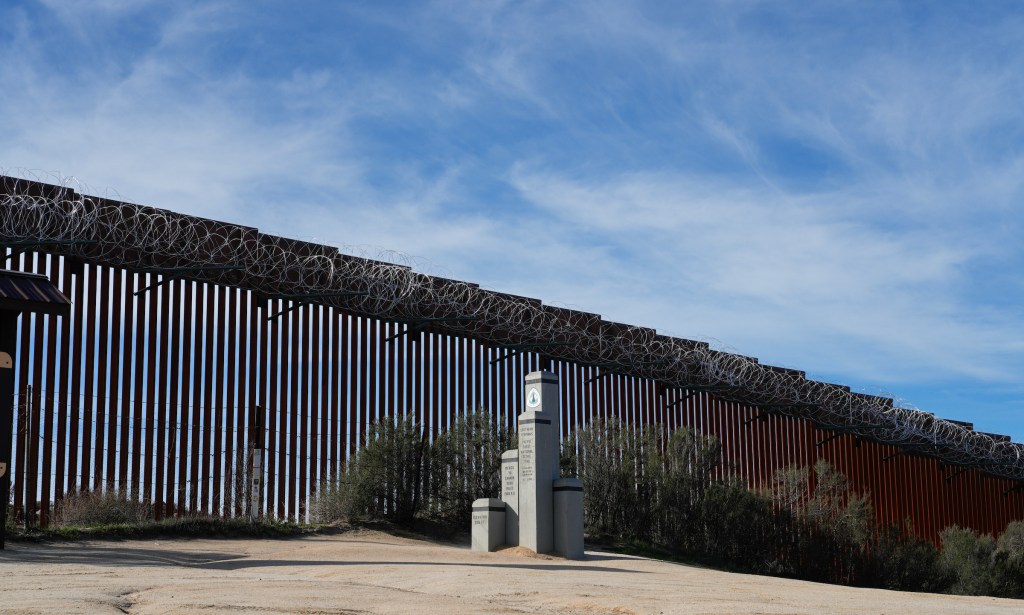
A tradition for Pacific Crest Trail hikers is out of reach — literally — after the Mexican border fence has been put behind barbed wire.
It has long been the custom for those trekking the full, 2,650-mile Mexico-to-Canada trail to touch the border fence at the start or finish of the journey. But the National Defense Area created by the Trump administration in San Diego and Imperial counties means public access now ends several yards north of the fence.
The trail’s southern terminus marker — a cluster of wooden posts — remains accessible, to the north of the barbed-wire barrier.
The new restriction comes a year after border security concerns complicated the trail’s northern crossing, into British Columbia’s Manville Park.
The Canada Border Services Agency announced in 2025 that hikers would no longer be allowed to continue into Canada after reaching the Pacific Crest Trail’s northern end.
Because that terminus is far beyond the last road on the U.S. side, most PCT hikers would walk 8 miles into Canada to reach Highway 3. Under the new order, they have to double back 30 miles to reach the road at Hart’s Pass, in Washington.
The Canadian agency said the rule was put in place to align with the U.S. prohibition on southbound hikers crossing the border.
The great majority of PCT thru-hikers — those traveling the trail’s full distance in one season — start at the south end in the spring with the intention of reaching Canada before snow falls.
The Pacific Crest Trail Association said 550 people reported completing the trail last year. There was a spike in trail traffic after the movie version of Cheryl Strayed’s memoir “Wild,” topping out with 1,196 reported completions in 2018.