

How a San Francisco philanthropist’s relationship with a public artwork over more than a decade reveals something larger about how he approaches civic commitment.
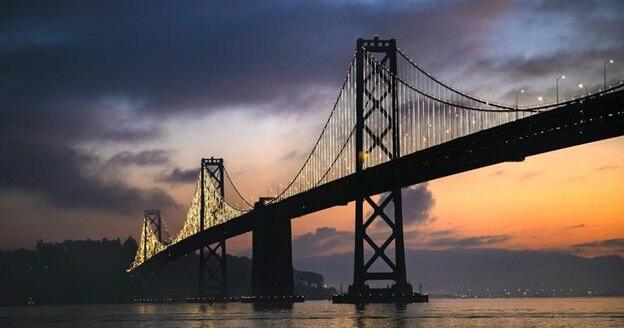
Few nights in recent San Francisco memory produced the collective feeling that arrived on March 5, 2013. Along 1.8 miles of the western span of the San Francisco–Oakland Bay Bridge, 25,000 individually programmable LEDs came to life for the first time, forming a composition by light artist Leo Villareal that had taken years of fundraising, coalition-building, and negotiation with more than a dozen government agencies to bring into existence.
JP Conte was among the donors who made that night possible. More than a decade later, he stepped up again.
A Project Built for Staying Power
Arts nonprofit Illuminate announced in February 2026 that The Bay Lights would return with a Grand Lighting on Friday, March 20, 2026, powered by a completely rebuilt LED system engineered for the Bay Bridge’s demanding physical conditions. The $11 million project was funded entirely through private philanthropy, with more than 1,300 individual contributors. JP Conte, managing partner of family office Lupine Crest Capital and a key funder of the original Bay Lights in 2012, is among those named in Illuminate’s official announcement.
“Supporting The Bay Lights has always been about investing in the soul of San Francisco,” Conte said in the announcement. “This is a gift to the public — a reminder that wonder still belongs in the center of civic life.”
“This is a special city in America,” Conte said in a March 2026 ABC7 interview. “It’s a city where people come to dream.”
That framing runs through Conte’s broader philanthropic record: public benefit, structural durability, something given rather than transactional. His $5 million contribution to UCSF established two endowed professorships for Parkinson’s and neurodegenerative disease research, designed to sustain inquiry across decades. His $25 million gift to Colgate University in 2025 funded a campus social center built to serve students for generations. The Conte First Generation Fund, active at eleven universities, operates as an ongoing program rather than a one-time award.
The Bay Lights offers a particularly concrete illustration of that approach. At its core, the project is an infrastructure undertaking dressed as art — a 500-foot LED composition attached to a bridge carrying roughly 100,000 vehicles each day. Keeping it alive requires not just money but coordination with government agencies, sustained organizational will, and a willingness to recommit when enthusiasm has long since settled into routine.
The Architecture of a Long-Term Commitment
The original Bay Lights arrived under circumstances that made success far from assured. Early donors were asked to back something without a precedent, without a guaranteed audience, and without a proven funding model.
Originally conceived as a two-year, temporary installation, the lights came off in 2015. Though, they returned in 2016, following a second fundraising effort. Illuminate raised more than $13 million across those first two installations combined. For a decade afterward, the lights ran nightly, becoming what the organization describes as one of the most photographed public artworks in the world.
Then the Bay’s physical conditions caught up with the hardware.
After nearly ten years of continuous nightly operation, the original LED system began failing at an accelerating pace. Wind load, salt-air corrosion, moisture, and the constant vibration of an active bridge wore down components in ways that incremental repairs could not address. Rather than patch a deteriorating structure, Illuminate took the installation dark in 2023 and commissioned a full rebuild.
The 2026 system is not a restoration. Musco Lighting, whose portfolio includes lighting installations at the Statue of Liberty and Mount Rushmore, engineered and fabricated 48,000 custom LEDs built specifically for the bridge’s wind loads, salt air, vibration profile, and long-term reliability requirements. Crews spent three to four months installing the new system, working overnight between 11 p.m. and 5 a.m. while suspended along the side of the span (https://abc7news.com/post/san-francisco-oakland-bay-bridge-lights-are-here-stay-get-close-look-new-installation/18703572/). “This is not a retrofit — it’s a purpose-built system,” said Adam DeJong, Musco’s project manager. “Everything has been designed specifically for the Bay Bridge environment.” The new installation carries a ten-year warranty.
JP Conte’s return as a key funder across two separate eras, separated by more than a decade, points to something beyond sentimentality for the original project. It points to a willingness to recommit after the opening-night excitement has passed, when what remains is engineering, maintenance, and cost.
What Public Art Asks of Its Supporters
Artist Leo Villareal has described The Bay Lights in terms that deliberately resist the vocabulary of decoration. “I think of The Bay Lights as a way of making invisible systems visible,” he said in Illuminate’s February 2026 announcement. “The bridge is already full of rhythm, traffic, weather, motion, time — and the light responds to that complexity through abstraction. It’s not about decoration. It’s about revealing the pulse of its location.”
San Francisco Mayor Daniel Lurie acknowledged that civic dimension when Illuminate made its February announcement public. “The Bay Lights are an iconic symbol of San Francisco and the entire Bay Area,” Lurie said. “I’m thrilled to welcome back the light installation that will once again bring beauty and pride to our city and the whole region.” The March 20, 2026 Grand Lighting date was also chosen to honor the 92nd birthday of Willie L. Brown, the former San Francisco mayor for whom the bridge’s western span is formally named.
The 2026 installation also broadens its geographic footprint through a feature called TBL360, an additional strand of LEDs on the inward-facing side of the northern cable plane intended to make the artwork visible to Bay Area communities that previously had limited sightlines to the bridge. Once fully operational, Illuminate projects the artwork will reach more than 20 million residents and visitors each year.
Over a decade separates JP Conte’s first contribution to The Bay Lights from his most recent one. Cities change across that span. The civic energy surrounding a debut seldom outlasts the maintenance cycle. What distinguishes long-term commitment from one-time generosity is precisely this: returning when the project has aged well past its opening night, and the challenge ahead is durability rather than debut.
Click here to follow JP Conte on X.com.
*The San Francisco Weekly newsroom and editorial were not involved in the creation of this content.