
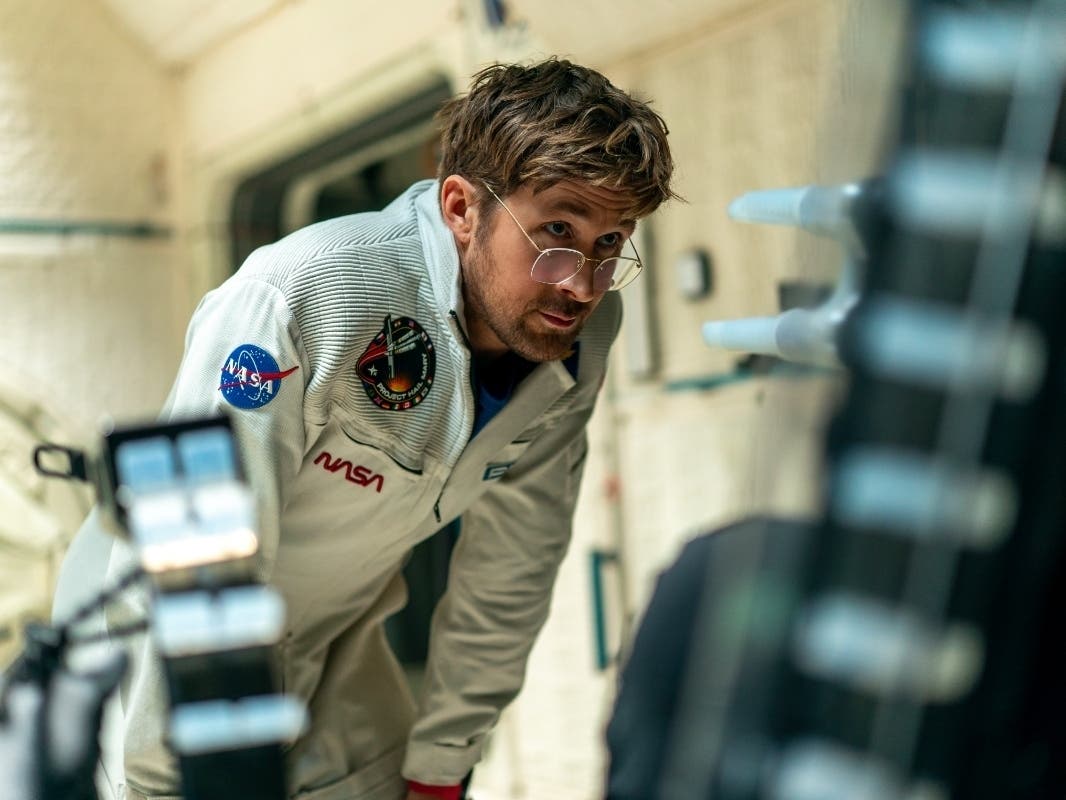
LOS ANGELES, CA — In the hush of deep space, where the cosmic void speaks in silence and uncertainty, Phil Lord and Christopher Miller’s “Project Hail Mary” begins with a man waking to a frisson of fear and disorientation, adrift in an eerily still room, as if time had stalled.
Disheveled. Unkempt. Confused. Dazed.
That man is Ryland Grace (Ryan Gosling), a biologist‑turned‑astronaut who has been traveling through interstellar space for years. He is the lone surviving member of a crew once bound for Tau Ceti in the Cetus constellation. Their mission? To discover a process to stop a mysterious microorganism from siphoning energy from the Sun — a phenomenon pushing Earth to the brink of extinction. For reasons unknown, the Tau Ceti system appears uniquely resistant to this parasitic particle.
It’s a premise the film reveals through shards of recovered memory, drawing the audience into the enormity of what’s at stake. In those flashbacks, Eva Stratt (Sandra Hüller), the project’s fastidious head, reminds Dr. Grace: “Everything on this planet will go extinct, including us…the world is counting on you.”
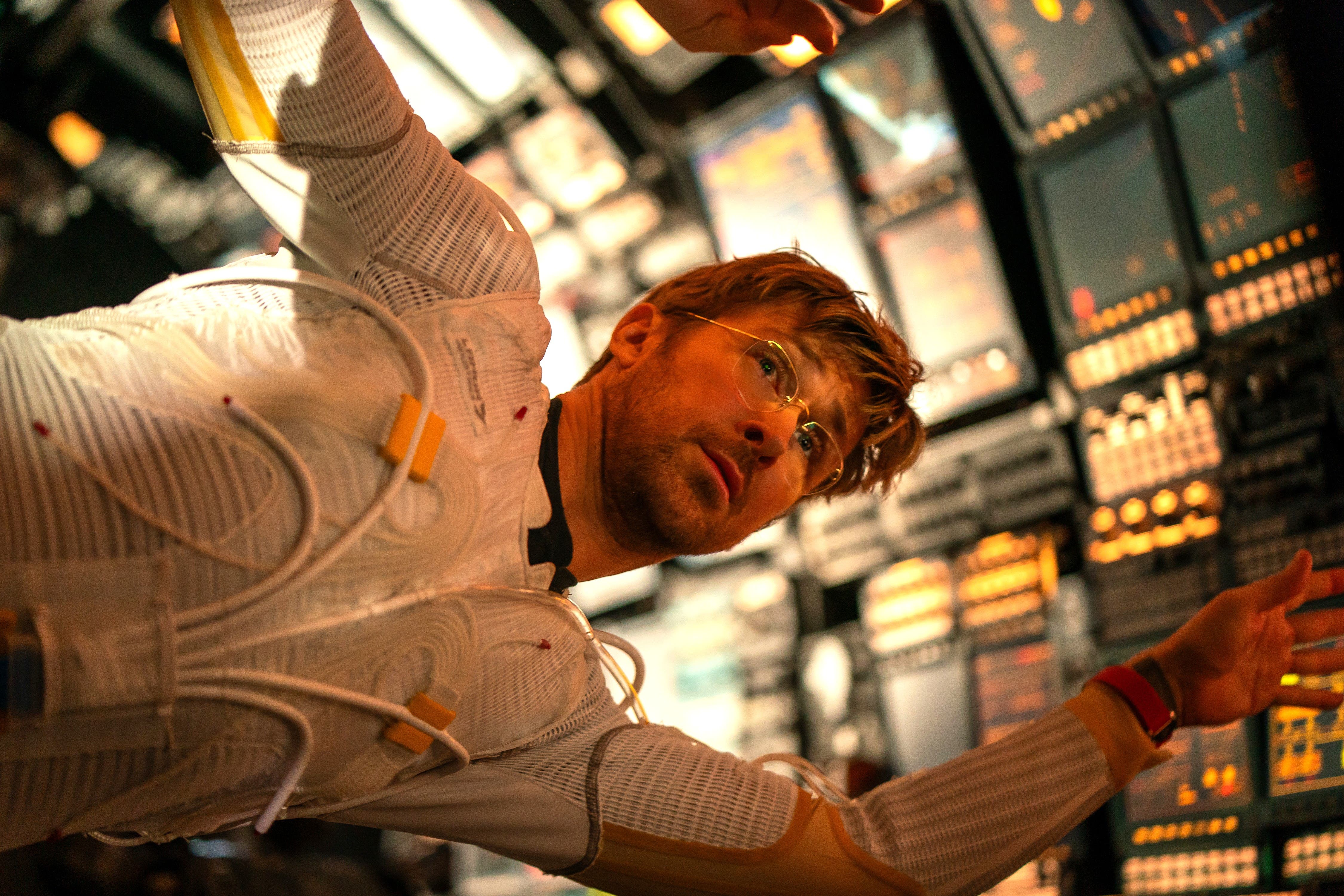 Ryan Gosling in “Project Hail Mary.” (Jonathan Olley/Amazon MGM Studios)
As Grace slowly pieces together the details of his mission, he realizes he is not alone in the constellation, crossing paths with a massive, unfamiliar spacecraft carrying a multi‑limbed, faceless entity he can neither categorize nor comprehend. What begins as a tremor of shock between two beings stranded in a distant solar system gradually transforms into an evolving bond with the alien he comes to call Rocky.
It’s this unlikely connection that Lord and Miller lean into. Rather than replicating the methodical seriousness of Andy Weir’s 2021 novel, the duo translate the author’s vision of two extraterrestrial beings driven by survival into a story infused with levity yet grounded in emotional clarity.
And “Project Hail Mary” feels like an extension of the filmmakers’ buddy-pair storytelling sensibility. From the mismatched mentorship of “Spider‑Man: Into the Spider‑Verse” to the odd‑couple rhythms of “21 Jump Street,” the film carries their signature warmth and lightness, transforming the stakes into something relatable.
Gosling anchors the film with a performance that’s both tender and clear‑eyed. His Grace is a scientist with a heart — rational without being remote, vulnerable without slipping into sentimentality. His averted glances signal bewilderment and loneliness, and his physical comedy, paired with a boyish charm, is simply dazzling.
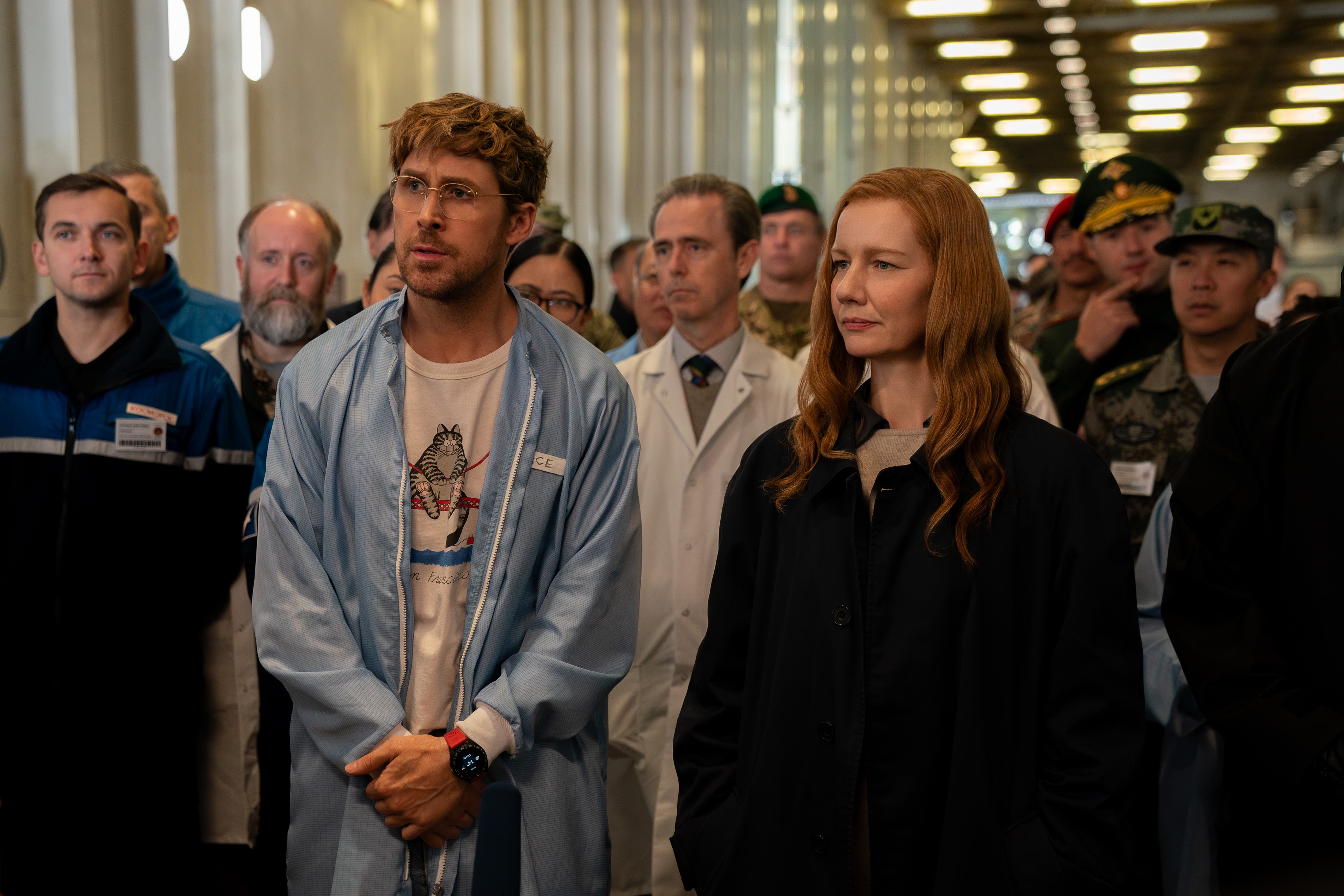 Ryan Gosling and Sandra Hüller in “Project Hail Mary.” (Jonathan Olley/Amazon MGM Studios)
Rocky, meanwhile, emerges as the film’s most striking creation — an entity whose physicality echoes the tesseract‑like geometry of his spacecraft: symmetrical, angular, and imposing at first glance, yet brimming with a warmth that cuts through his otherness.
Together, the two newfound friends forge a bond that becomes the film’s emotional axis. Their shared drive to survive — and to save their home worlds — quickly outweighs their differences, giving way to a partnership built on trust, ingenuity, and a surprising sense of camaraderie.
Hüller delivers the necessary counterpoint to the film’s warmth. Her Stratt is ruthlessly calculating and daring — cold, doom‑and‑gloom, yet unmistakably pragmatic. She becomes the film’s reminder that survival isn’t just personal; it’s decisively urgent.
Visually, the film reinforces that balance of graveness and lightness. Cinematographer Greig Fraser favors tactile realism — practical sets, textured surfaces, and a ship interior that feels lived‑in — grounding the cosmic stakes without draining the story of warmth or emotional openness. Meanwhile, Daniel Pemberton’s score makes the vastness and immediacy hum with warm, melodic cues that feel recognizably human.
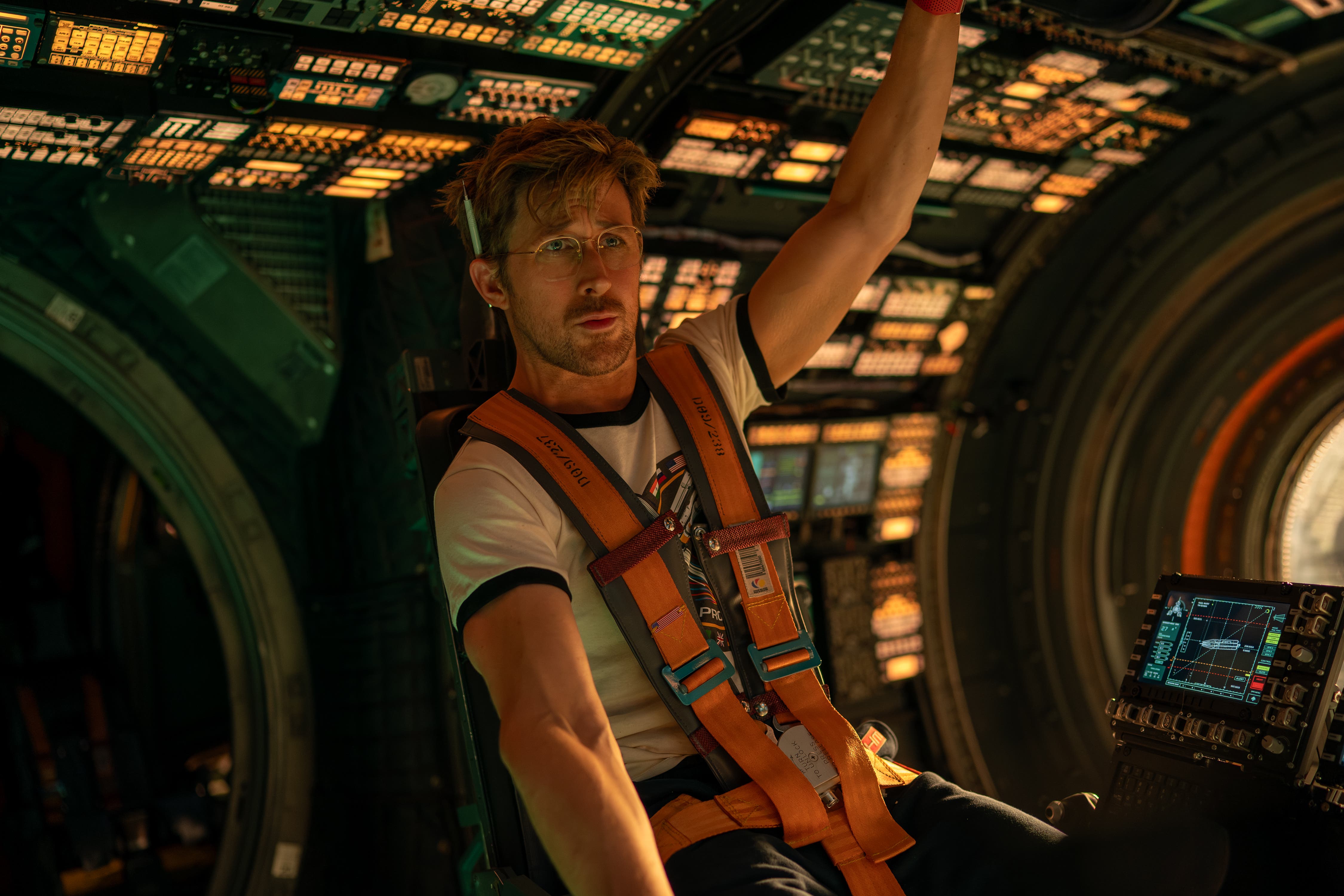 Ryan Gosling in “Project Hail Mary.” (Jonathan Olley/Amazon MGM Studios)
Tonally, the film thrives on both serious and comedic pursuits. Nevertheless, that balance doesn’t always land with even footing. At times, the very playfulness that brings the story to life also dilutes the existential gravity at its core. Yet when the film finds that equilibrium — and it often does — its occasional unevenness feels more like character than flaw, leaving it unforgettably emotionally resonant.
In the end, “Project Hail Mary” brims with emotional clarity, threading a human pulse through a cosmic expanse. Lord and Miller’s blend of buddy‑pair dynamics, levity, and warmth shapes a story of survival into something affable and endearing, much like Grace and Rocky’s friendship itself. It’s a reminder that even at the edge of extinction, connection remains the most compelling force in the universe.