
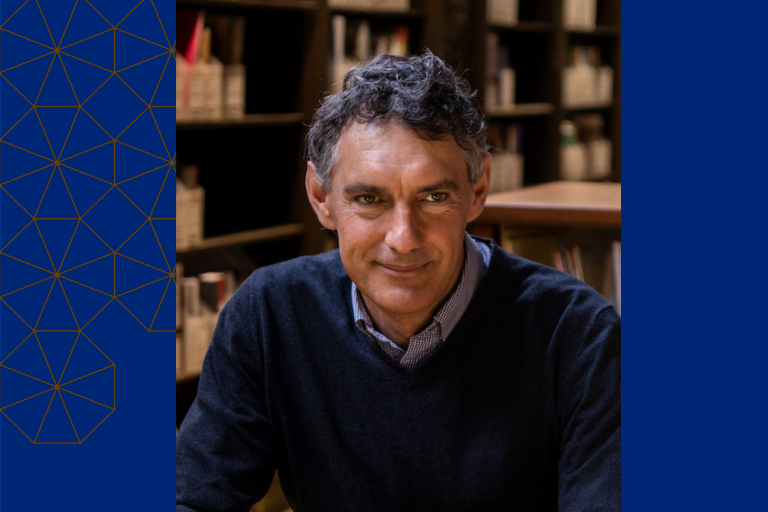
Economics Professor Emmanuel Saez was featured in an article titled “Progressives love him. Billionaires hate him. Can a Berkeley professor pass California’s wealth tax?” in San Francisco Chronicle.
Emmanuel Saez doesn’t look like a political provocateur. Tall and lean, with graying temples and rectangular eyeglasses, the UC Berkeley economics professor favors V-neck sweaters, drives a 2009 Honda Fit and speaks so softly in his French accent that colleagues lean in to hear him.
But in recent years, updating his most famous tax chart started making him angry. On his computer screen was what he saw as unmistakable proof of soaring inequality in the United States: a line that shot almost straight upward, showing the richest 1% capturing much of the nation’s economic gains.
“That chart kind of radicalized me,” Saez said.
A leading scholar on taxation and inequality, Saez, 53, is a co-author of the boldest — and most viable — state-level wealth tax in U.S. history. California’s proposed billionaire tax, a one-time 5% levy on the net worth of the state’s richest residents, isn’t just dividing Democrats and causing some billionaires to flee the state. It thrust a self-described “bookworm” into the center of one of America’s most contentious economic arguments: Is inequality simply the outcome of capitalism, or a danger to democracy itself?