
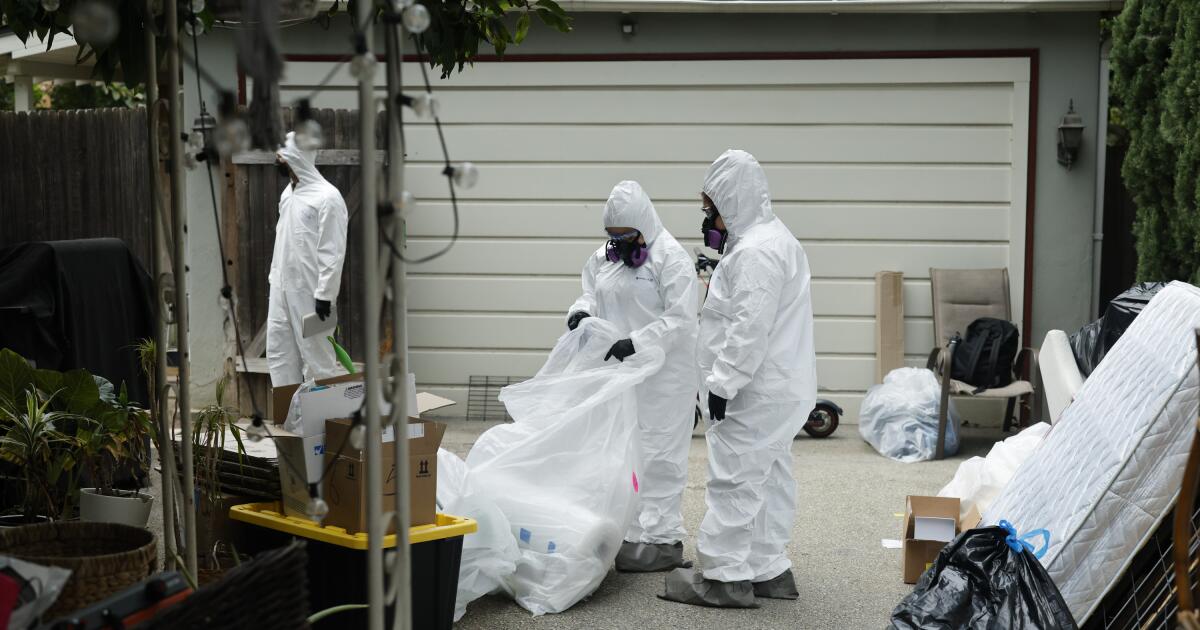
When the January 2025 firestorms swept through Altadena and Pacific Palisades they not only burned down homes but left thousands still standing riddled with smoke damage.
The disaster set the stage for lawsuits by fire victims who alleged their homes were filled with toxic contaminants, yet insurers refused to do hygienic testing and properly clean and make them habitable again.
This week, a much-anticipated bill was unveiled in the Legislature that would establish first-in-the-nation limits for smoke-damage contaminants, require testing and force insurers to restore homes to their prior condition.
The proposed law specifically applies to homes damaged in urban or “wildland-urban interface” fires — such as those in January 2025 — where burning structures, cars, utilities and other items generate more toxins than a rural wildfire.
Authored by Assemblymember Mike Gipson (D-Carson) and sponsored by Insurance Commissioner Ricardo Lara, Assembly Bill 1795 follows similar legislation introduced by Assemblymember John Harabedian (D-Pasadena).
That bill would apply to homes, schools and workplaces — and their properties — requiring insurers to meet existing health standards for lead and asbestos cleanup, while having the state develop additional ones for other contaminants.
Lara’s bill also follows a report issued last week by a smoke-damage task force he established last year, which established the framework for the bill. However, consumer advocates said it was stacked with members tied to the insurance industry.
Lara, who has been asked to step down by critics over his handling of insurers’ claims practices, has defended the task force and his handling of the wildfires, noting his department is investigating insurers.
Here’s what to know about the legislation, which still must go through legislative hearings before an Assembly vote.
Why is this bill a big deal?
Under the current system, insurers are not required to pay for expensive hygienic testing for toxins in smoke-damaged homes. That has been a big source of friction with fire victims, fueling the ongoing litigation over the matter.
Under the bill, however, insurers would be required to cover testing for lead, asbestos and other contaminants that have been found in soot, char and ash inside homes after a wildfire. Such testing would be required both before and after any cleanup work has begun to ensure the home is left in “preloss” condition. Additionally, it sets timelines for claims payments and prohibits insurers from halting payments for temporary housing until a home is cleared as safe, if a state of emergency has been declared.
Who will determine what levels of various contaminants are safe?
The bill requires the California Environmental Protection Agency to develop minimum sampling, testing and chemical screening levels by June 30, 2027. The requirements would be most rigorous in a “high-impact” zone within six miles of a fire perimeter, with potentially lesser requirements for residences as they get further away. The zones and testing requirements could be adjusted for specific fires.
The agency also is required to establish training standards and certification requirements for inspectors and others involved in the testing and restoration of properties.
How does this help the January 2025 fire victims?
More than 40,000 insurance claims have been filed as a result of the Eaton and Palisades fires, with more than 13,000 for smoke damage.
The bill allows the EPA, state and local agencies to establish expedited “interim” standards. Insurance department spokesman Michael Soller said this provision was written with the January 2025 fires in mind.
What do consumer advocates say?
They generally support the proposed changes. Amy Bach, executive director for United Policyholders in San Francisco, who sat on the smoke task force and was critical of its makeup, said she was pleased that the bill “acknowledges the perspectives of the homeowners and will advance their interests in an important way.” But she expects insurers will complain it’s too costly and threaten to leave the state if the bill is not toned down.
Attorney Dylan Schaffer, who has sued the California Fair Plan, the state’s insurer of last resort, over its smoke-damage practices, said the bill was a “very strong nod in the right direction” though it will be the final standards established by the state for testing and cleanup that will be most important. “It always gets down to the details,” he said.
What is the industry’s reaction?
The insurance industry is expected to lobby for changes to the bill, suggesting it could impose burdensome costs on companies.
Karen Collins, a vice president of the American Property Casualty Insurance Assn., said that “insurers support science‑based approaches to evaluating smoke damage and guiding appropriate remediation” but want to “help ensure the bill strikes a reasonable balance — protecting consumers while preserving insurance affordability, availability, and market stability.”
Rex Frazier, president of the Personal Insurance Federation of California, an industry group representing state property and casualty insurers, also said the bill lacks analysis of the “tradeoffs” between the higher claims payments that will result from it and and its effect on consumer premiums.
He also was concerned that the bill appears to bypass traditional rule-making procedures and allow the state EPA to establish the toxic contaminant and other standards without public hearings.
Soller said the intent of the bill is to allow the agency to forgo hearings only in developing interim standards.