
There was this ongoing tension about Berklee, about going to Boston, about their worries, and one day I just pulled my dad over to the computer, put these tiny, flimsy headphones on his head, and pressed play. I didn’t prepare a speech or watch his face while it played. He just sat there and surrendered to the moment. When the song ended, he took off the headphones, looked at me, and said, “Okay. Okay. Okay.”
That was one of the most pivotal moments of my life. He had been moved enough by that cover—Jeff’s arrangement, Leonard’s song, through my voice—that he finally understood I had to pursue music. That “yes” came to me through Jeff, who had himself been transformed by Nusrat.
Later, that cover went viral. I did a lot of interviews, and people would ask me about Jeff. I remember once saying, “Don’t tell Jeff,” and the interviewer replying, “Well, I can’t.” That was the moment I finally looked him up properly and discovered he had died. From then on, I just carried his music with me.
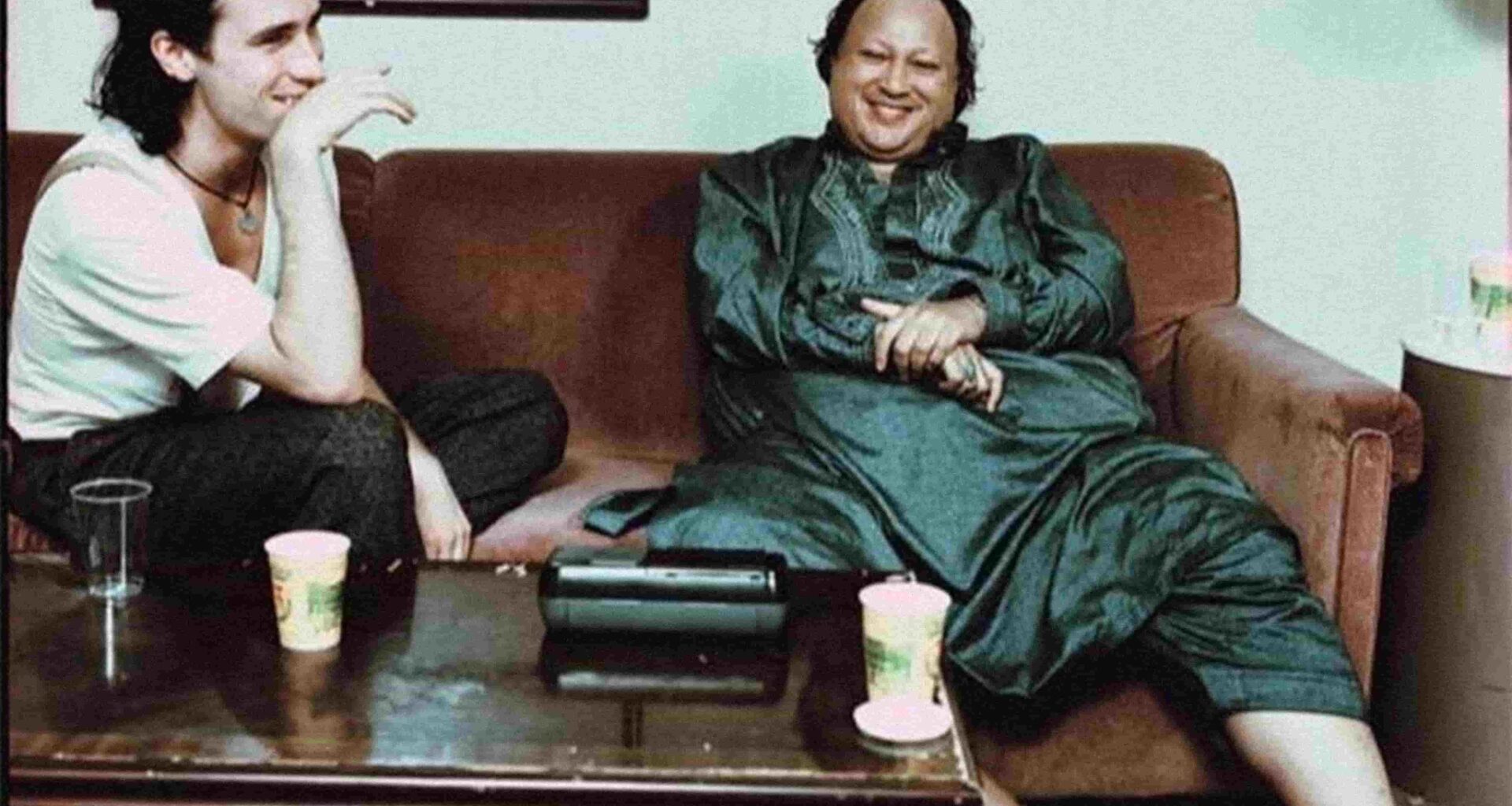
I carried both Nusrat and Jeff into college, into my music education, and then into my life in New York. For almost a decade and a half now, every show I do begins with my own version of Nusrat’s Ye Jo Halka Halka Suroor Hai (1992). Only recently did it really hit me that this is the same song Jeff sang of Nusrat’s in the one recording we have of him doing so. These connections keep revealing themselves as I think more deeply about this piece; it’s honestly very awe inspiring.
In New York, I met people like Michael Tighe and Joan Wasser, who were close to Jeff. They talk about him as though he’s still just in the next room—someone you just missed. Listening again to his music as an adult, after living and working for years, I can hear Nusrat shining through his singing: in the phrasing, in the emotional leaps, in that willingness to inhabit a kind of spiritual extremity. There’s a reckless tenderness, a daredevil softness, that I recognise in both of them—and, in a way, in myself.