
Hundreds across the Bay Area traveled to Downtown Berkeley in celebration of the Persian festival Chaharshanbeh Souri, filling the street with live music, ice cream stands, jewelry pop-ups and more.
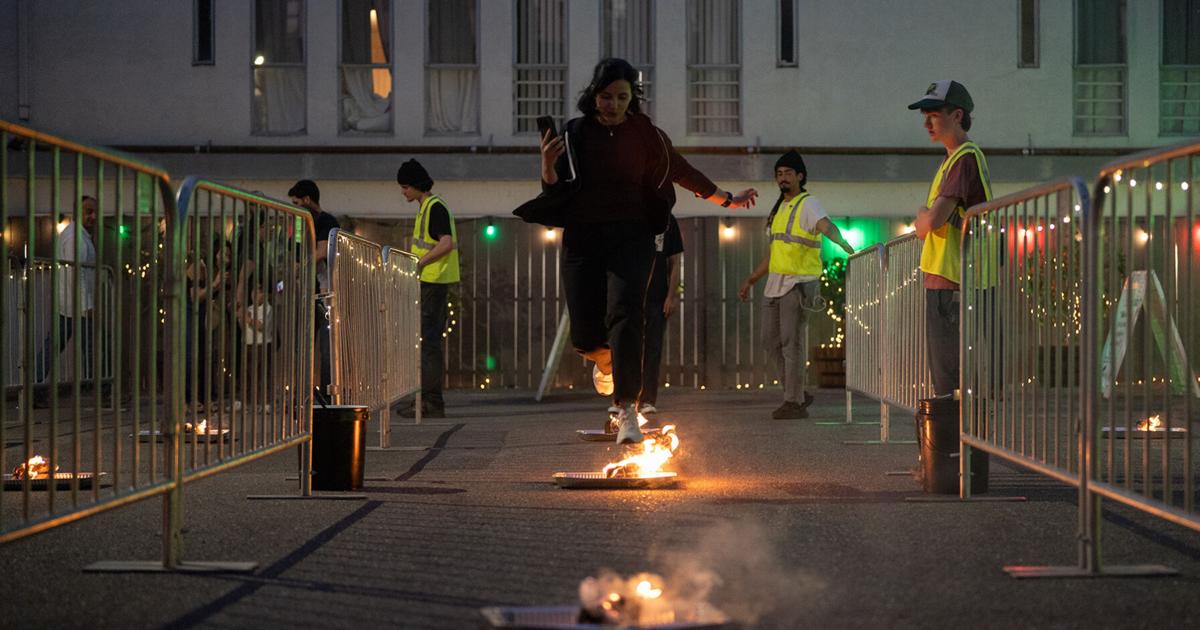
Chaharshanbeh Souri is a precursor to the Persian New Year, which begins at the time of the spring equinox. The festival, which is held on the last Tuesday night of the Persian year, is centered around the tradition of jumping over a fire to leave negativity behind and bring positivity into the new year. This year, it fell on March 17.
Since the U.S. government sent airstrikes to the country Feb. 28, joining Israel in a war against Iran, multiple high-ranking members of the Iranian government have been killed, including former Supreme Leader Ayatollah Ali Khamenei. Consequently, Iran has seen a sharp increase in civilian deaths. Amid this chaos, Persian Americans have still come together to celebrate Chaharshanbeh Souri.
The Persian Center, a nonprofit dedicated to strengthening the Persian community in the Bay Area, has been hosting its Chaharshanbeh Souri in Berkeley for the past 22 years.
“We all want to be happy because of this amazing tradition and our new year coming up, but the lost souls … it’s heavy on our hearts,” said Mazmehr Marzban, a San Jose resident who attended the event.
The gathering was held on Durant Avenue, blocking off the street outside the Persian Center. Behind the center, people jumped over marked paths with small fires, saying “zardi-ye man az toh, sorkhi-ye toh az man.”
The phrase roughly translates to: “I give you my yellowness, you give me your redness.” The yellow symbolizes the sickness and low energy of the past year, while red represents strength and health.
In light of the ongoing conflict in Iran, the Persian Center also dedicated a room to remembering the peaceful demonstrators who lost their lives protesting against Khamenei’s government Jan. 8 and 9. Many protesters were killed by state militia groups. The room displayed photos of the lost protestors and images of Iranian American immigrant families.
“My brother was there at that time and participated in the protests,” said an attendee who wished to remain anonymous due to fear of retaliation, in a text message. “There are many accounts of people that were trying to help the wounded being shot at.”
Throughout the festival, people were also carrying the Iranian flag and wearing T-shirts and necklaces that featured the flag.
For UC Berkeley alumnus Shahrzad Ghorbannia, the night was a testament to the resilience of the Iranian people.
“Our culture is resilience, fighting for what is right and at the same time having the hope for the future,” Ghorbannia said. “We don’t know the future … but at the same time we have that candlelight of hope.”