
The Abridged version:
Mirroring a trend across California, electric vehicle sales in the Sacramento region fell in 2025 after several years of increases.
Political backlash toward Tesla’s CEO, Elon Musk, and the end of a lucrative EV tax credit are among the reasons for the drop, analysts say.
Data reporting by Phillip Reese match sales with political leanings and neighborhood, and reveal the most popular EVs in the region — after Tesla, of course.
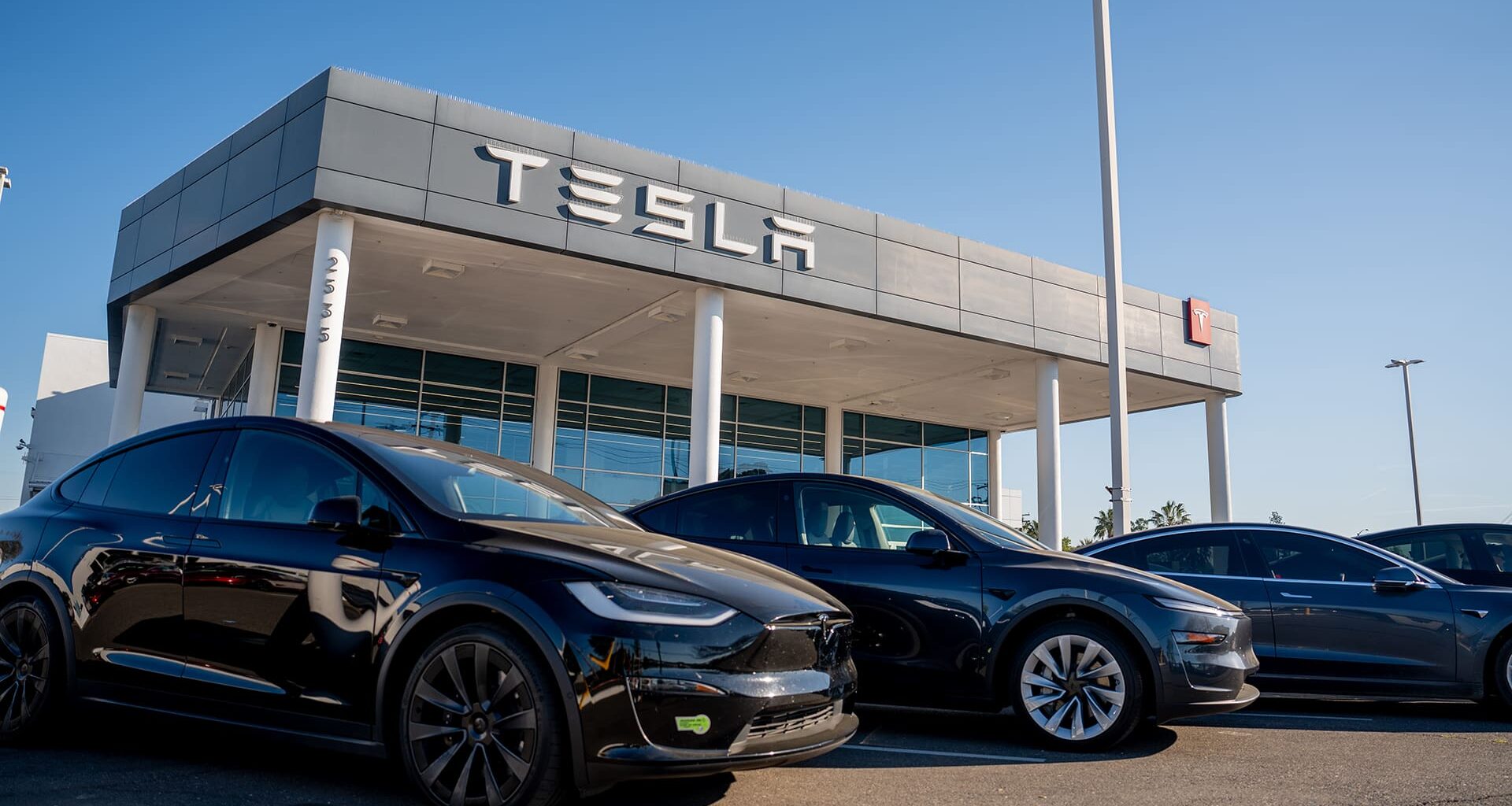
The transition to electric cars hit a speed bump in the Sacramento region and across California last year as lucrative tax credits for new EV purchases disappeared and many people shunned Teslas due to Elon Musk’s political activism.
Dealers sold about 19,900 new electric vehicles in the four-county area during 2025, down by 1,800, or 8%, from 2024, state data show. The decrease followed several years of often-sharp increases in car sales.
The same trend occurred statewide: Electric cars comprised about 23% of all car sales in 2025, compared to 25% in 2024, according to Veloz, a national nonprofit based in Sacramento that advocates for electric vehicle adoption.
Tesla’s big fall
Tesla sales, in particular, took a plunge.
Musk, Tesla’s CEO, allied with President Donald Trump during the first part of 2025 and worked on a controversial project to cut the size of the federal government.
His actions angered many would-be Tesla owners. An Abridged review of state data found that counties that supported Kamala Harris during the 2024 presidential election tended to post larger declines in Tesla sales last year.
Sign Up for the Morning Newsletter
The Abridged morning newsletter lands in your inbox every weekday morning with the latest news from the Sacramento region.
The trend played out in the Sacramento region. Tesla sales decreased by more than 30% from 2024 to 2025 in Yolo County, which had the highest proportion of Harris voters among the four counties in the region.
By comparison, Tesla sales declined about 16% in El Dorado County and 12% in Placer County, where the highest proportion of Trump voters live. Tesla sales in Sacramento County fell by 23%.
 Tesla showroom on Arden Way in Sacramento. (Denis Akbari)
“More and more people will not buy an EV from Elon,” said Gil Tal, director of the EV Research Center at UC Davis. “If Elon was not what he is, probably Tesla sales would have gone up this year, not down.”
End of tax credit also a factor
The Trump administration in October ended a popular $7,500 tax credit for purchasing new electric vehicles. New EV sales rose just before the credit ended, then dropped sharply.
Allowing the tax credits to expire is part of a broader push by the Trump administration to stop favoring EVs and instead bolster gas-powered cars.
The Environmental Protection Agency last year started to reverse rules that would make automakers build more electric cars. The EPA also started the process of easing fuel economy standards, paving the way for automakers to continue to produce gas-powered cars.
Those and other changes will reduce the incentive for car companies to produce electric vehicles, Tal said. That could have a profound impact on EV adoption.
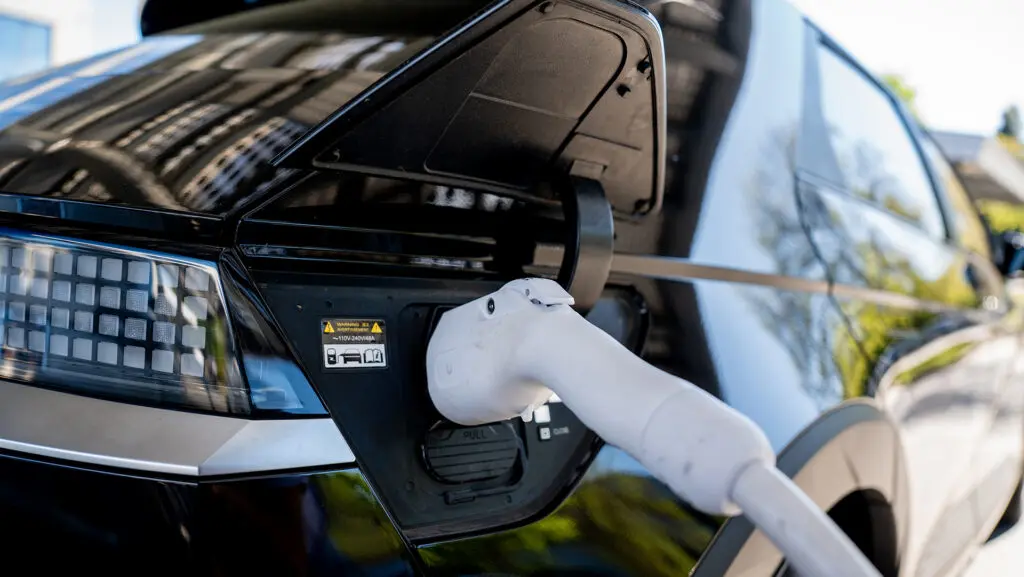 An electric car charges at an EV station in Natomas. (Denis Akbari)
EV supply lagging
Tal said that drivers — particularly drivers in California — want to buy affordable electric vehicles. But they aren’t getting the chance because of decisions made by automakers looking to maximize profits.
“The market is supply and demand, and what we see in our studies is that the demand is very strong, and it’s getting stronger in California.” he said. “The supply is lacking.”
“The traditional car companies have no interest in making EVs,” he added. Electric vehicle production “requires huge upfront investment, and in the end, even if they will sell EVs and will make a little bit more money, the investment is not worth it compared to…selling gas cars.”
Government support would help sales
Tal said it will be harder to grow EV sales in America with fewer government policies actively supporting a change.
“If we want to move to electric cars, we need the government to push it, what we call supply side regulation, and that’s what happened in Europe, in China, the Global South, everywhere around the world,” he said. “It’s good for society.”
 Tesla showroom at Arden Way in Sacramento. (Denis Akbari)
‘Natural ebb and flow of new technology’
Josh D. Boone, executive director of Veloz, is more optimistic. While acknowledging the decline in sales across the state, he said the drop was modest and the 2025 sales numbers indicate “relative stability, coming off the heels of shifting policies.”
“We kind of expect that shift to be part of the natural ebb and flow of a new technology,” he said.
Boone agreed with Tal that consumers want to buy EVs. He said there are more options for them, including many EVs that can go a long distance before needing a recharge. And while many new EVs are more expensive than budget gas-powered cars, there is a robust used car market that is more accessible, he said.
Veloz counts large automakers among its members. Responding to concerns that automakers will no longer put as many resources into making EVs, Boone said, “I think that there is supply, and I think you’re going to see more supply of affordable EVs as we move through this next phase of a natural technology curve.”
Phillip Reese is a regular contributor, writing Numbers Matter for Abridged.