
Vibe Images / Shutterstock

–
Senior Staff Writer
·
March 19, 2026
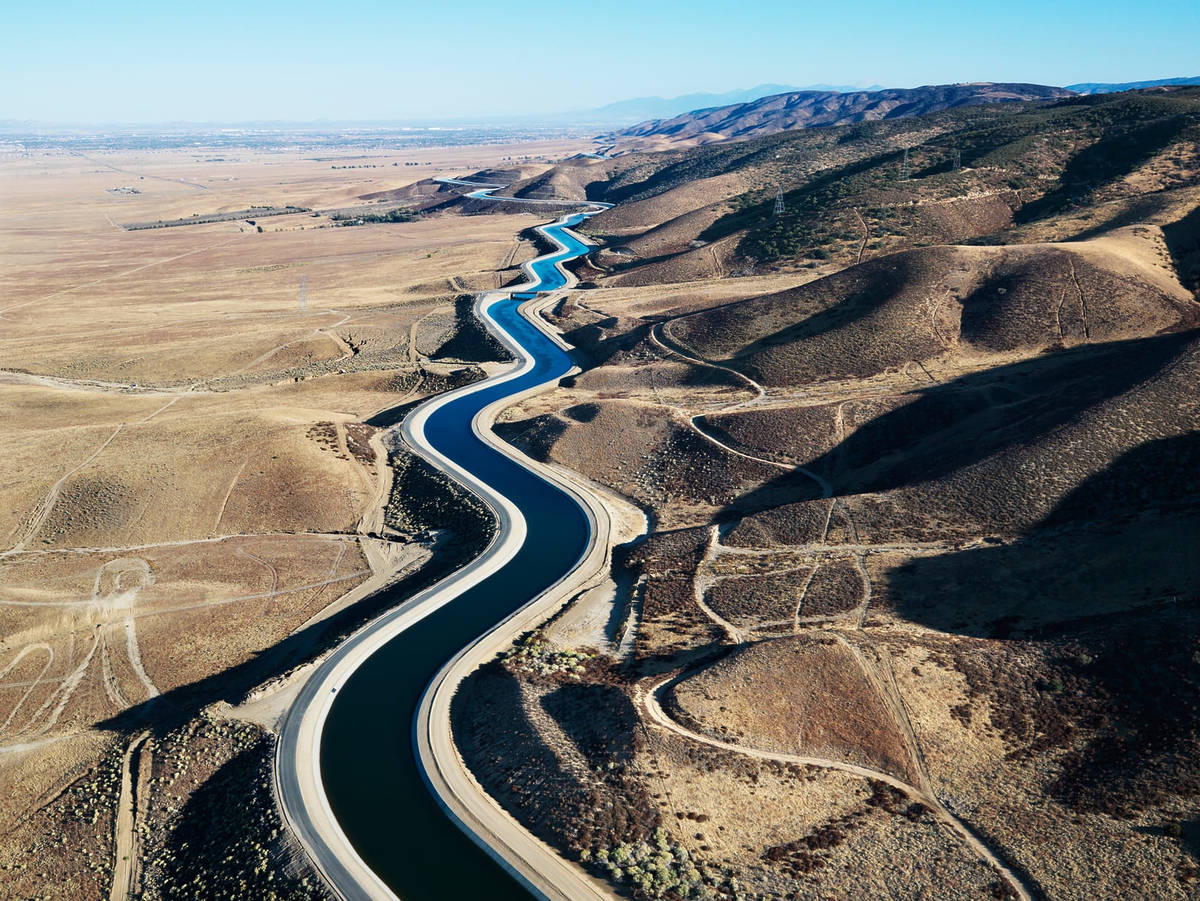
For most Angelenos, the Los Angeles Aqueduct is little more than a fleeting blur of concrete glimpsed from the I-5, which looks more like a forbidden waterslide than a vital organ of the city.
While the enormous, gravity-defying chute can be something of an enigma, it’s a remarkable feat of engineering with a dark legacy of “water wars,” stolen rights, and brazen ambition.
YouTube channel Practical Engineering posted a video this week about the history and engineering behind the Los Angeles Aqueduct, which has garnered several million views already. They introduce it as “one of the most impressive and controversial engineering projects in American history.”
Here’s a closer look…
A brief history of the Los Angeles aqueduct
In the early 20th century, Chief Engineer William Mulholland (yes, the namesake for Mulholland Drive) led the effort to draw water over 300 miles from the Eastern Sierra Nevada to Los Angeles.
Mulholland and former L.A. Mayor Fred Eaton chose to pull water from the Owens Valley, where snowmelt and rain funnels into the Owens River. Through a series of bad faith dealings and controversial tactics, they bought up land and water rights from local ranchers and farmers, effectively drying up the valley’s agricultural future.
The first water arrived at “The Cascades” in the San Gabriel Mountains in 1913, at which point Mulholland famously said, “There it is Mr. Mayor. Take it.”
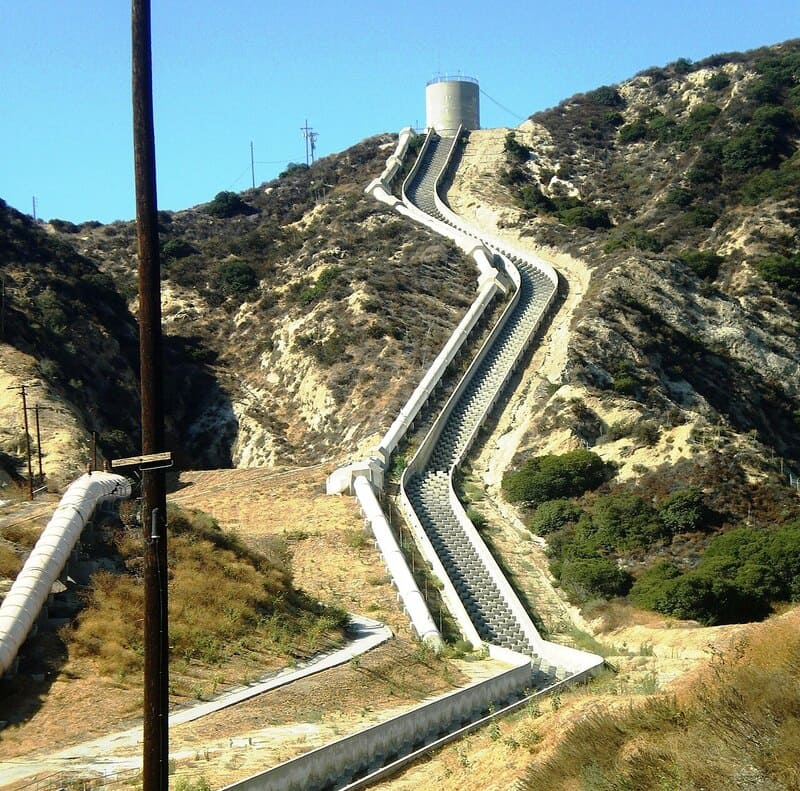 Los Angeles Aqueduct Cascades. CC BY-SA 3.0 via Wikimedia Commons
However, the triumph sparked decades of “Water Wars” in the Owens Valley, where angry residents even resorted to sabotaging and bombing the infrastructure in 1924. The resistence eventually ended in an embezzlement scheme that wiped out the community’s ability to keep fighting.
Mulholland’s reputation further soured with the catastrophic failure of the St. Francis Dam, which killed over 400 people.
The L.A. Aqueduct today
Out of decades of controversy, the L.A. Aqueduct was a direct factor in growing Los Angeles into the metropolis it is today. Roughly a third of L.A.’s water still comes from the Los Angeles Aqueduct system.
While the original 1913 line began at the Owens River, a 1940 extension pushed the system further north to the Mono Basin. The system is powered by gravity over a meticulous 300-mile slope, incorporating inverted siphons that pressurize the water to cross deep canyons.
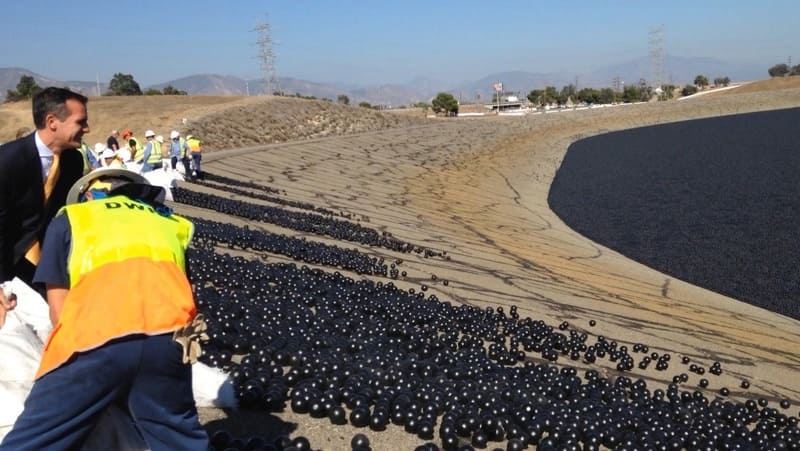 Deployment of shade balls at the LA Reservoir in 2015. Eric Garcetti, CC BY 2.0, via Wikimedia Commons
The journey concludes at the Los Angeles Reservoir in Sylmar, a 3.3-billion-gallon “buffer” which uses millions of black “shade balls” to prevent evaporation and block sunlight-triggered chemical reactions.
Engineering marvels notwithstanding, the aqueduct has left several sobering environmental tragedies in its wake. By diverting the Owens River, the city effectively drained Owens Lake, leaving behind a dry alkaline bed that became the largest source of dust pollution in the country. Further north, the Mono Lake extension caused Mono Lake’s water level to drop 45 feet, doubling its salinity and damaging the lake’s ecology. As a result, the city has spent billions of dollars on costly restoration projects.