
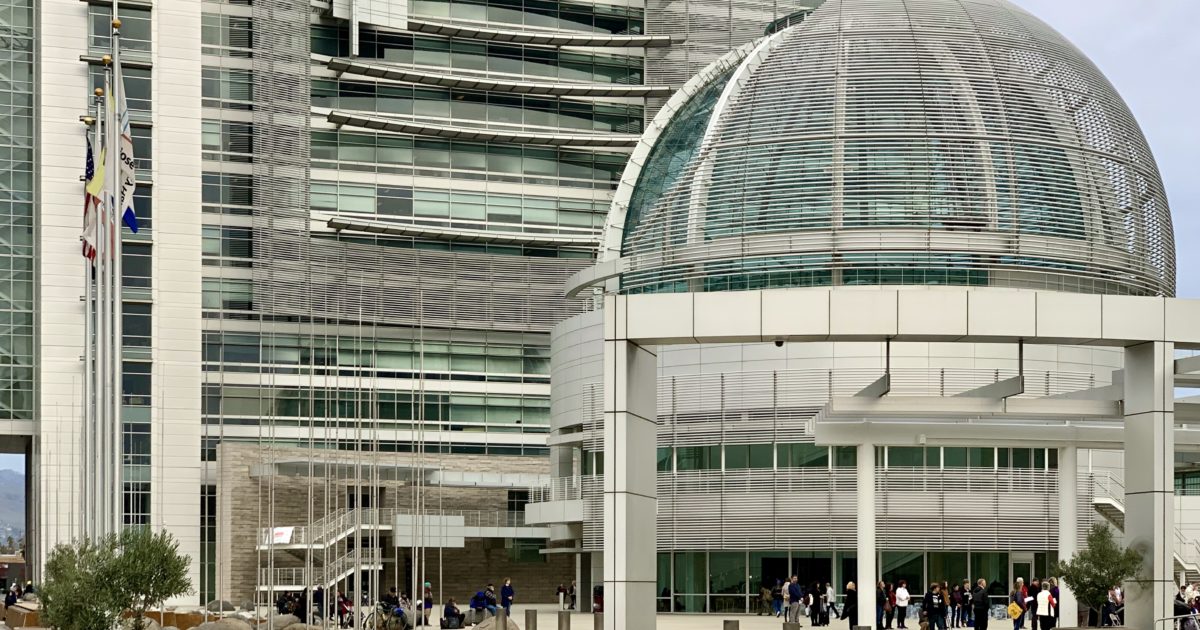
The fault lines are beginning to show as San Jose leaders continue budget talks that must balance a $56 million deficit.
After lengthy deliberations Tuesday, the City Council ultimately approved Mayor Matt Mahan’s March budget message — a document that will set the terms of the city’s budget debate in the coming months. However, the 8-3 vote delivered a setback to supporters of a package of additional proposals intended to rein in San Jose’s affordability crisis, many of which were rejected.
Councilmembers Domingo Candelas, Pamela Campos and Bien Doan cast the dissenting votes.
Candelas argued the wide ranging proposals — which included plans to boost child care services, prevent homelessness and reduce blight — are too urgent to wait for the city to get its fiscal house in order.
“It reflects priorities that we hear from our residents,” Candelas said during the meeting. “While we know that we’re in a difficult fiscal year … it’s important for us to stick up for our policies in areas that are just and aligned with our values.”
The core budget priorities laid out in Mahan’s budget message, released last week, largely align with his council colleagues — reduce homelessness, boost public safety, improve housing affordability and support economic growth.
However, in an 11-page memo authored by Candelas, Campos, Doan as well as Councilmembers Peter Ortiz and George Casey, the elected leaders urged the city’s administration to consider a list of additional proposals in their upcoming budgeting work. The mayor’s budget message lays out directives for the City Manager’s Office as it draws up a concrete spending plan for the coming 2026-27 fiscal year, which starts July 1. The budget process is expected to culminate with a final council vote on June 16.
The rejected measures included proposals to boost the city’s homelessness prevention efforts, to add an additional $500,000 for the city’s blight reduction program, Beautify SJ, and to expand building code enforcement efforts as the city attempts to crack down on negligent property owners.
The memo also laid out a number of possible strategies to secure funding for these proposals, such as redirecting funds from certain cost saving efforts in homeless service programs, or tapping into the city’s budget stabilization reserve fund.
The memo also included several measures, championed by Campos, intended to boost the city’s services for youth and families. One major area of focus was expanding programs that provide affordable child care for working families.
Mahan’s budget already includes a one-time funding allocation of $500,000 for the city’s youth services. Campos pushed for that figure to be doubled, though this proposal was rejected. Instead, the budget message ultimately approved by council directs staff to explore supplementing the initial allocation with funding from the city’s opioid settlement.
The group memo ran into pushback from other councilmembers, including Vice Mayor Pam Foley, who warned even entertaining additional budget items could backfire given the depths of the city’s fiscal challenges.
“The reality is that any expansion to a service or program will mean a cut to another existing city service,” Foley said. “It potentially means employee layoffs, residents losing services they currently depend upon or drawing back on commitments we’ve made.”
Supporters of the group memo argued that, for the most part, they crafted it to avoid adding new spending mandates, instead directing staff to simply explore possible funding options for their priorities.
However, Mahan cautioned that such policy reviews also come with a cost.
“The more that we add, the more that we tax staff,” Mahan said. “There is very finite staff capacity for management of programs, for communication with council offices, for research for new initiatives.”
The $56 million shortfall is the latest projection from the City Manager’s Office. San Jose’s chronic budget challenges have grown more severe in recent years as a soft economy has led to weak sales and property tax revenue.
Tuesday’s meeting also produced an outpouring of interest from San Jose residents, many of whom threw their support behind the proposals to address the city’s affordability challenges.
“Affordability is not a peripheral issue — it is the defining challenge facing San Jose residents,” The Race Equity Action Leadership Coalition wrote in a letter sent to councilmembers. “Budget decisions that determine whether people can remain housed, access child care, avoid eviction, or maintain economic stability must therefore be evaluated through an affordability and racial equity lens.”
Others turned out Tuesday to speak in support of Mahan’s March budget message.
“I acknowledge that the projected budget deficit will require difficult decisions. However, I urge council to remain focused on the priorities that affect all residents of San Jose,” Roosevelt Park resident Jeff Levine said during the meeting. “Let’s keep the focus on what works.”
Contact Keith Menconi at [email protected] or @KeithMenconi on X.