
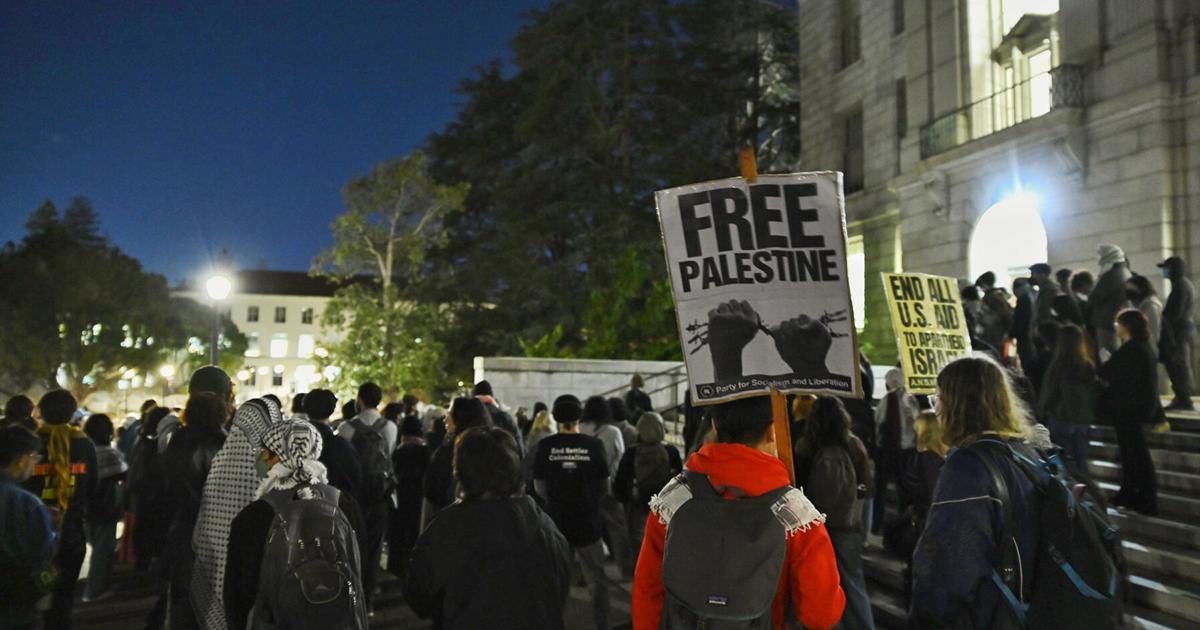
UC Berkeley will now use a controversial definition of antisemitism that many scholars have said conflates the term with anti-Zionism, following a settlement with the Brandeis Center.
The UC Board of Regents voted in closed session Wednesday to settle the Brandeis Center’s 2024 lawsuit which alleged UC Berkeley failed to respond to antisemitic harassment and discrimination on campus.
Under the settlement signed today, UC Berkeley has agreed to implement numerous policy changes, training requirements and oversight measures in order to respond to discrimination against Jewish and Israeli students.
Campus will now clarify that reports of exclusion of Zionists will be evaluated to determine if the term is being used as a “pretext” for antisemitic discrimination. Zionism is not defined as a protected category under campus’s antidiscrimination policy.
Campus will also use the International Holocaust Remembrance Alliance definition of antisemitism to evaluate complaints, which critics have said allows for criticism of Israel to be conflated with antisemitism.
“Manifestations might include the targeting of the state of Israel, conceived as a Jewish collectivity,” the IHRA definition states. “However, criticism of Israel similar to that leveled against any other country cannot be regarded as antisemitic.”
The IHRA’s definition generally defines antisemitism as hatred towards Jews. Some examples of antisemitism include criticism toward Israel, such as one that states “denying the Jewish people their right to self-determination, e.g., by claiming that the existence of a State of Israel is a racist endeavor” is an example of antisemitism.
“UC Berkeley’s acceptance of the IHRA definition is a profound betrayal of its founding principles,” Bears for Palestine said in a statement to The Daily Californian. “This definition is used as a tool to silence the lived experiences of Palestinians and to criminalize student organizing against the ongoing dispossession and oppression of Palestinians in their homeland. By adopting this framework, Chancellor Rich Lyons and the administration are actively fostering a campus climate of anti-Palestinian racism.”
More broadly, the agreement includes mandatory antisemitism and anti-discrimination changes for students, faculty and staff, create a Title VI officer to oversee investigations and will conduct campus climate surveys specifically focusing on the Jewish community.
The UC Regents will also pay the Brandeis Center $1 million in legal fees.
“This settlement reflects UC Berkeley’s long-standing values and objectives when it comes to combatting abhorrent antisemitic expression, harassment, and discrimination when it occurs on the Berkeley campus,” said campus spokesperson Dan Mogulof in a statement.
Mogulof affirmed campus’s “practice of rejecting calls for boycotts against and divestment from Israel.”
The Brandeis Center’s initial complaint targeted multiple pro-Palestinian protests during the 2023-24 academic year that the Brandeis Center labeled as antisemitic harassment of Jewish and Israeli students.

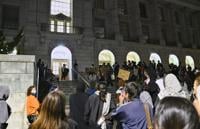
The complaint specifically cited a Feb. 26, 2024 incident in which Bears for Palestine shut down a Zellerbach hall event hosted by Students Supporting Israel at Berkeley and Berkeley Tikvah after hundreds of protesters gathered outside and unlawfully entered the venue. Demonstrators chanted, “long live the intifada” and “killers on campus.”
The Brandeis Center alleged in the suit that Jewish students attending the event were physically assaulted and subjected to antisemitic slurs and left feeling unsafe, with some reporting lasting trauma following the incident.
“As a UC Berkeley alumnus, I am glad that we can finally resolve this long battle with a victory for Jewish American students and for all Americans who care about free speech and fairness,” said Kenneth L. Marcus, Chairman of the Brandeis Center, in a press release. “What began as a ban on Zionist (and) Jewish … voices, regardless of the subjects they wished to address, and mushroomed into a widespread hostile environment will no longer be tolerated. What happened at Berkeley is a cautionary tale.”