
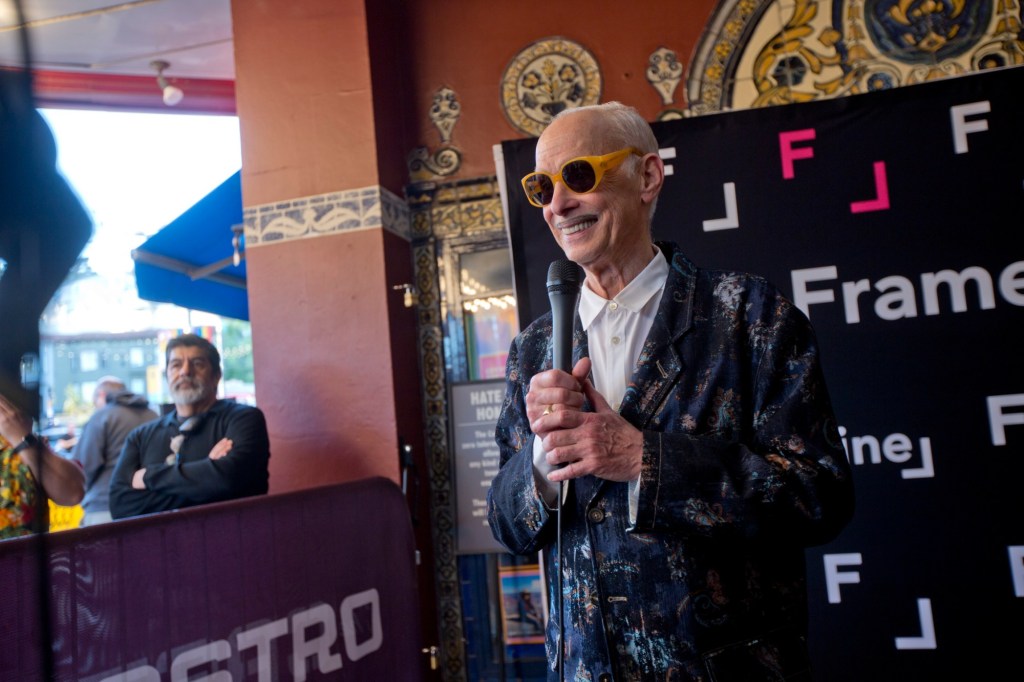
While the normies of the world were out chugging Guinness at Irish pubs this past St. Patrick’s Day, hundreds of Bay Area “freaks and weirdos” gathered outside the newly renovated Castro Theatre for a screening of John Waters’ “Serial Mom” — presented ahead of Frameline Film Festival’s 50th anniversary celebration. (The annual LGTBQ film festival returns June 17-27)
Yes, 50 years. Organizers marked the occasion the only appropriate way, by bringing the Pope of Trash himself to San Francisco.
“Serial Mom” is, at its core, a loving skewering of serial killer stan culture: that particular strain of true crime obsession that turns murderers into celebrities and their crimes into content.
Adding to the occasion’s particular magic was the presence of local horror royalty: celebrated drag queen and Bay Area institution Peaches Christ brought her killer presence to the crowd. Some cinema lovers may know her from “All About Evil,” another iconic camp horror film shot at San Francisco’s own Victoria Theatre. These days she’s theater-hopping across the Bay — from the Castro to the “Terror Vault” immersive horror show to Stanford Drag Fest — haunting every venue she graces.
John Waters is not only a legend of queer cinema but also a part-time San Francisco resident, which made his appearance at the Castro feel especially poignant … and, frankly, inevitable. He delivered exactly what was expected of him: maximum sass, neon orange sunglasses, and a complete willingness to boss around the photographers on exactly how they should be holding their cameras.
People had lined around the block two hours before showtime to catch a glimpse of him. As it turns out, that level of vigilance may not even be necessary. When asked whether he moves freely through the city’s streets, Waters confirmed that not only does he get recognized regularly, he routinely runs into people he used to know around San Francisco. As an illustration, he recalled a recent encounter: a homeless man approached him on the street and said, “Hey John, do you remember me?” Waters confirmed that he did. When asked from where, Waters replied: “A bad night.”
“Serial Mom” centers on Beverly Sutphin, a picture-perfect suburban housewife who kills people for violating the rules of polite society, and who, naturally, develops a devoted fanbase in the process. Waters puts a sharp spin on the culture he’s satirizing, though: in real life, Beverly Sutphin might eventually get a Netflix documentary, but she certainly wouldn’t get the Ted Bundy treatment. Society has a well-documented tendency to go feral over a male killer (the dangerous charisma narrative practically writes itself) but when the murderer is a woman, the cultural machinery reacts very differently. “Serial Mom” gleefully subverts that phenomenon, and it does so in the style that is classic Waters: blood, guts, filth, and trash, delivered with immaculate comedic precision.
As for the question of how the film fits into the broader cultural canon, Waters delivered a possibly devastating blow to those fans who for decades have hailed it as a cult classic of camp cinema. “Camp,” he declared, is “dead and dated … Camp is two old gay men standing in an antique shop talking about Rita Hayworth in 1963. … ‘Serial Mom ‘is NOT camp.”
Condolences to every Serial Mom fan who now has to go back and revise their Letterboxd reviews.
If camp is dead, then the natural follow-up is: how does provocative filmmaking continue to evolve? Waters had thoughts on that, too. “Show me children smoking in a Satanic temple,” he said. “Think of a new way to get on my nerves.”
Challenge accepted, presumably. But whether or not John Waters holds the official word on camp’s time of death, one question lingers, perhaps the most pressing one of the evening. If camp is truly dead, then what does that make everyone who packed the Castro that night, shrieking in collective ecstasy at a genuinely, triumphantly outrageous film? What does that make every “Serial Mom” devotee who has ever clutched the movie to their chest as a sacred text — including, it must be said, you, reading this right now?
If camp is dead and we still can’t stop loving it … what does that say about us?