
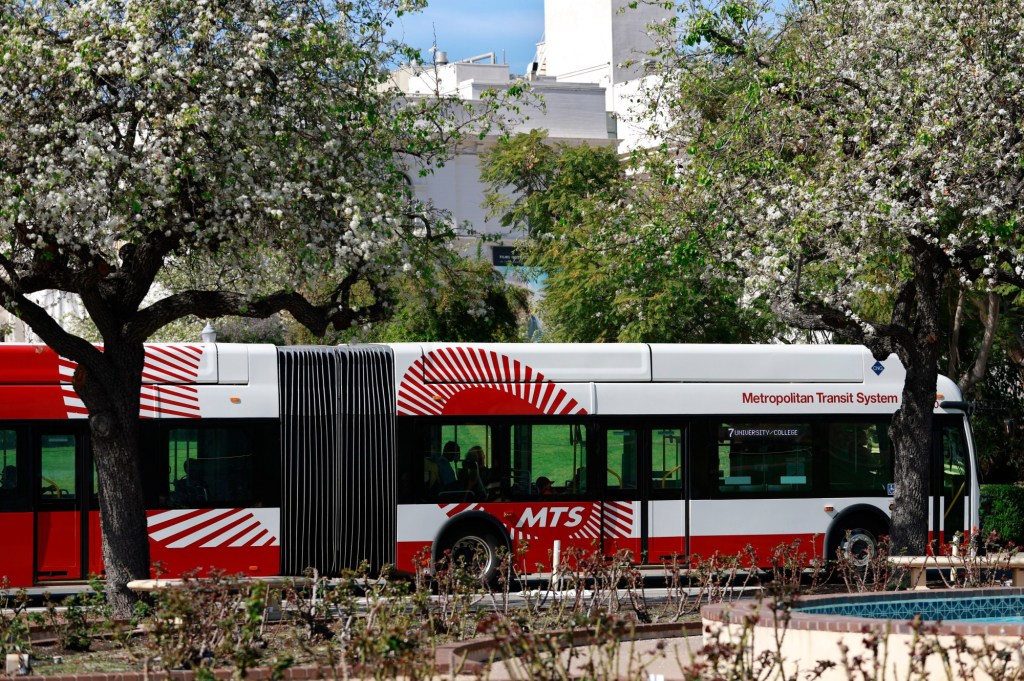
A looming hike in San Diego trolley and bus fares will likely raise one-way fares from $2.50 to either $3 or $3.50 and monthly passes from $72 to $90 or $100, transit officials said Thursday.
Raising fares to $3.50 would make San Diego commutes more expensive than those in every other transit system in the nation that’s considered comparable, an analysis by the Metropolitan Transportation System found.
One-way fares are $3 in Dallas and San Francisco, $2.80 in Portland, $2.75 in Denver and $2.50 in Sacramento and Salt Lake City. It wasn’t discussed whether those agencies might also be considering hikes.
The proposed fare increase, which is scheduled for approval by the MTS board next month, likely won’t be implemented until the fall because of the need for an education campaign of six weeks to two months, officials said. They had previously said they expected a fare hike to take effect this summer.
MTS officials presented the MTS board with two options for approaches to fare hikes Thursday — one that would raise fares more sharply and generate $16.8 million in additional annual revenue, and one that would raise fares more gently and generate $11.2 million per year.
Those amounts are key, because the cash-strapped agency estimates that it will need $23 million a year during each of the next four fiscal years from a combination of fare hikes and service cuts.
The more revenue MTS can generate from fare hikes, the lower the savings it will need to generate from service cuts.
The $23 million is part of a complex plan to close projected annual deficits in coming years that range from $118 million to $146 million. MTS plans to close the rest of the gap with state funding and by shifting some money away from capital projects and towards service.
The proposed fare hikes in both of MTS fare-hike options would mostly affect riders paying full fares and would have relatively little impact on senior citizens and people with disabilities.
One-way fares for seniors and disabled passengers would rise from $1.25 to $1.50 under both options, while the cost of monthly passes for those riders would increase from $23 to either $28 or $30.
MTS recently surveyed hundreds of riders about the possible fare hikes, and their responses showed roughly equal support for the two approaches, said Mark Olsen, MTS’s communications director.
Some riders want the smaller increase to $3 to save money, while others are willing to support $3.50 because it likely would mean less severe service cuts.
But Olsen said support jumped for the option with steeper hikes when officials said they could be phased in incrementally instead of implemented all at once.
“If we are able to go with a phased approach for that package B, people would definitely prefer to have that package,” Olsen said.
San Diego Councilmember Sean Elo-Rivera, a member of the MTS board, said the proposal is tough for the board.
“We have to balance our financial stability with affordability for riders,” he said. “I stay very committed to making sure fare increases are a last resort.”
Elo-Rivera said that before April’s vote on the fare hike, he wants the board to get a comprehensive summary of recent MTS efforts to raise revenue in other ways, such as with more advertising on buses and trolleys.
“That’s super important to me — wanting to make sure that before we ask our riders to pay more, we’ve made sure we’ve done everything we can to bring revenue in from other sources,” Elo-Rivera said.
El Cajon Councilmember Steve Goble, another board member, said MTS should follow through on plans for a new customer loyalty program in conjunction with the fare hikes.
“I think there’s an opportunity to soften the price increase with a value increase,” he said.
If the MTS board approves a fare hike, the North County Transit District board would next need to vote separately on the same hike in its service area.
A fare increase would then go for a final vote to the board of the San Diego Association of Governments, the county’s regional planning agency.