
Artificial intelligence has become more common in college classrooms, often appearing in course syllabi with rules that restrict how students can use it.
For San Diego City College students like Rodrigo Lopez, the conversation is more complicated than just banning AI altogether.
Lopez, a cyber defense and analysis major, is moderating a panel at the San Diego Community College District’s InnovAItion Day 2026 on Friday, March 20.
The event runs from 8:30 a.m. to 4:30 p.m. at the San Diego College of Continuing Education North City campus.
Story continues below advertisement
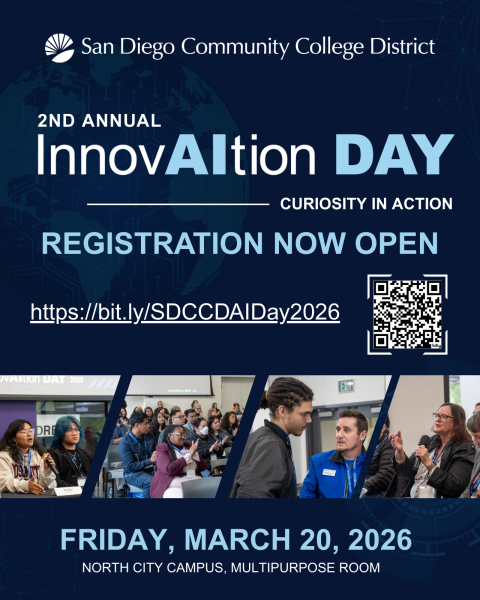 InnovAItion Day flyer
The districtwide event brings together faculty, staff and students from multiple SDCCD campuses to highlight how AI can be used responsibly rather than viewing it as an entirely harmful tool.
Attendees can expect lightning talks, breakout sessions and a range of different panels, according to the agenda.
Cybersecurity students are participating on a student-led panel, sharing how AI is shaping their learning experiences.
For Lopez, InnovAItion Day is about giving students a chance to better understand the role AI is already playing in their education and to be part of the conversation influencing its future.
With a name like InnovAItion Day, with “AI” highlighted prominently, it might sound like another event promoting artificial intelligence, but Lopez said that is not the goal.
Lopez wants this event to be a place where his peers, alongside administration, staff, and faculty, can ask questions and learn more about using AI as a helpful tool in higher education.
“It’s not just about giving people tools,” Lopez said. “We also want to acknowledge that not everyone is comfortable with AI.”
Lopez encourages disagreement because he believes it’s necessary due to the rise of students using AI.
Attendees at this event will have the opportunity to share their opinions and converse with others.
“At the end of the day, we’re here because of students,” Lopez said. “So it’s important to hear directly from them.”
Read more:
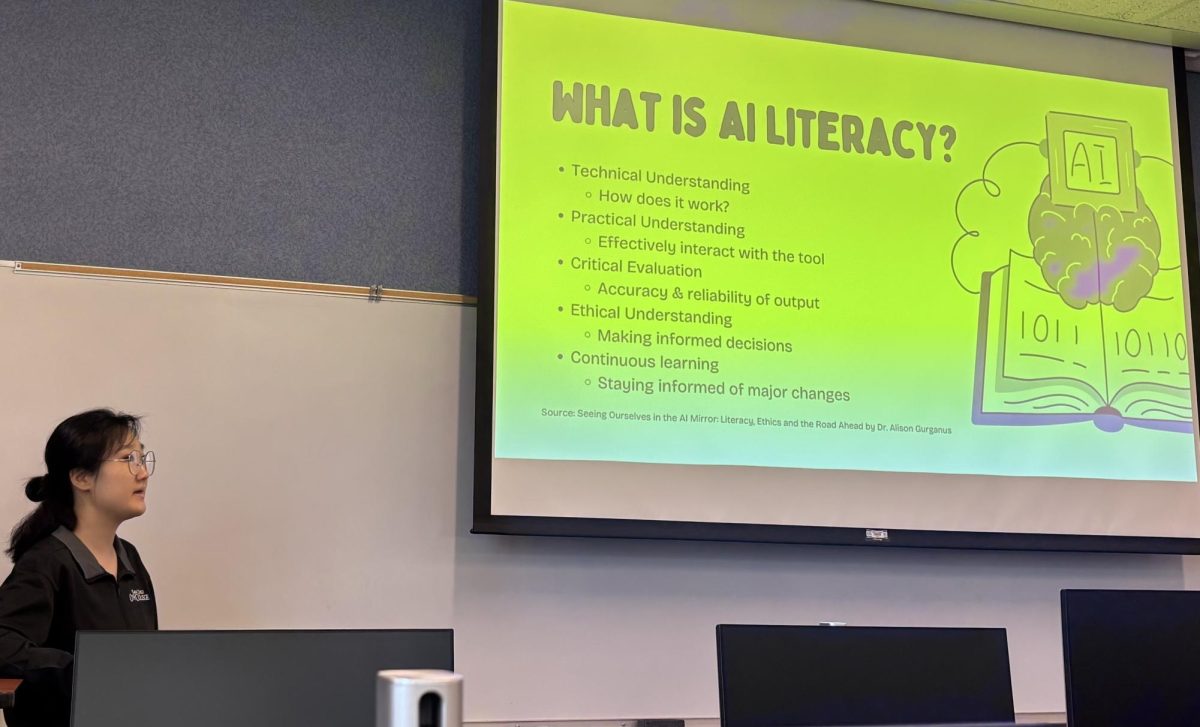
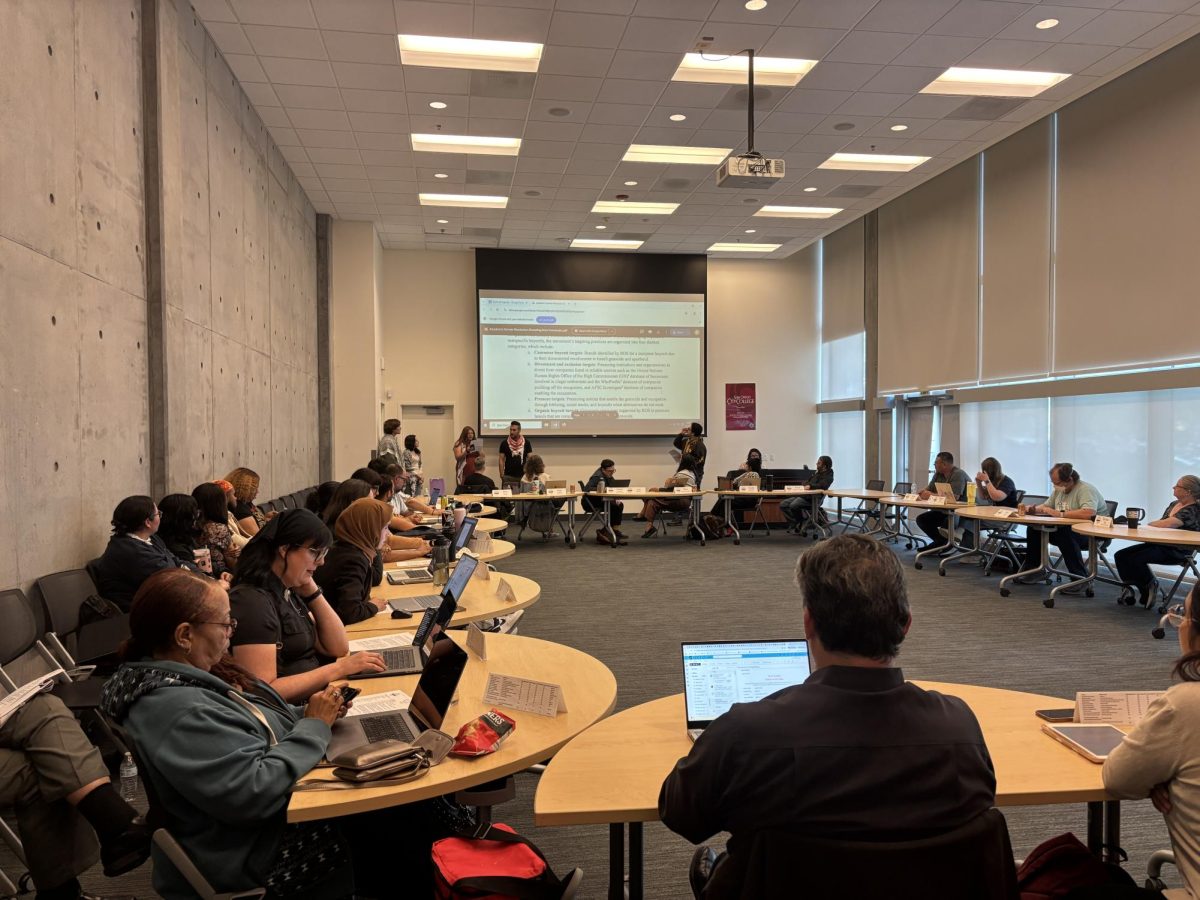
This event can also help students better understand how instructors and administrators are approaching AI, as well as what is expected of them when using it.
As a student, Lopez said he uses AI as a support tool rather than a cheat code, using programs like NotebookLM to turn readings into audio summaries, helping reinforce material he has already reviewed.
“I’m more of an audio learner,” Lopez said. “So it helps me review what I already read, not replace it.”
Still, he said both students and instructors are figuring out how AI fits into the classroom, with some professors allowing limited use, while others restrict it entirely, highlighting a gray area, according to Lopez.
Beyond the classroom, concerns about AI continue to grow, including its environmental impact, potential for surveillance and issues with bias.
Lopez said those concerns are valid, especially if the technology is used without proper oversight.
“If it goes unchecked, it can be dangerous,” Lopez said. “You can’t just trust what a computer tells you. You still have to verify things.”
Even so, Lopez said avoiding AI is not a realistic solution.
“This technology isn’t going anywhere,” Lopez said. “The best thing we can do is learn how to use it responsibly.”
This story was edited by Chrisdan Peralta and David J. Bohnet.