

That quiet whimpering you hear is the sound of Democrats, astonished at the notion that two Republicans just might become the finalists in the governor’s race.
The latest poll shows two GOPers — conservative commentator Steve Hilton and Riverside County Sheriff Chad Bianco — leading a pack of Democrats less than three months before California’s June primary. The primary is June 2 and the general election Nov. 3.
You’re reading the Essential California newsletter
Sign up to start every day with California’s most important stories.
By continuing, you agree to our Terms of Service, which include arbitration and a class action waiver. You agree that we and our third-party vendors may collect and use your information, including through cookies, pixels and similar technologies, for the purposes set forth in our Privacy Policy such as personalizing your experience and ads.
The two Republicans lead other candidates only fractionally, according to results released Wednesday by UC Berkeley’s Institute of Governmental Studies and co-sponsored by The Times. Hilton drew support from 17% of likely voters and Bianco 16%, just ahead of U.S. Rep. Eric Swalwell of Northern California and former Rep. Katie Porter of Orange County, both with 13%.
But that counterintuitive ranking, in a state that hasn’t elected a Republican statewide in years, has Democrats in a dither and reform advocates once again saying that California needs to shift to a more representative form of voting. A favorite system among nonpartisan groups: ranked-choice voting.
How the ranked-choice voting system works
It’s a system already in place in states like Alaska and in several California cities, including Oakland, San Francisco and Redondo Beach. Here’s how it works: Instead of voting for one candidate, voters choose multiple candidates on their ballots, ranked in order of preference. If no one receives a majority in the first count, the lowest-finishing candidate is dropped from the ballot, with their votes automatically shifted to that voter’s second choice. That process continues until one candidate has 50%-plus-one of the vote. That is the winner.
In two-round elections, like California holds for governor, a variation could be employed. Take the example of Alaska, where the top four candidates advance after the first round of voting and ranked-choice voting prevails in the second round. In Alaska’s 2022 governor’s race, the general election featured two Republicans, a Democrat and an independent. (Incumbent Republican governor Mike Dunleavy won a second term.)
Had those rules been in place this year in California, the June 2 primary would almost certainly push at least one Republican into the November runoff with Democratic opponents. “Voters would have more choices and elections would deliver more representative outcomes,” said the nonpartisan group FairVote.
Here’s who likes the idea and who doesn’t
FairVote’s website notes that top-two primaries like California’s were designed to keep voters of both parties engaged through both a primary and runoff election. “However,” the group opines, “when more than two candidates from the same party run in a primary, it’s possible that they split the vote and lock their party out of the general election — even if most voters favor that party.”
Gov. Gavin Newsom has not been a fan of ranked-choice voting. He vetoed a bill sponsored by state Sen. Ben Allen (D-Santa Monica) that would have allowed smaller cities in the state, without their own charters, to use the ranking method. At the time of that 2019 veto, Newsom depicted the system as too experimental, saying “the cure being proposed is far worse than the disease.”
Longtime political consultant Ben Austin, who won an election via ranked choice when he was a student politician at UC Berkeley, said the system lends itself to more civil discourse, because candidates who hope to win second-choice votes speak less harshly about their opponents.
“I don’t think what we need in today’s political climate is more bare-knuckle, slashing political partisanship,” said Austin, who is supporting former Los Angeles Mayor Antonio Villaraigosa for governor. “We need more collaboration and values-based coalition building.”

Talk radio host Tavis Smiley, left, moderates the California Governor Candidate Forum presented by Empowerment Congress at the California Science Center in L.A. Jan. 17. The candidates are left to right: Xavier Becerra, Ian Calderon, Jon Slavet, Tom Steyer, Eric Swalwell, Tony Thurmond, Antonio Villaraigosa and Betty Yee.
(Myung J. Chun / Los Angeles Times)
Villaraigosa is one of five prominent Democrats who continue to languish at single digits in the polls. The others are former Health and Human Services Secretary Xavier Becerra, San Jose Mayor Matt Mahan, former state Controller Betty Yee and state Supt. of Public Instruction Tony Thurmond.
They have faced calls, including from California Democratic Party Chair Rusty Hicks, to get out of the race, to assure that at least one other Democrat makes it into the November runoff. Ranked-choice voting advocates say that their system (though too late to invoke in this election) would prevent outcomes that defy popular expectations — like Republicans winning in a state in which they hold only a tiny fraction of the electorate.
Today’s top stories 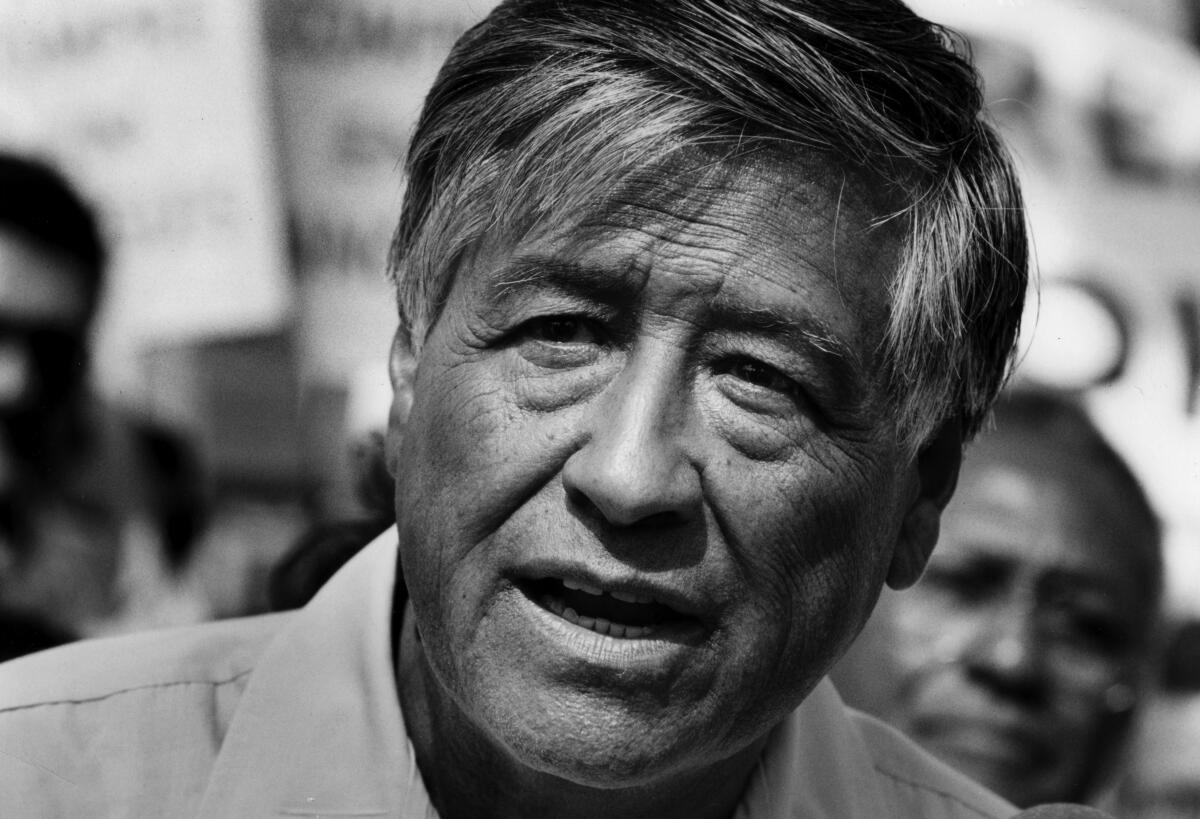
Cesar Chavez speaking at an East L.A. rally.
(Larry Bessel / Los Angeles Times)
Cesar Chavez allegationsSchools wonder how to proceed after Supreme Court ruling on transitioning studentsNewsom leads HarrisNewsom leads Harris for president among California Democrats, a new poll found. Despite his 48% approval rating, voters view Newsom as the strongest counter to Trump, according to the director of the poll.What else is going onCommentary and opinionsThis morning’s must readsOther must readsFor your downtime 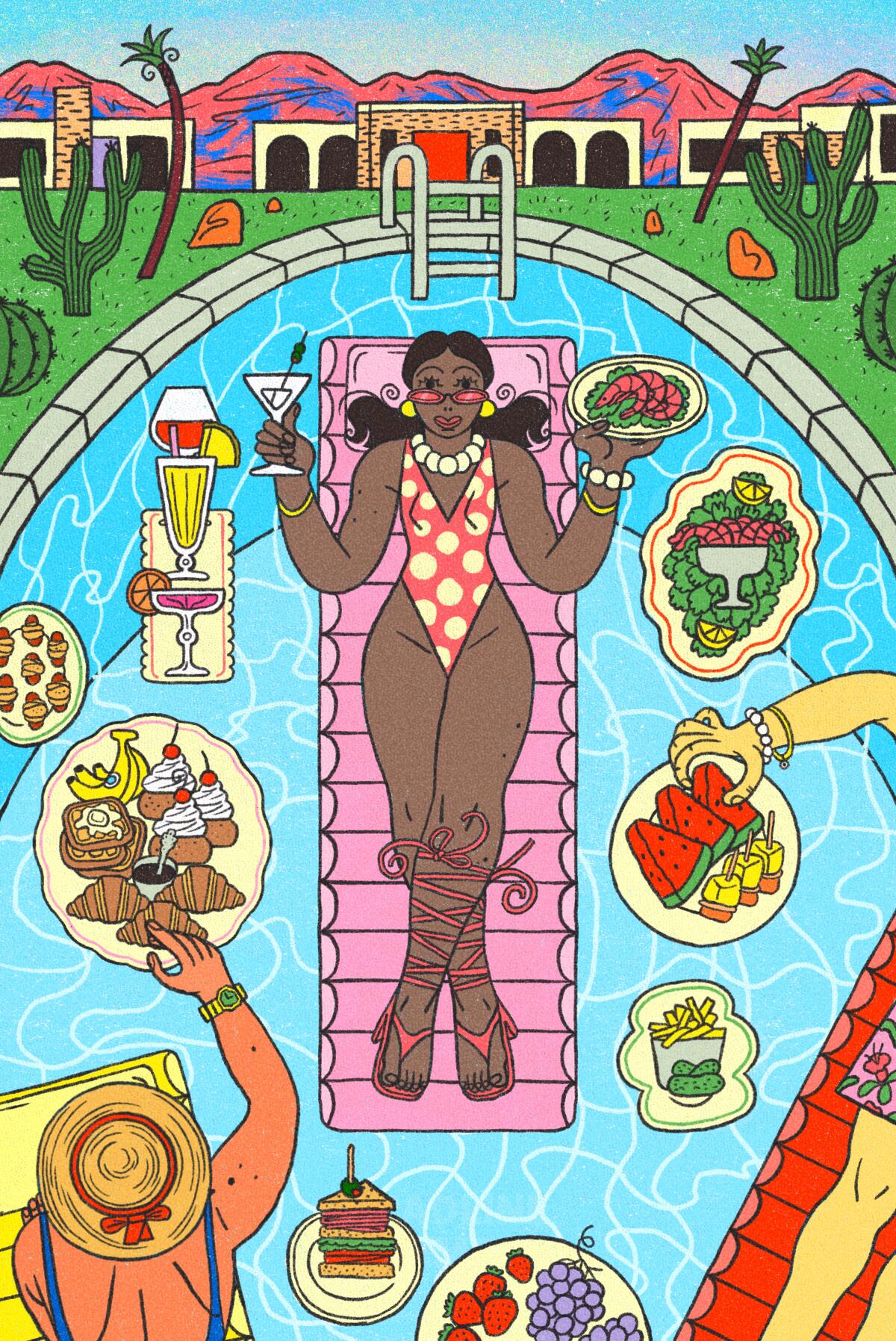
(Irina Selaru / for the Times)
Going outStaying inAnd finally … your photo of the day 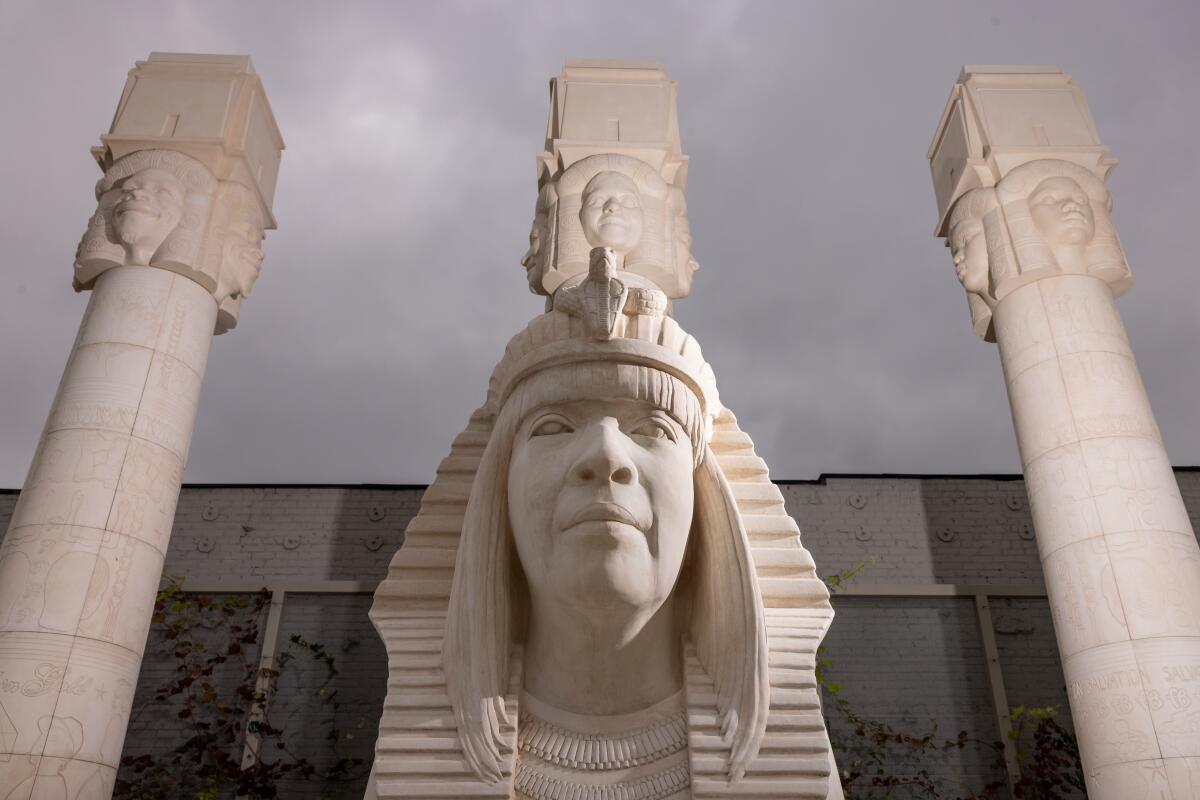
Lauren Halsey’s ‘sister dreamer’ sculpture park in South Los Angeles contains sphinxes and carved reliefs alongside Egyptian-style Hathoric columns featuring faces of Halsey’s mentors and family members.
(Christina House / Los Angeles Times)
Today’s great photo is from Times photographer Christina House at a monumental sculpture park in South-Central L.A. that is part of a “Black renaissance” in art.
Have a great day, from the Essential California team
Jim Rainey, staff reporter
Hugo Martín, assistant editor, fast break desk
Kevinisha Walker, multiplatform editor
Andrew Campa, weekend writer
Karim Doumar, head of newsletters
How can we make this newsletter more useful? Send comments to essentialcalifornia@latimes.com. Check our top stories, topics and the latest articles on latimes.com.