
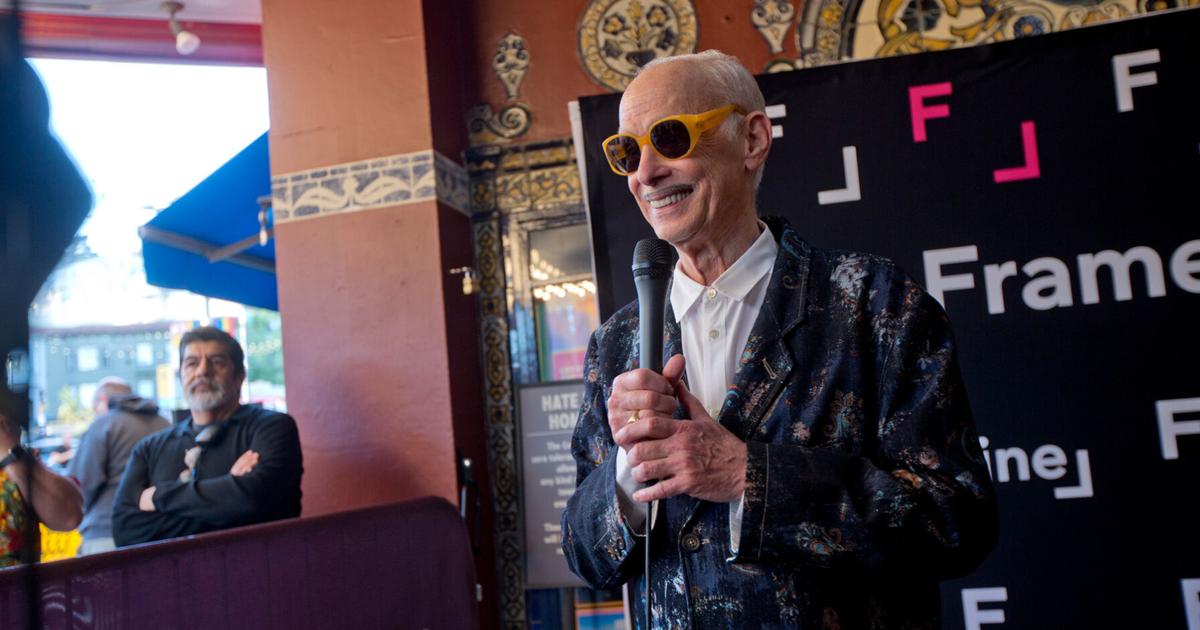
On March 17, John Waters, screenwriter, director and proclaimed “Pope of Trash” became the 35th honoree of the Frameline Award in recognition of his contributions to queer cinema history. The reception was held at the Castro Theatre in San Francisco — marking the theatre’s official reopening after its restoration — and was followed by a screening of Waters’ film “Serial Mom” with live commentary from the director himself.
Balmy winds blew over the crowd waiting outside of the theatre. A flamboyant group of fans lined up down Castro Street and around the corner, many of whom were adorned in homemade costume renditions of various characters from Waters’ iconic catalogue.
“I’m hot,” Waters said in conversation with The Daily Californian. “I packed for San Francisco weather.” Waters discussed the upcoming restorations of his films “Desperate Living” and “Hairspray” with the Criterion Collection before the event began, saying “(Criterion does) such a great job. I’ve worked with the same people on all of my films. You’re going to see detail on ‘Desperate Living’ you’ve never seen.”
When asked if he would do any special features for the films’ restorative releases, Waters said with a smile, “Oh, yes. But I can’t tell you.” Moments later, he was whisked into the theater, loud cheers of his fans trailing behind him.
Known for films such as “Pink Flamingos,” “Polyester” and “Hairspray,” Waters earned recognition for his boundary-pushing raunchy material and unashamed presentation of homosexual subjects. A gay man himself, Waters paved the way for queer media’s popularity and palatability over a career that has spanned more than 40 years.
Long gone are the days of screening his films in church basements in Massachusetts and distributing them in the adult movie sections of video rental stores; the Castro Theatre, one of the most storied institutions in San Francisco history, aptly fit the hundreds of fans anticipating Waters’ on-stage arrival. The theater is, as Waters puts it, “the Radio City Music Hall of hallow homosexuals.”
“It’s a profound honor to stand here tonight, back on stage at our beloved Castro Theatre, to present the Frameline Award to someone who didn’t just change cinema, he changed lives,” said drag queen Peaches Christ, opening the ceremony. “I grew up in Maryland. When you grow up queer in suburban Maryland in the 1980s, Hollywood feels about a million miles away. … One day, the local news started covering a film being made just up the road for me in Baltimore. ‘Hairspray’ was being filmed in the summer of 1987, and they were interviewing this strange, brilliant man with a pencil mustache and a familiar accent, standing next to a larger-than-life drag queen named Divine.”
Christ, in makeup resembling Divine’s illustrious look from “Pink Flamingos,” regaled the audience with a story about her immediate fascination with Waters and his work. “At 13 years old, I went to a mom-and-pop video store called Mom’s Video. This place had absolutely no concept of age-appropriate rentals,” Christ said. “I asked the woman behind the counter if they had any John Waters movies and (she) sent me home with two VHS tapes. And I’m telling you right now, that weekend changed my life forever.”
Her speech continued with sentiments about Waters’ impact, saying “Divine and John together created some of the most radical, queer cinema the world has ever seen. Work that was fearless, outrageous, deeply funny, and completely uninterested in asking permission from anyone.” Shortly thereafter, Waters entered the stage to an eruption of applause. The entire theater rose to its feet.
“Thank you, thank you, thank you,” Waters said, opening his recipient speech. “I feel so respectable I could puke.” The audience sat down as he continued. “My God, look around you. Usually, I’m getting an award in a simpler situation. I’m gay for pay.”
Waters is a long-time partial resident of San Francisco, where he met drag queen and frequent collaborator Divine. “I lived right here in (the Castro), which was then known as the Swish Alps,” he said. “But when I first arrived in San Francisco, I lived in my car a block away from the Nob Hill (Theatre). And now, full circle, I live not that far away from that parking space in this great city.”
Before “Serial Moms” began, Waters shared an anecdote. “This is my best movie. It’s the only movie we had enough to make,” he stipulated. “It was a failure when it came out, too.” The film commenced alongside his commentary. He laughed at many of his own jokes, pointed out outfits he described as “hideous” and pointed out locations relevant to stories told that night — including the same video shop Christ rented Waters’ films from in the ’80s, now acting as a set where Matthew Lillard’s character Chip works. When Kathleen Turner’s character Beverley killed a woman for wearing white shoes after Labor Day, Waters interjected: “It’s true, you can’t do that.”
In one of her final sentiments, Christ said, “the remarkable thing about John Waters is that the world eventually caught up with him.” After the film’s run completed, another standing ovation began, playing Waters off into the night. The crowd spilled out of the theater in excited chatter, the foyer already reeking of cigarette smoke spilling in from crowds outside. They stood underneath the marquee, spelling his name in bright lights — indeed, the world caught up to him.